

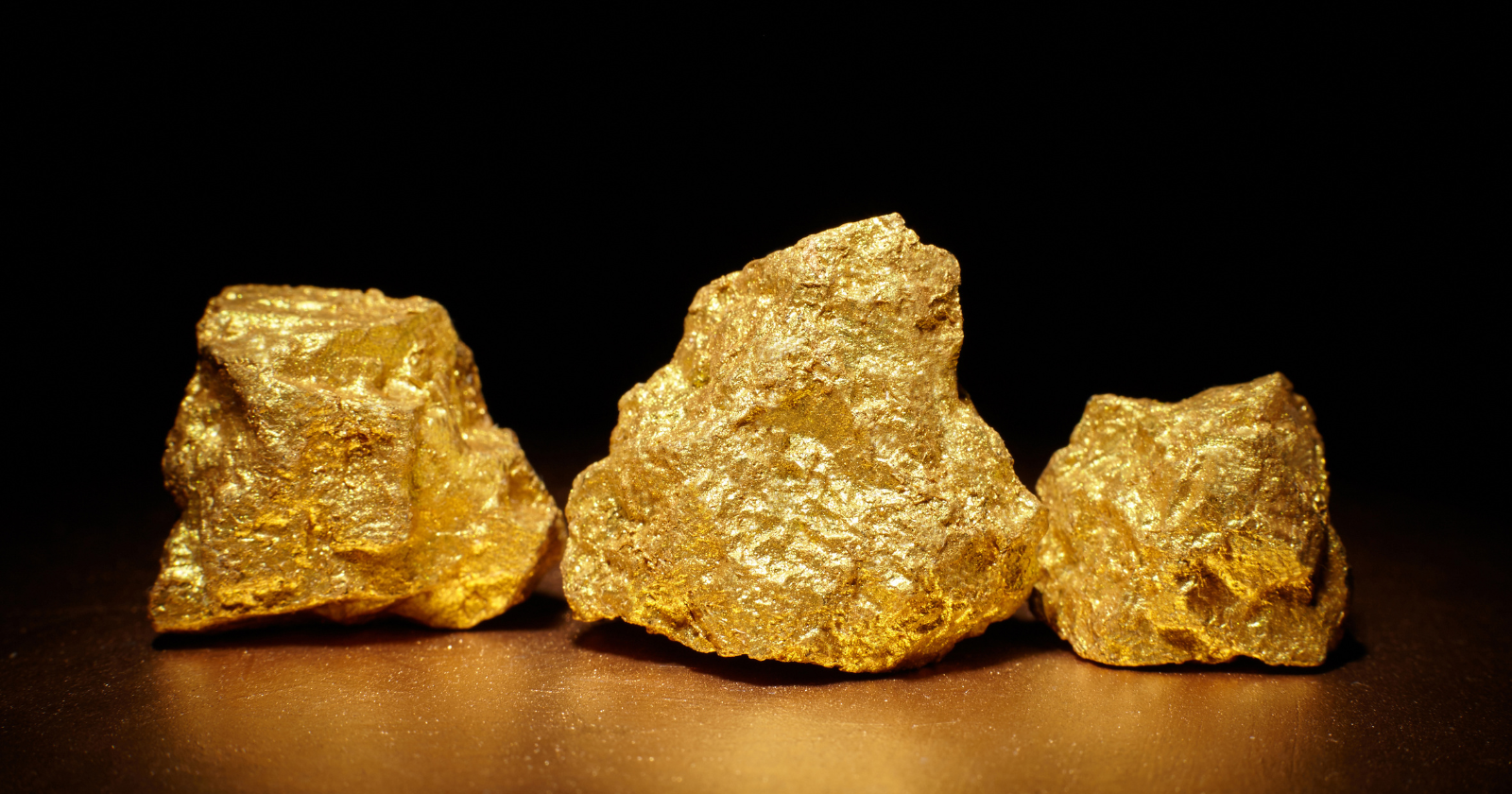
If you are wearing a wedding ring, or holding a coin in your pocket, or standing near anything gold, consider for a moment the specific history of the material.
The gold in that ring is old. Not centuries old. Not thousands of years old. The gold atoms themselves — the specific atoms of the seventy-ninth element, with 79 protons and 118 neutrons and whatever electrons happen to be attached at the moment — were forged approximately 12 to 14 billion years ago, in events that occurred somewhere in a galaxy that had not yet become the Milky Way.
The events in question were the collisions of dead stars.
For most of the history of astrophysics, the origin of gold and other very heavy elements was a genuine scientific puzzle. Regular stellar fusion — the process powering ordinary stars like the sun — can produce elements up to iron by fusing lighter atoms together. Beyond iron, fusion stops paying off energetically. Heavier elements like gold, platinum, and uranium cannot be made in ordinary stars. They require conditions that ordinary stars, even in their explosive deaths as supernovae, do not quite reach.
The conditions that do work involve neutron-rich environments so extreme that they exist essentially nowhere in the normal universe. Only in the collisions of neutron stars, or in specific classes of hypermassive stellar collapse, does the required environment briefly appear. In those collisions — which can be over in fractions of a second — atoms undergo something called the r-process, the rapid absorption of many neutrons at once, followed by radioactive decay chains that leave stable heavy nuclei behind.
The gold in your ring was made in one of those events.
What a neutron-star merger actually looks like
A neutron star is what remains after a massive star has died and collapsed to a size at which its atomic structure has broken down. Its protons and electrons have been forced together into neutrons. Its mass — roughly 1.4 times the mass of the Sun — is compressed into a sphere approximately ten kilometres across. A teaspoon of the material inside a neutron star would weigh approximately a billion tonnes.
Neutron stars sometimes exist in binary systems — two of them, orbiting each other, slowly losing energy over hundreds of millions of years through gravitational wave emission. Eventually they spiral inward. The final few seconds of the inspiral, when the two objects are within kilometres of each other, happen at more than 300 orbits per second. And then they collide.
The event that follows is called a kilonova — a term coined in 2010 by Brian Metzger and colleagues, who calculated that a neutron-star merger would produce an optical flash approximately one thousand times brighter than a typical nova. On August 17, 2017, humanity observed one of these events directly for the first time: a merger designated GW170817, whose gravitational waves were detected by the LIGO and Virgo observatories, and whose electromagnetic afterglow was picked up by telescopes across the world within hours.
The GW170817 collision, in the final moments, ejected approximately 20,000 Earth-masses of neutron-rich material into space. Of that, spectroscopic analysis and follow-up modelling by Daniel Kasen, Brian Metzger, and colleagues estimated approximately 200 Earth-masses were pure gold — plus significant quantities of platinum, uranium, and other heavy elements.
Two hundred Earth-masses of gold, produced in a single event lasting less than a second.
Where the gold went
The material ejected from a kilonova travels outward at approximately one-quarter the speed of light. Some of it disperses across the surrounding volume of space; some of it eventually mixes with the gas of the interstellar medium.
Over hundreds of millions of years, that mixed material becomes part of new star-forming regions. When a nebula eventually collapses gravitationally into a new solar system, some fraction of the heavy elements previously produced by nearby kilonovae get incorporated into the resulting stars and planets.
Our own solar system formed approximately 4.567 billion years ago from the gravitational collapse of a specific molecular cloud that had already been enriched by generations of previous stellar deaths — including some indeterminate number of neutron-star mergers that had happened in the general galactic neighbourhood over the preceding several billion years. When Earth accreted from the dust and rock of the young solar nebula, most of its gold ended up sinking into the planet’s molten iron core, along with most other heavy metals. The gold accessible to modern mining, in the Earth’s crust, is thought to have been delivered later — by asteroid impacts during a period called the Late Heavy Bombardment, approximately 4.1 to 3.8 billion years ago.
Those asteroids were themselves fragments of earlier planetary material that had also formed from the enriched interstellar medium. The gold in them, and in every subsequent gold deposit ever mined on Earth, ultimately traces back to kilonova events that occurred well before the sun existed.
The biography of a gold atom
Consider a single gold atom in a wedding ring worn on someone’s finger today.
That atom was forged in the r-process nucleosynthesis of a neutron-star collision somewhere in the pre-Milky Way universe, perhaps 12 billion years ago. It was ejected from that collision at nearly a quarter of the speed of light, drifted through interstellar space for hundreds of millions of years, and eventually became part of the molecular cloud that would collapse to form our solar system.
Around 4.567 billion years ago, it was incorporated into the primitive solar nebula. Around 4.5 billion years ago, it was incorporated into a body that would eventually become an asteroid or planetesimal. Between roughly 4.1 and 3.8 billion years ago, that body impacted the young Earth, delivering the atom to the surface layers of a planet that had only just cooled enough to have a solid crust.
For the next few billion years, the atom cycled through geological processes — subduction, volcanic activity, hydrothermal deposition, sedimentation. It eventually ended up in a specific vein of gold-bearing rock somewhere on the continent that would eventually be called Earth’s landmass. Sometime in the last few thousand years, humans mined that vein. The atom passed through refining, casting, and eventually a jeweller’s workshop. It was formed into a ring. That ring was placed on a finger.
The wedding ring on that finger is, in the specific chemical sense, older than the sun. It is a direct physical artefact of two stars that died in a collision more than four billion years before Earth existed.
That is not metaphor. It is just what the ring is.
The gold has, in the honest sense, been waiting. It is difficult to know exactly what for.
