News about planet Earth.
Terra Daily

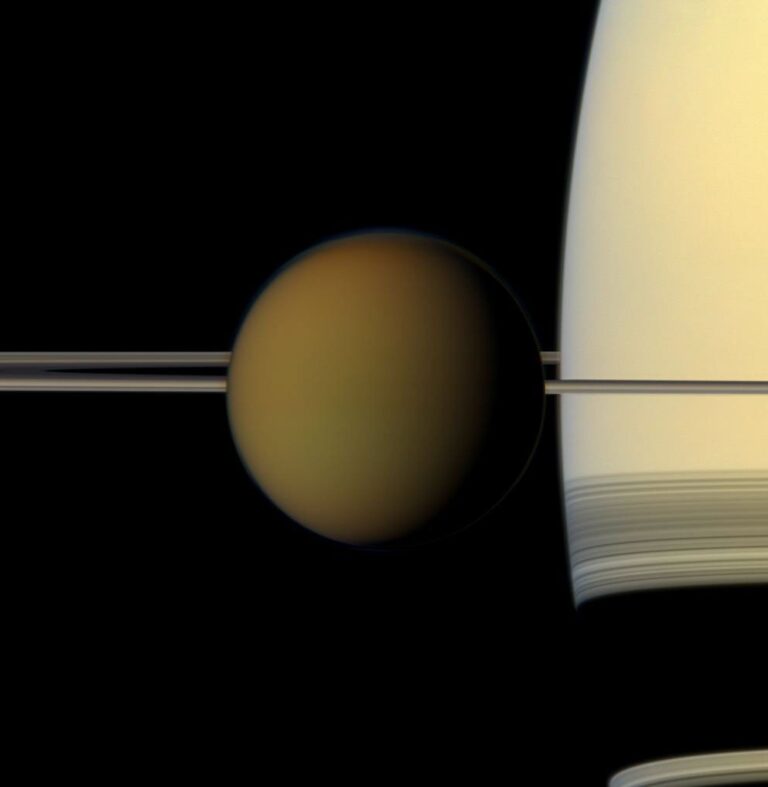
The dark dunes wrapping Titan's equator hold hundreds of times more carbon-rich material than every coal deposit on Earth, built not from sand but from soot-like hydrocarbon grains that drift down from the orange sky

The Cassini spacecraft's radar looked down through Titan's orange smog and saw something that shouldn't have been there: long, parallel black streaks running for hundreds of kilometers around the moon's equator, spaced like the ridges of a fingerprint.

Latest

All articles →
Iron and Ice

Titan is the only moon among the 150-plus in the solar system with a thick atmosphere — its air presses on the surface about 1.5 times harder than Earth's at sea level, roughly what you'd feel at the bottom of a swimming pool

Titan sits 1.4 billion kilometers from the Sun, wrapped in a nitrogen haze so thick that when the European Space Agency's Huygens probe parachuted through it on January 14, 2005, the descent took two hours and twenty-seven minutes.

Uncategorized

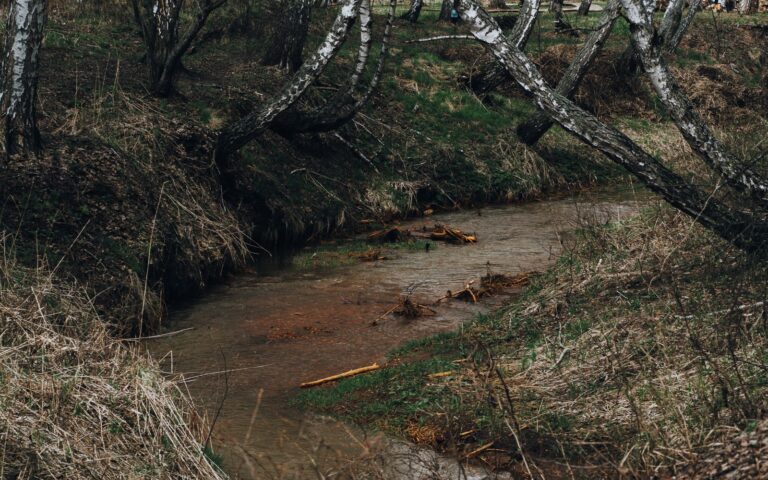
Anything that falls into a four-kilometre stretch of a river in the central Peruvian Amazon dies within seconds, because the water reaches temperatures of up to 100 degrees Celsius, despite the river sitting more than 700 kilometres from the nearest active volcano and in a region of the planet with no known magmatic activity

The Asháninka and Shipibo people, who have lived in the central Peruvian Amazon for many centuries, have a name for it: Shanay-Timpishka.

What’s up in

Terra Daily

Earth science, climate impacts, ecosystems, agriculture, forests, and the broad environmental changes shaping life on a changing planet.

What’s up in

Shake and Blow

Earthquakes, volcanoes, severe weather, fire, tectonics, disaster response, and the natural hazards reshaping communities and landscapes.

What’s up in

Water World

Oceans, rivers, polar ice, water systems, marine life, and the environmental changes affecting the planet's blue and frozen regions.

About Terra Daily

News about planet Earth.

Terra Daily is an independent publication covering planet Earth, natural hazards, water systems, ecosystems, climate impacts, and the science behind life on a changing planet. The site pairs a deep archive with current reporting on the research, communities, policy shifts, and environmental events shaping Earth's living and physical systems. We employ modern AI technologies to support our editorial workflows; every published piece is editorially directed and reviewed.

More about us →