

Roy Baumeister’s team ran a now-famous set of experiments in which volunteers were asked to resist a plate of warm chocolate-chip cookies and eat radishes instead, then attempt an unsolvable geometry puzzle. The radish-eaters gave up on the puzzle significantly faster than those who had eaten the cookies. The finding sat at the beginning of a long line of research suggesting something the brain seems to have figured out long before any psychologist did: conscious choosing is expensive, and habit is the cheaper currency.
That is why, over a lifetime, the brain quietly hands more and more of a day over to routine. One domain at a time. The commute, the morning coffee, the way a key turns in a lock, the order in which teeth are brushed — all of it migrates from the front of the mind to the back, where it runs on almost nothing.
The cookies-and-radishes study, and what came after
Baumeister called the effect ego depletion — the idea that willpower behaves like a muscle that tires with use. The results became famous: the same puzzle, with the only difference being whether the volunteer had spent the previous five minutes overriding an impulse.
The strict muscle model has since been argued over. Some replications failed. Others found the effect held when the task was demanding enough. What survived the fight, and what later neuroscience made concrete, is the plainer finding underneath: making deliberate choices costs the brain something measurable, and doing it repeatedly makes the next choice worse.
Later research has traced the cost to glucose consumption in the prefrontal cortex and elevated cortisol after long decision sequences. The well-documented drop in judicial parole rulings across the course of a day provides a clear example: judges grow tired of choosing, with the probability of favourable rulings declining as sessions progress, then resetting after food breaks. The judges were not being cruel. They were tired of choosing.
Why the brain treats a decision as a threat
The prefrontal cortex — the slab of tissue behind the forehead that does most of the deliberate weighing of options — is metabolically the most expensive real estate in the body per gram. It runs hot. It uses oxygen and glucose at rates that outstrip almost every other region. And when it works hard for long stretches, the body responds the way it responds to other kinds of load: with a low-grade stress signal.
Journalists covering the neuroscience beat have documented this repeatedly. Reporting on decision fatigue describes a measurable decline in the quality of choices after sustained demands on self-regulation, along with a rise in impulsivity, avoidance, and default-option selection. In plain terms, a tired chooser stops choosing well and starts choosing whatever is nearest.
That is the state the brain wants to avoid. So it offloads.
The basal ganglia, and the quiet handover
Deep under the cortex sits a cluster of structures called the basal ganglia — evolutionarily older, denser, and far cheaper to run than the prefrontal cortex above them. This is where habits live. When a behaviour is new, the prefrontal cortex handles it, weighing each step. When the behaviour is repeated enough times, the basal ganglia take over, and the cortex goes quiet.
Neuroscience research has mapped this transfer in rats running mazes, showing a distinct signature: at the start of learning, neural activity spikes across the whole run. After enough repetitions, activity concentrates only at the start and end of the sequence — the trigger and the reward — while the middle goes dark. The rat is no longer thinking about the maze. It is running it.
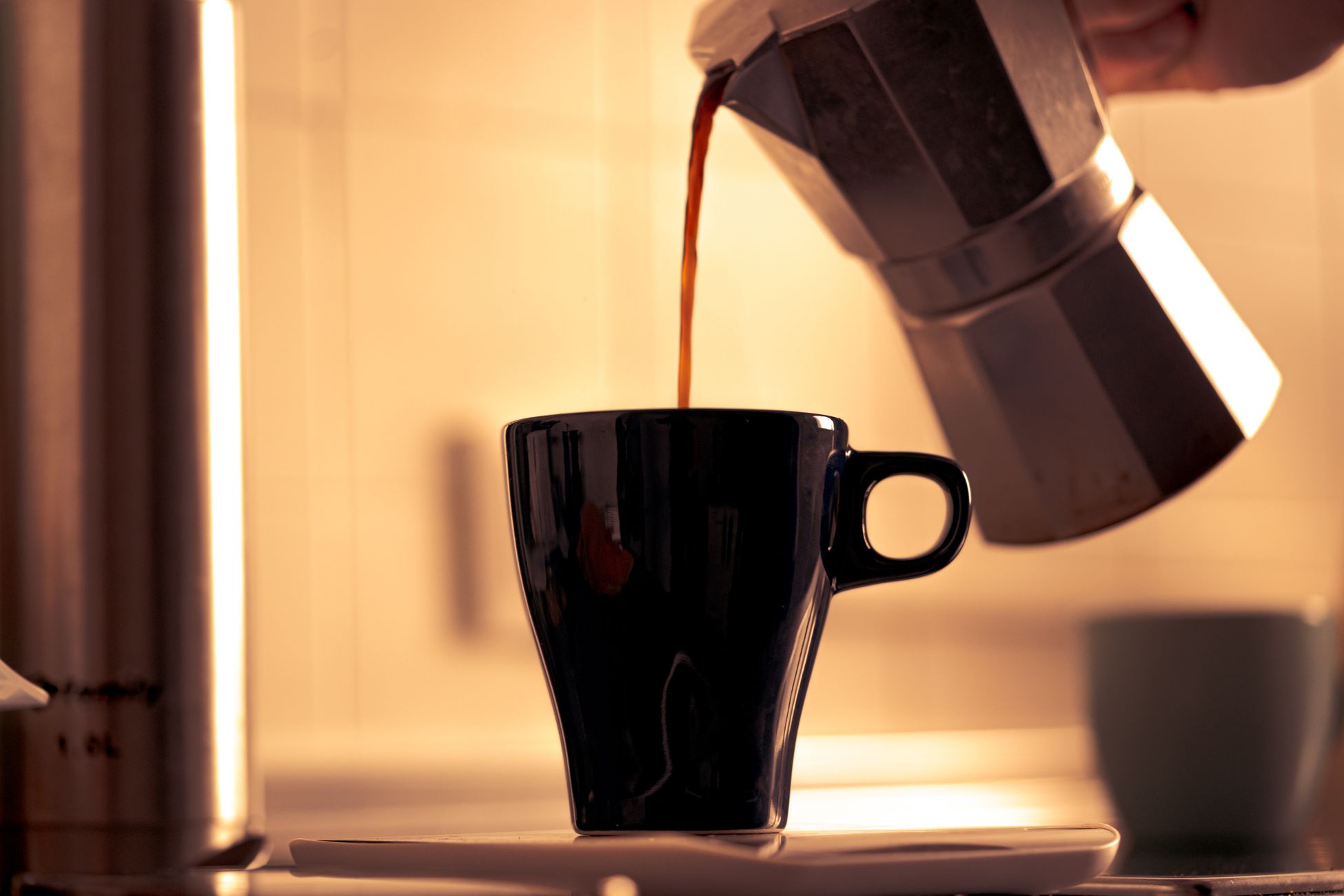
Human brains do the same thing with a shoelace, a gearshift, a password, a route home. Writing on the neuroscience of habit loops describes the brain as constantly looking for ways to make life easier, noting a behaviour that produces reward and quietly building a habit around it. The word quietly matters. Most of what a person does in a day was never consciously decided that morning.
What automation buys the body
The stress difference is not abstract. Research on skilled performance under pressure suggests that once a skill has been drilled to automaticity, performers tend to show better physiological stress markers and lower error rates. Reporting on firearms training research makes the point directly: once a skill becomes automatic, it functions as a habit and becomes the default behaviour under stress. A conscious rehearsal of steps in a crisis is slower and physiologically more costly than a trained reflex.
The same principle scales down to ordinary life. A person who has to decide every morning what to eat for breakfast is running the prefrontal cortex for a task that could be done by the basal ganglia. Multiply that across brushing teeth, choosing clothes, picking a route, sequencing a shower, and the day accumulates dozens of small taxes on the same overworked tissue.
Habit avoids the tax. That is the trade the brain is quietly making.
Why smart, complicated lives cost more
The paradox is that the more options a person has, the more expensive the day gets. Reporting on decision fatigue in high-functioning adults notes that people who consider more variables and weigh more outcomes carry a heavier cognitive load — and hit fatigue sooner, not later. Intelligence is not a shield against depletion. It is a multiplier of it.
This is part of why several public figures famously wore the same outfit every day. Steve Jobs and his black turtleneck. Barack Obama and his two suit colours, described as a deliberate move to pare down decisions so mental bandwidth was preserved for consequential ones. Mark Zuckerberg and his rotation of identical grey t-shirts. The wardrobe was not vanity. It was outsourcing.
Sleep, and the overnight sorting
Habits do not form only through repetition during waking hours. Sleep does part of the work. Research on sleep and neuroplasticity describes how the brain uses sleep to consolidate learning into more durable neural maps, strengthening the pathways that were rehearsed during the day and pruning the ones that were not. A repeatedly driven route can become a habit partly because the hippocampus rehearses it during slow-wave sleep, helping transfer the pattern to the striatum.
Which is why a skill often feels easier the morning after learning it. The prefrontal cortex has quietly been relieved of some of the load while its owner slept.
The cost of the trade
Automation is efficient, but it is not free of side effects. A brain that offloads a behaviour to the basal ganglia stops noticing it. That is fine for tying shoes. It is less fine for eating, drinking, scrolling, or replying — behaviours that also form loops, also become automatic, and also stop being examined.
Habit researchers describe this as the dark side of the same efficiency. The same mechanism that lets a commuter drive home without conscious thought lets a smoker light a cigarette without registering the decision to do so. The trigger fires, the sequence runs, the reward lands, and the prefrontal cortex was never consulted.
Breaking a habit is expensive for exactly the reason forming one was cheap. Undoing it requires the prefrontal cortex to reassert control over a sequence the basal ganglia has been running for years. It is metabolically costly, cognitively tiring, and — as any January gym membership can attest — often abandoned by February.
A life shaped by what stopped being decided
By middle age, most of a person’s ordinary day is running on inherited automation: the side of the bed they get out of, the hand that reaches for the phone, the mug they choose without noticing, the seat they take at the same table. The brain built these routes quietly, one repetition at a time, because each one saved a small amount of glucose and a small amount of stress.
Add up enough small savings and a life takes shape around them. The habits are not the background of the day. They are most of it. The conscious choices — the ones a person remembers making — are the thin bright layer on top of a much larger structure the basal ganglia have been assembling in the dark.
Which is what Baumeister’s radish-eaters were, in a small way, demonstrating. Every act of resistance came out of the same finite budget. The brain, over a lifetime, learned to spend that budget on as few things as possible. Everything else, it turned into a groove.
