
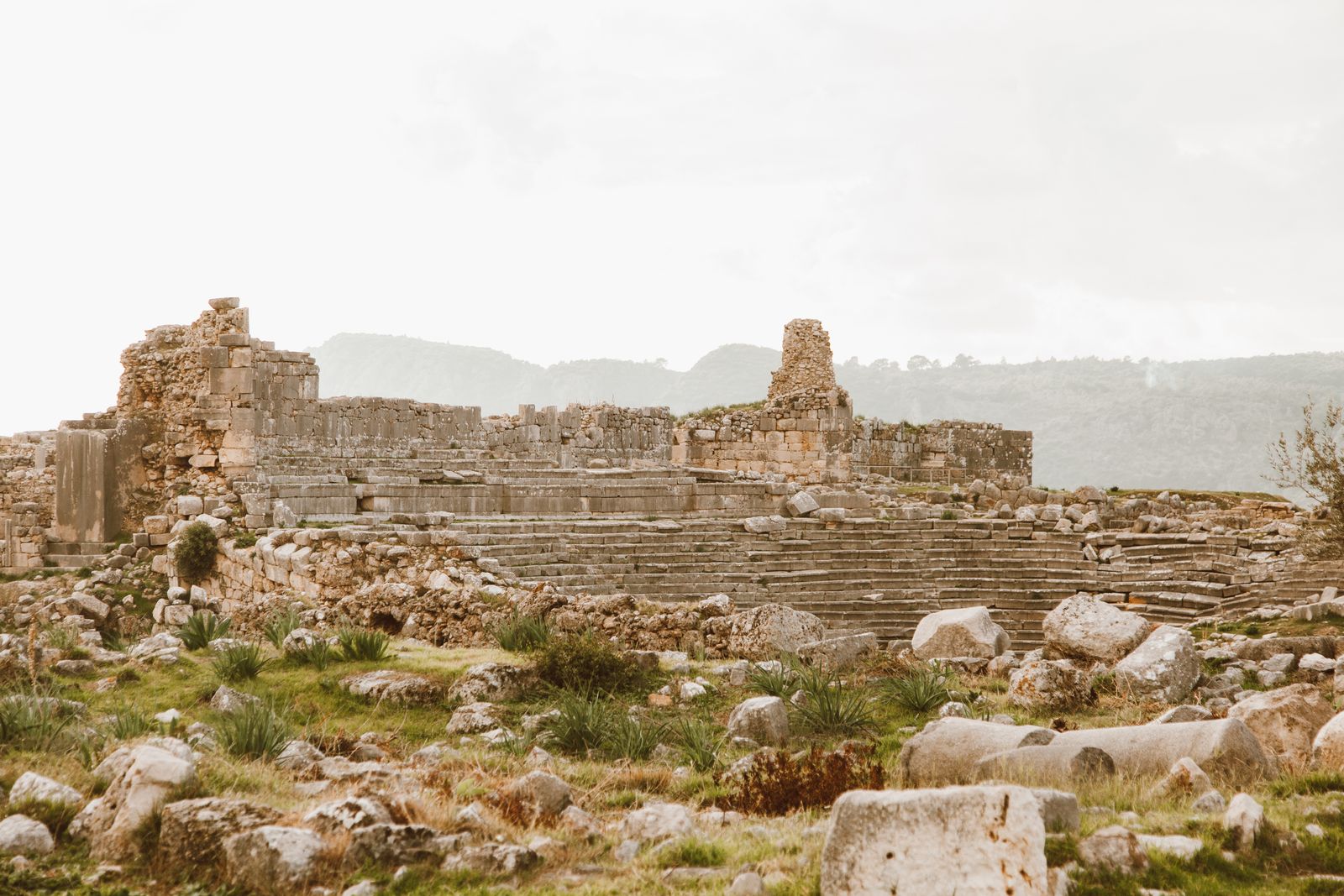
Göbekli Tepe was built on a limestone ridge in southeastern Turkey by communities living during the Pre-Pottery Neolithic, beginning around 9600 B.C. They cut T-shaped pillars from bedrock beside the settlement with flint and stone tools, moved them short distances using human power and equipment made from perishable materials, and raised them through coordinated work repeated across many generations. The oldest structures are roughly 6,500 years earlier than Stonehenge’s first earthwork and about 7,000 years earlier than its famous sarsen setting, according to the chronologies published by UNESCO and English Heritage.
The remarkable part is not that a heavy stone can move without a wheel. It is that people without metal tools, draft animals, pottery or writing could organize quarrying, food preparation, construction and repeated rebuilding on this scale. The surviving evidence explains much of the practical problem, although no wooden sledge, rope system or crew list has survived to show exactly how each pillar was moved.
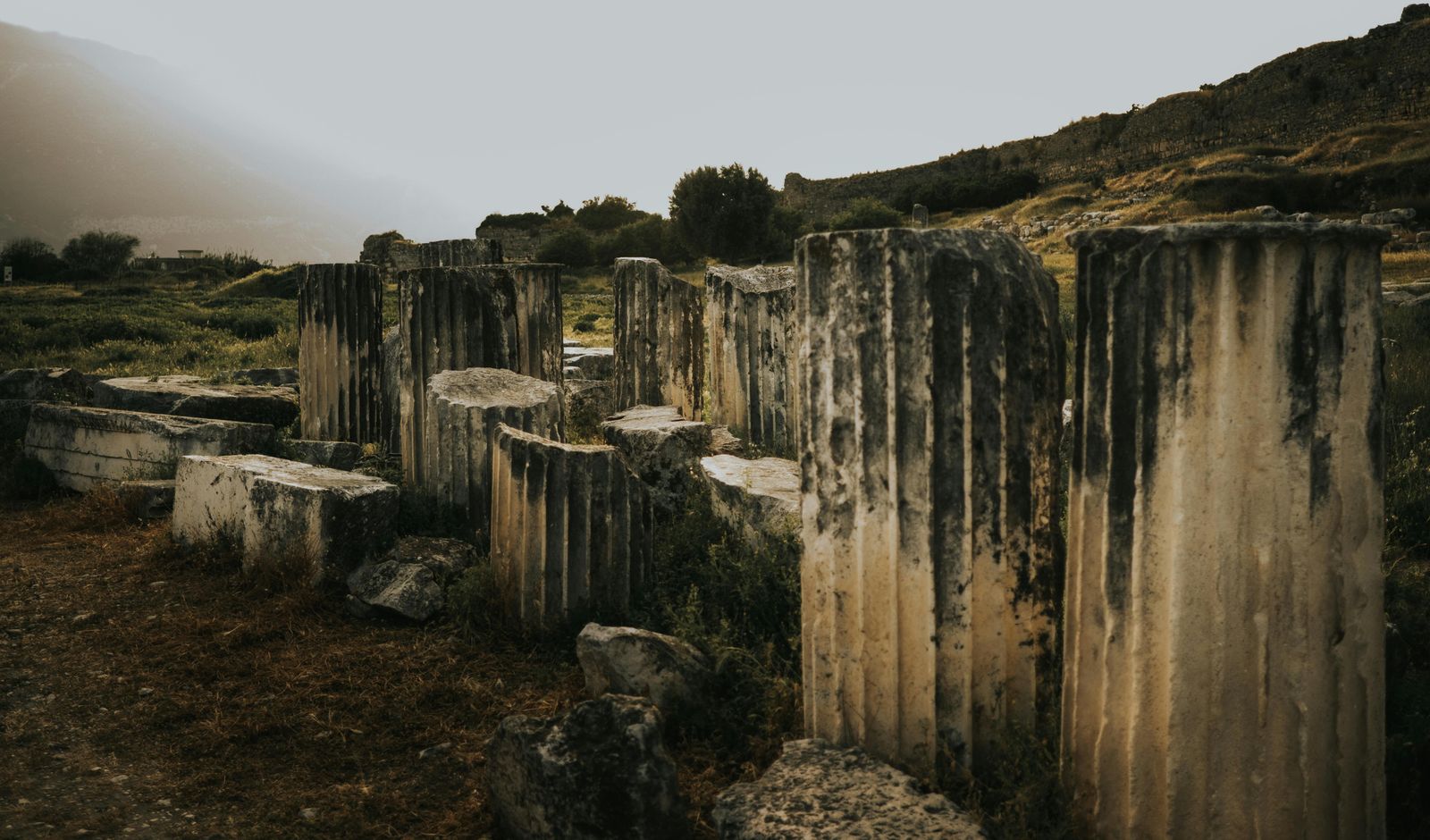
The quarry was almost under their feet
Göbekli Tepe occupies one of the highest points of the Germuş range, overlooking the Harran plain. The mound contains deep archaeological deposits, but the builders did not begin on a featureless tabletop. A recent reconstruction of the site’s Neolithic topography shows that stepped limestone bedrock strongly influenced where structures were placed and how sediment later accumulated around them.
The same ridge supplied the pillars. Quarry scars, partly cut blocks and unfinished monoliths remain visible across the plateau, allowing archaeologists to reconstruct the first stages of production. The limestone is relatively hard and crystalline, not unusually soft, but it can still be worked with flint picks.
Natural bedding planes made the job more manageable. Workers could cut channels around the outline of a pillar until they reached an existing separation in the rock, then probably use wooden beams or wedges to help release it. The German Archaeological Institute’s account of the quarrying and transport evidence identifies several abandoned pieces whose cracks and faults preserve evidence of this process.
The central pair of pillars in one of the best-known buildings rise about 5.5 metres and have been estimated at roughly eight to ten metric tons each. Even the most distant known quarry locations were about 500 metres from the mound, while others were less than 100 metres away. The builders still faced a difficult haul, but not the long-distance stone supply problem associated with some later monuments.
Moving a pillar without a wheel
No surviving trackway or transport rig has been found at Göbekli Tepe. Wooden sledges, planks, levers and plant-fibre ropes are plausible because comparable methods are known ethnographically and because all would have been available from the surrounding environment. They remain reconstructions rather than objects recovered from the site.
The most likely process involved many controlled movements rather than one spectacular pull. A pillar could be shifted on a sledge or timber bed, supported while the ground ahead was prepared, and gradually manoeuvred into position. Ramps, levers and temporary wooden supports could then have helped workers tip it upright, but archaeologists have not established one definitive lifting method.
The central pillars were placed in sockets or low pedestals cut into the bedrock, while smaller pillars were built into surrounding stone walls and benches. That arrangement shows that erection was planned as part of the building sequence. It also reduced the chance that a standing pillar would shift after the surrounding architecture was completed.
How many people took part remains uncertain. Early comparisons with modern megalith-moving projects encouraged estimates involving hundreds of labourers, but no archaeological evidence provides a precise headcount. The Göbekli Tepe Research Project concludes only that the heaviest work required careful coordination and more people than a single small foraging group could supply.
A settlement with special buildings
The early public image of Göbekli Tepe was an isolated temple where mobile hunters gathered before returning to the wilderness. That interpretation helped make the site famous, but continuing excavation has changed it. A German Archaeological Institute review of research at the World Heritage site describes a more complicated, multiphase settlement rather than a single-purpose sanctuary.
Excavators have now identified ordinary buildings alongside the monumental ones, as well as fire installations, food remains, water-management features and burials. Researchers therefore describe Göbekli Tepe as a settlement with a pronounced ritual component. Its large round and oval structures were special buildings within a lived-in landscape, not necessarily temples separated from everyday life.
The site’s discovery history is also less dramatic than the familiar story of archaeologists mistaking every pillar for a medieval grave marker. A joint Istanbul and Chicago survey recorded the hill in the 1960s because of the abundance of prehistoric flint on its surface, but the buried monumental architecture went unrecognized. Klaus Schmidt visited in 1994, connected the exposed limestone pieces with T-shaped pillars known from Nevalı Çori, and began excavations the following year.
Göbekli Tepe was extraordinary, but its builders were not working without any regional precedent. Early communities at Nevalı Çori, Çayönü, Jerf el Ahmar and other Upper Mesopotamian settlements also constructed buildings set apart by their layout or imagery. Ritual gathering itself was far older, as shown by evidence from a much earlier gathering space in Galilee; what stands out at Göbekli Tepe is the scale, density and sculptural ambition of the architecture.
Food made the work possible
Animal bones recovered at the site are overwhelmingly from wild species. Gazelle dominate much of the assemblage, accompanied by wild cattle, boar, wild sheep and numerous birds. Cut marks, burning and deliberate breakage show that animals were butchered, cooked and consumed in substantial quantities.
These remains support the idea that communal eating helped bring people together. A study in Antiquity connected large-scale food and drink preparation with gatherings at the site. It is still impossible to assign every bone deposit to a construction feast, especially when buildings and fills accumulated through numerous episodes.
Plants mattered just as much as meat. Researchers studying more than 7,000 grinding implements found evidence for extensive cereal processing, including the preparation of food for relatively immediate consumption. The PLOS One study concluded that large grinding-tool assemblages were compatible with work feasts and other forms of communal food preparation.
Klaus Schmidt proposed that the demand created by recurring gatherings may have helped push communities toward more reliable food production. The chronology makes a connection plausible because Göbekli Tepe was used during the broader transition from foraging to cultivation and herding. It does not prove that monument building caused agriculture, however, and current evidence points to a long regional process rather than one sanctuary abruptly inventing farming.
What the pillars and bones do not say
The T-shaped pillars appear to represent stylized people. Some bear arms, hands, belts and loincloths, while foxes, snakes, boars, birds and other wild animals cover their broader surfaces. These figures reveal a complex symbolic world, but no inscription identifies the beings represented or explains what happened inside the buildings.
Human remains provide another tantalizing but incomplete clue. Modified cranial fragments recovered from the site’s deposits show that at least some skulls received deliberate treatment after death. The evidence, published in Science Advances, does not confirm the older suggestion that intact graves lie beneath the floors of the monumental buildings.
The structures were not all neatly and deliberately buried in single ceremonial events. Current project research identifies a more complicated mixture of human dumping during rebuilding, gradual accumulation and sediments displaced by slope movement or other natural processes. Several filling events occurred at different times, so the mound visible today is the product of construction, repair, abandonment and landscape change extending across many centuries.
Why Stonehenge is useful, and misleading
Stonehenge makes the age of Göbekli Tepe immediately comprehensible, but the two monuments belonged to different worlds. Stonehenge’s first earthwork was created around 3000 B.C., and its great sarsen stones were raised around 2500 B.C. Its builders belonged to established farming communities within a wider ceremonial landscape that also included settlements, timber monuments and features such as the ring of shafts near Durrington Walls.
Ancient DNA adds a distant connection without establishing a direct cultural line. Research published in Nature Ecology & Evolution found that Britain’s Early Neolithic population descended largely from farming groups whose deeper ancestry lay around the Aegean and who reached western Europe through Mediterranean and continental routes. That does not make the people of Stonehenge descendants of Göbekli Tepe’s builders in any specific archaeological sense.
Geophysical surveys indicate that numerous special buildings remain beneath Göbekli Tepe, while only a small portion of the mound has been excavated. The wind still crosses a ridge shaped by bedrock, collapsing walls, rebuilding and thousands of years of accumulated sediment. The stones explain how people without wheels or metal could construct something enormous, but the reasons they returned, rebuilt and carved the same dangerous animals into human-shaped pillars remain largely under the earth.
