

In the spring of 1847, in a maternity ward at Vienna General Hospital, a Hungarian obstetrician named Ignaz Semmelweis ordered every doctor and medical student entering the delivery room to scrub their hands in a basin of chlorinated lime solution. Within twelve months, the death rate among new mothers in his ward fell from around 18% to roughly 2%. It was one of the largest reductions in mortality ever produced by a single intervention in a hospital, and the medical establishment refused to accept it.
Semmelweis died 18 years later in an asylum outside Vienna, beaten by guards, from an infected wound on his hand.
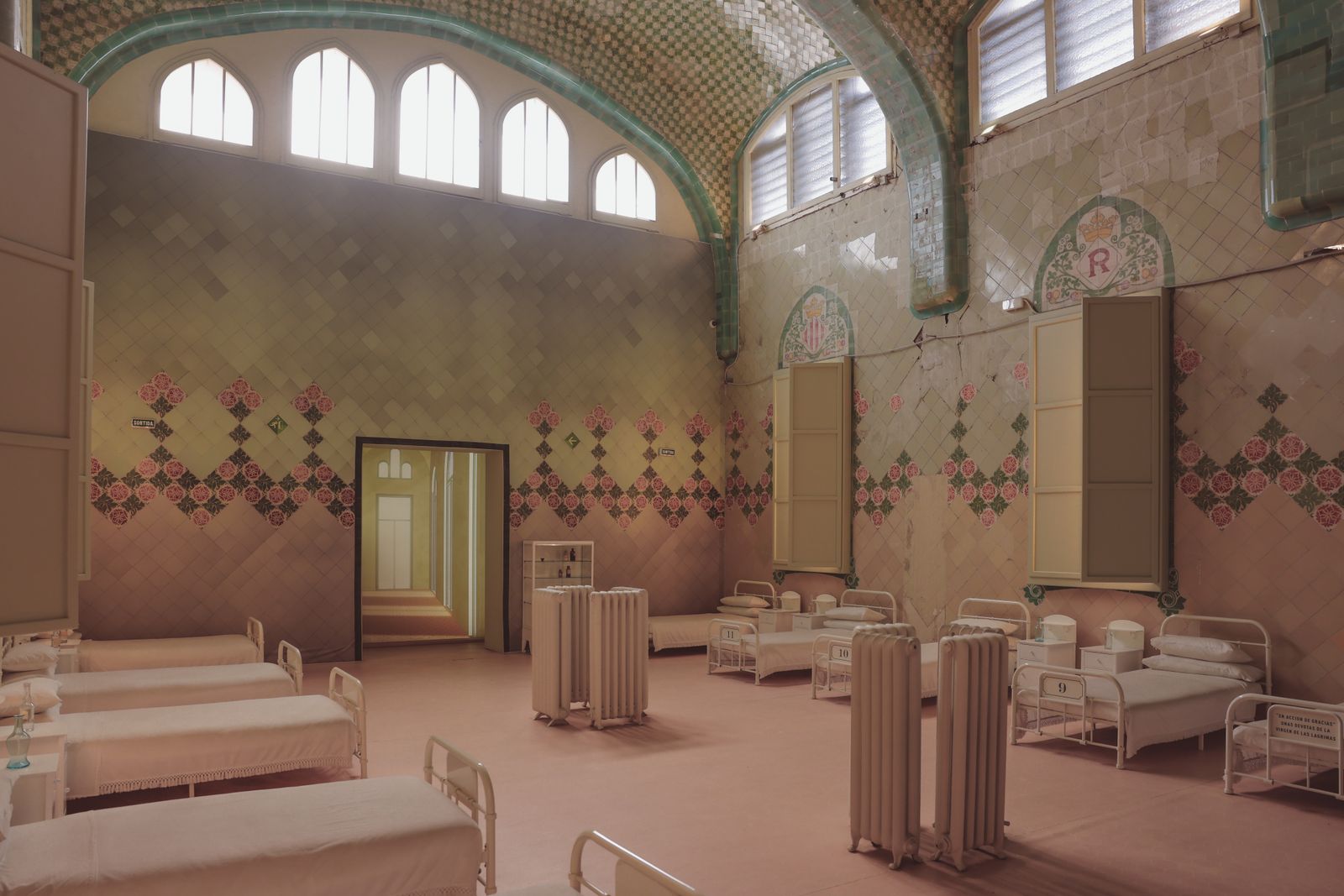
Two wards, one hospital, wildly different odds
The Vienna General Hospital ran two maternity clinics side by side. Poor women arrived at the door and were admitted on alternating days — Monday to the First Division, Tuesday to the Second, and so on. The assignment was essentially random. The outcomes were not.
The First Division, staffed by physicians and medical students, had a maternal death rate that hovered around 10% and sometimes spiked far higher. The Second Division, staffed by midwives and their trainees, ran at roughly 2 to 4%. A modern review of Semmelweis’s records puts the doctors’ clinic at roughly three times the mortality of the midwives’. The gap was so notorious that women begged to be sent to the midwives’ ward. Some gave birth in the street outside the hospital rather than be admitted to the doctors’ side, and the street births had lower mortality than the ward.
The killer was puerperal fever — childbed fever — a bloodstream infection that we now know is caused by Streptococcus pyogenes. In the 1840s, no one knew what caused it. The reigning theory was miasma: bad air, foul vapours, atmospheric disturbances. Doctors blamed the season, the emotional state of the mothers, overcrowding, even the presence of male doctors as somehow disturbing to modesty.
A scalpel wound solves a mystery
Semmelweis, who had taken the obstetrics job in 1846 after being rejected from more prestigious specialties, spent months eliminating variables. He rearranged the position of the beds. He changed the ventilation. He altered which direction the priest walked when delivering last rites. Nothing moved the numbers.
The break came in early 1847, when his friend and colleague Jakob Kolletschka cut his finger on a scalpel during an autopsy of a woman who had died of puerperal fever. Kolletschka developed a raging infection and died within days. When Semmelweis read the autopsy report, he recognised the pathology — pleurisy, peritonitis, meningitis — as identical to what he had been seeing in the postpartum women in his ward.
Kolletschka had been killed by the same thing killing the mothers. And the mechanism was suddenly, horribly obvious. Doctors and students at the Vienna General began their mornings in the autopsy room, dissecting the previous day’s dead, and then walked upstairs to perform pelvic examinations on women in labour. They wiped their hands on their aprons between corpses and cervixes. Gloves would not enter routine surgical practice for another half-century.
Midwives, by contrast, never touched cadavers. They were forbidden from the autopsy theatre.

The chlorinated lime basin
Semmelweis reasoned that some invisible “cadaverous particles” were being carried on doctors’ hands into the birth canal. Ordinary soap and water did not remove the smell of the dissection room, so he picked chlorinated lime — calcium hypochlorite — a strong disinfectant that stripped the odour. He had first tried plain soap, water and a nail brush before settling on chlorine because it was the only thing that removed the smell of the dead. In 1847, he mandated that every physician and student wash their hands in the chlorine solution before entering the First Division.
The results were immediate. In the monthly mortality tables Semmelweis kept, deaths in the First Division dropped from 18.27% in April 1847 to 2.2% that June. By 1848, entire months passed with no maternal deaths at all. The doctors’ ward, for the first time in a generation, was safer than the midwives’.
Semmelweis had, without knowing anything about bacteria, invented antisepsis. Louis Pasteur would not publish his germ theory until the 1860s. Joseph Lister would not begin using carbolic acid in surgery until 1867. Semmelweis was working two full decades ahead of the science that would eventually vindicate him.
Why the establishment rejected him
The Viennese medical faculty did not celebrate. They were offended. The implication of Semmelweis’s finding was unbearable: doctors, gentlemen of learning and status, had been killing the women they were supposed to save. Part of the rejection, as historians have noted, was exactly that the theory blamed the physicians themselves for the deaths — the notion that gentlemen of their standing could be carriers of disease was intolerable.
Semmelweis did not help his own case. He refused, for years, to publish his findings formally. He communicated through letters and lectures, often furious ones. His chief at the Vienna hospital blocked his reappointment in 1849. Semmelweis returned to Hungary, took a post at a hospital in Pest, and produced the same drop in mortality there. Still the wider profession would not budge.
When he finally published his book in 1861, it was dense, meandering, and laced with rage. He wrote open letters denouncing his critics as murderers, and branded one prominent opponent, the Würzburg obstetrician Friedrich Wilhelm Scanzoni, a “medical Nero.” The tone made him easier to dismiss.
The asylum
By the mid-1860s Semmelweis was unravelling. Colleagues described mood swings, drinking, and outbursts. Whether he was suffering from early-onset Alzheimer’s, tertiary syphilis, or a nervous collapse from years of watching mothers die while being called a crank — historians still argue. In 1865, a colleague lured him to a Viennese asylum under the pretence of touring a new institution, his own family by then convinced he had lost his mind. Once inside, he was committed against his will.
He tried to leave. Guards beat him. Two weeks later, in August 1865, he was dead at 47. The autopsy found extensive injuries and a gangrenous wound on his right hand — very likely the same kind of infection he had spent his life trying to prevent. As Africa Check documented in a review of the circumstances, the popular claim that he was institutionalised specifically because of his handwashing ideas is an oversimplification — his mental state had deteriorated for reasons that may or may not have been connected — but the timing, and the way his profession had treated him, is impossible to separate from the collapse.
He was buried in Vienna with almost no ceremony. A handful of colleagues attended. His own hospital did not send a delegation.
What he was right about, and how long it took
Within a few years of Semmelweis’s death, the picture changed completely. Pasteur showed that microorganisms caused fermentation and disease. Lister, reading Pasteur, began spraying carbolic acid in operating theatres in Glasgow and cut post-surgical mortality dramatically. Robert Koch identified the specific bacteria behind anthrax, tuberculosis, and cholera. By 1890, germ theory was mainstream. Handwashing between patients was becoming routine, not because Semmelweis had convinced anyone, but because the biology had finally caught up to what he had inferred from a scalpel wound.
His name was rehabilitated slowly. Streets, hospitals, and eventually a medical university in Budapest were named after him. Today his portrait hangs in the very institution that once expelled him. The World Health Organization now runs a hand hygiene day every 5 May — a date it chose to stand for the five fingers on each of two hands, 5/5, rather than to mark Semmelweis, though he happened to set out his first chlorine basins in the May of 1847.
The lesson has not fully stuck even now. Healthcare workers in wealthy countries still fail to wash their hands between patients at concerning rates. Compliance in hospitals remains a persistent challenge. Every study of the intervention — from Vienna in 1847 to the SARS wards of Hong Kong in 2003 to the COVID hospitals of 2020 — has confirmed the same thing: the single most powerful tool against nosocomial infection is soap, water, and a person willing to use them.
What makes the Semmelweis story keep surfacing — it was retold heavily during the pandemic and again in coverage of hospital-acquired infections — is not just the tragedy of the man. It is the shape of the problem. A finding that is empirically correct, cheap to implement, and enormously beneficial, blocked for two decades by professional pride and by the absence of a theory that could explain why it worked.
Terra Daily has written before about accidental scientific breakthroughs that took years to be accepted, including William Perkin’s accidental synthesis of the first aniline dye in 1856, which happened less than a decade after Semmelweis’s basins went up in Vienna. The 19th century was full of correct answers arriving without the machinery to prove them.
Semmelweis’s numbers — 18% to 2%, in a single ward, in a single year, in a hospital that had been burying its patients by the thousand — remain one of the cleanest natural experiments in the history of medicine. He was 29 when he ran it. He was 47 when he died in the asylum. Between those two dates, hundreds of thousands of women died of childbed fever across Europe in hospitals that could have prevented it by copying a Hungarian obstetrician nobody wanted to listen to.
The basins are still there. So is the chlorine. So, mostly, is the resistance.
