
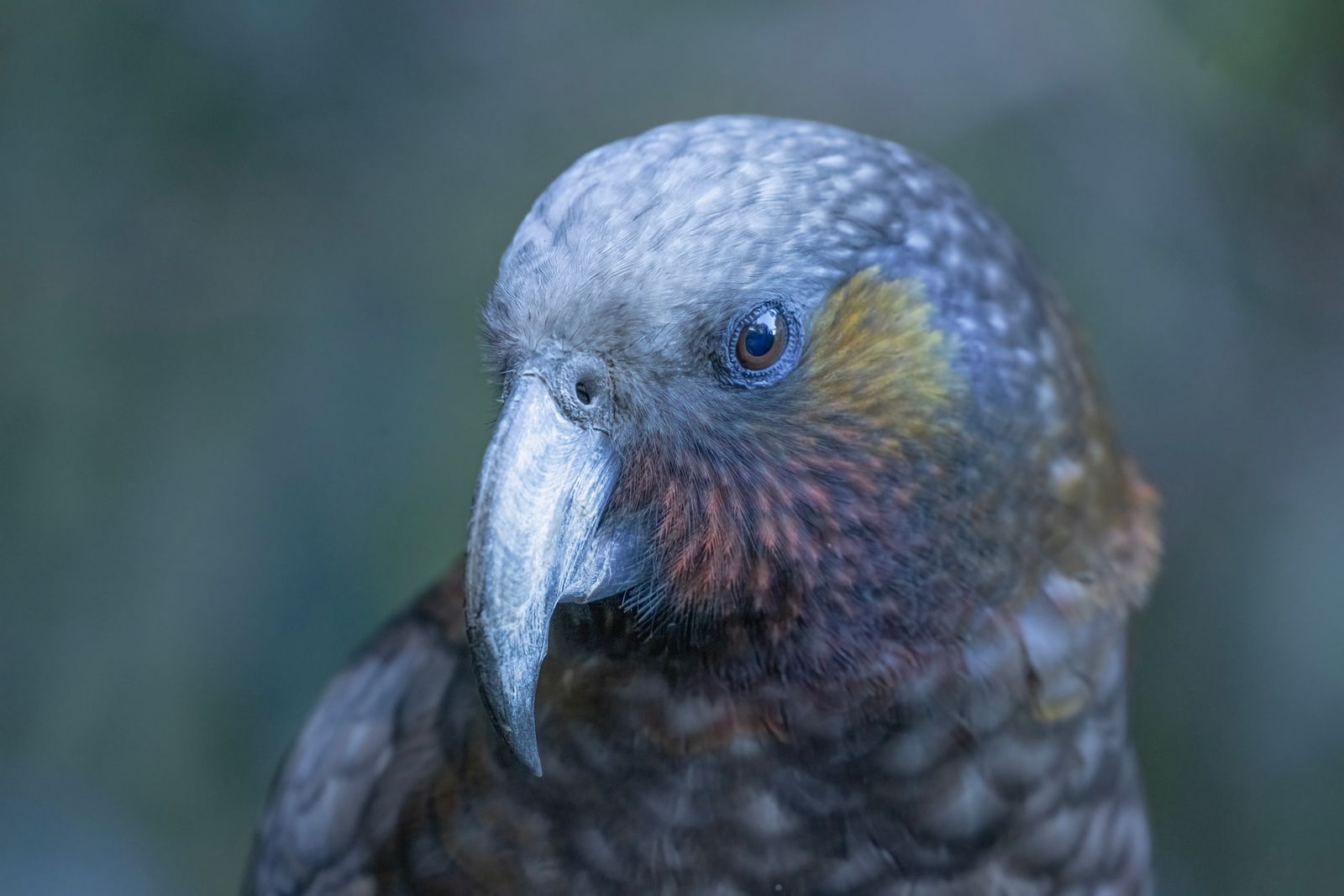
On a windless night on Whenua Hou/Codfish Island, three kilometres off the north-west coast of New Zealand’s Rakiura/Stewart Island, a green parrot the weight of a small cat freezes in the beam of a ranger’s headlamp. It is a kākāpō, the world’s only flightless parrot, and the only reason it is standing on that particular patch of moss is that every introduced mammal on the island has been methodically trapped, poisoned and monitored out of existence. There were 236 adult kākāpō alive at the start of 2026, and every one of them lives on a predator-free island or in a fenced sanctuary.
The mechanism is not complicated to describe and is brutally difficult to execute: remove the mammals, then defend the boundary forever. New Zealand’s Department of Conservation now counts more than 110 predator-free offshore islands, built up over sixty-odd years since the world-first rat clearance of Maria Island in 1960, and now folded into the national Predator Free 2050 target. The results, catalogued across peer-reviewed papers, agency reports and long-running seabird counts, describe something close to ecological time travel — and the seas around the cleaned islands are changing too.
The stowaways that rewrote a country
New Zealand spent millions of years as a land of birds. With no native land mammals apart from a couple of bat species, birds filled the niches that rodents, deer and cats occupy elsewhere. Some became flightless. Some, like the giant wētā — crickets heavy enough to outweigh a mouse — grew into the ecological role of small rodents.
Then ships arrived. Polynesian voyagers brought the kiore (Pacific rat) centuries ago. European vessels brought ship rats, Norway rats and house mice. Stoats were released deliberately in the 1880s to control rabbits, a decision that ranks among the worst wildlife interventions in the country’s history. Within a few decades, ground-nesting birds were collapsing across both main islands.
By the mid-twentieth century the kākāpō was down to remnant pockets. Between 1980 and 1997 the survivors found on Rakiura were moved to three offshore sanctuaries — Whenua Hou/Codfish, Maud and Te Hauturu-o-Toi/Little Barrier. The islands were free of cats and stoats, but rats still took eggs and chicks, and by 1995 the total population had fallen to 51 birds. The conservation service made the decision that would define the next half-century: clear the islands of everything, not just the obvious killers.
How you clear an island
Eradication is a strange, patient science. On a small rocky outcrop, a team can trap and poison every last rodent in a matter of weeks. On something the size of Rangitoto-Motutapu it takes helicopters, GPS-guided bait drops, sniffer dogs and years of follow-up monitoring before a single “predator-free” declaration is signed.
The rulebook is unforgiving. Miss one pregnant rat and the population rebounds within a season. Miss one stoat and every seabird chick on the island is at risk. Teams typically wait at least two full years of zero detections — no droppings, no chew marks on wax tags, no camera hits — before an island is officially declared clear.
New Zealand has applied this protocol to island after island: Kapiti, Tiritiri Matangi, Little Barrier, Whenua Hou, Maud, Motuara, Ulva and dozens of smaller sisters. The most ambitious chapter yet is a three-project programme on Maukahuka/Auckland Island, Rakiura/Stewart Island and the Chatham Islands, announced in February 2025 and estimated to cost NZ$202 million in total, of which the government has so far committed NZ$54 million. It is run with Ngāi Tahu, Moriori and Ngāti Mutunga o Wharekauri, whose ancestral relationship with those islands shapes the restoration plan.
What comes back first
Recovery on a cleared island follows a rough sequence, and it is fast. In the first breeding seasons after eradication, ground-nesting seabirds that had been clinging to the fringes — sooty shearwaters, diving petrels, fairy prions — begin producing chicks that survive to fledge. Burrows that had been silent for decades fill with the wheezing calls of returning adults.
The kākāpō now breed across three predator-free islands: Whenua Hou, Pukenui/Anchor and Te Kākahu/Chalky. Every living bird wears a backpack transmitter and has had its genome sequenced. After a four-year gap, the 2026 rimu mast triggered the largest breeding season ever recorded: the hundredth chick of the season hatched in March, against a previous record of 73 fledglings in 2019. Chicks are only added to the official population count at 150 days.
On Maud Island in the Marlborough Sounds, Cook Strait giant wētā introduced in 1976 now clamber across leaf litter at night. They reach around seven centimetres and roughly 27 grams — the weight of a house sparrow, in an insect — and they survive nowhere a rat can reach, as DOC’s own threatened wētā recovery plan sets out.
Tuatara, whose lineage split from other reptiles more than 200 million years ago, are breeding again on islands where they had long since stopped. Little spotted kiwi, gone from the mainland wild, persist on island sanctuaries where early conservationists moved founding populations before stoats could reach them.
The sea notices
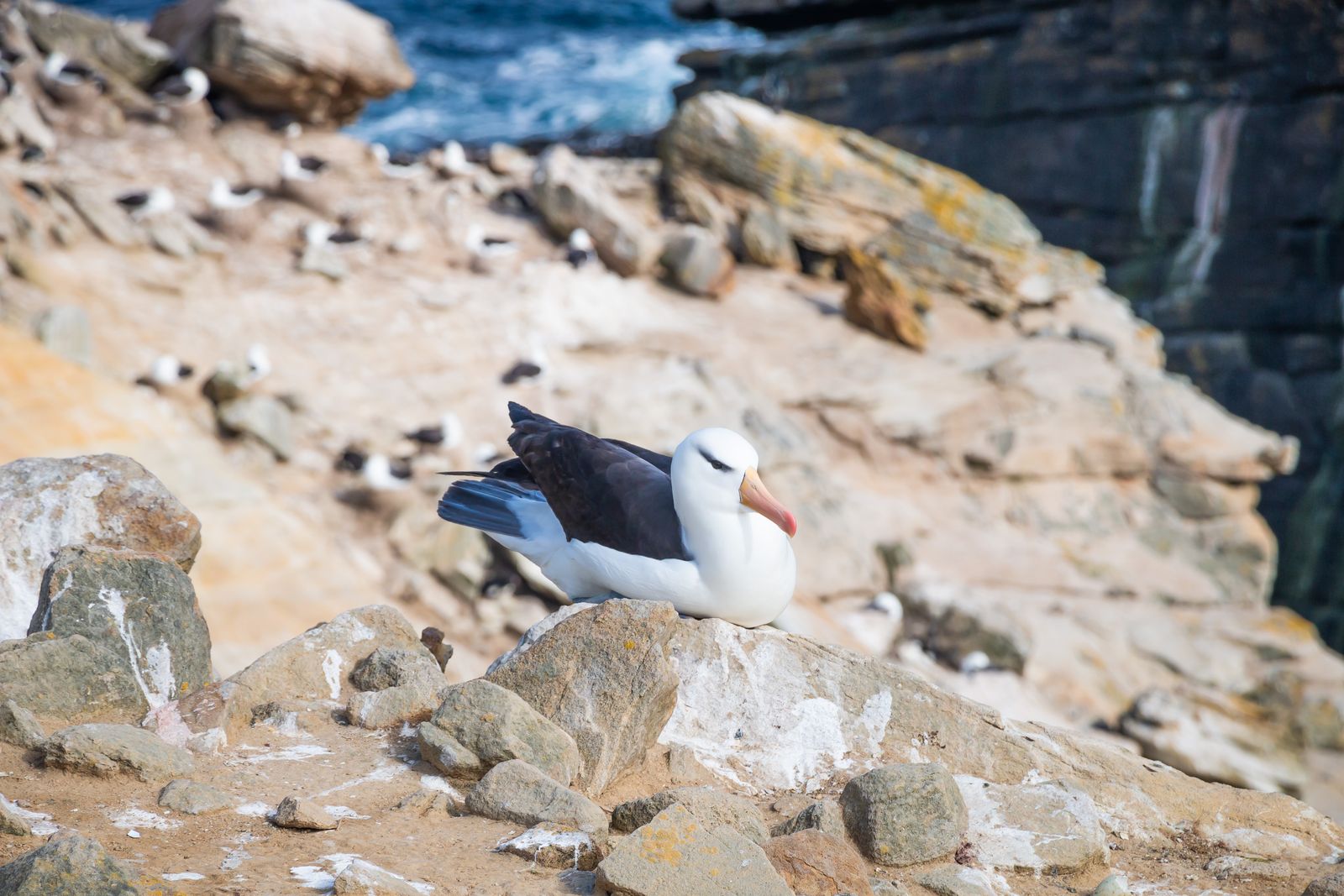
The most surprising finding of the past decade is that clearing rats from an island changes the ocean around it. Seabirds are nutrient pumps. They feed at sea, roost on land, and drop guano rich in nitrogen and phosphorus onto the soil, where rain washes it into the reef.
The clearest evidence comes from the Chagos Archipelago in the Indian Ocean, where some islands carry rats and others never did. A team led from Lancaster University found that seabird densities were 760 times higher on the rat-free islands, with nitrogen deposition rates 251 times higher, and that the signal showed up in soils, shrubs, algae, sponges and reef fish alike.
A follow-up study published in Ecology in July 2026 by Lancaster and the University of Texas traced that signal into the smallest reef animals. On reefs beside rat-free islands, cryptobenthic fish such as gobies and triplefins carried more than five times the biomass of small invertebrates; beside rat-infested islands the two were near parity, with coral crabs, porcelain crabs and snapping shrimp filling the gap. Predatory fish shifted accordingly, eating fish near seabird-rich islands and armoured invertebrates near seabird-poor ones. The food web is not merely thinner without seabirds. It is wired differently.
Reinvasion, and a protocol that travels
The recovery is not uniform, and it is not permanent without vigilance. A single pregnant rat swimming from a moored yacht, a stoat crossing a narrow channel on driftwood, a mouse hidden in a tramper’s pack — any of these resets the clock. Islands like Rangitoto-Motutapu, connected to Auckland by ferry traffic, run permanent biosecurity checkpoints with detector dogs working the queue.
Some species return on their own. Others are helicoptered in, one bird at a time. Kākāpō chicks are still hand-reared in difficult seasons. South Island saddleback, robins and hihi have been translocated across dozens of island populations to build genetic redundancy against a single catastrophe wiping out a colony.
And “150 years ago” is a rhetorical marker rather than a target. The ecosystems returning to these islands are not identical to those that existed before European contact. Some pollinators are gone for good. Some plant communities have shifted. What is being rebuilt is a functional analogue — birds on the ground, wētā in the leaf litter, tuatara in the burrows, seabird guano in the soil — rather than a museum diorama.
The protocol itself has become the global template. In the South Atlantic, Falklands Conservation secured a £3 million Darwin Plus grant, announced in early 2026, for the New Island Restoration Programme, which aims to remove feral cats, black rats, house mice and rabbits from a reserve holding the world’s largest slender-billed prion colony. The methods are the New Zealand ones: helicopter bait drops, GPS grids, multi-year monitoring.
The same playbook cleared South Georgia, where baiting ran in phases from 2011 to 2015 and the island was declared free of rats and mice in May 2018 across 108,723 hectares — more than eight times the area of the previous record holder, Macquarie Island. It has since run on Palmyra Atoll in the central Pacific and on Antipodes Island in New Zealand’s own subantarctic waters. In each case seabird numbers rebounded within a few breeding seasons, and in each case the monitoring continues indefinitely.
Terra Daily has followed the same logic in freshwater systems, from a New England river where a dam standing since 1837 came out in 1999 and alewives and shad moved back upstream, to the Dutch Room for the River programme, which unbuilt levees at more than thirty locations. The principle is identical: identify the thing that broke the system, remove it, and let the biology do the rest.
The sound of a rebuilt night
The New Zealand islands are unusual in how completely they test that principle. Because they are surrounded by water, an eradication has hard boundaries. Because the native fauna evolved in mammalian isolation, the removal effect is enormous. And because the country has been at it since 1960, there are now second- and third-generation recovery datasets — birds whose great-grandparents were among the first founders on an island cleared before the Department of Conservation existed.
Rangers who spend nights on cleared islands describe the acoustic change as the most striking part of the work. On a mainland forest floor the soundtrack is muffled: possums crashing through canopy, rats scuttling in leaf litter, the occasional morepork. On a fully cleared island in the middle of the breeding season, the ground itself becomes noisy. Petrels crash-land through the canopy at dusk and shuffle into burrows. Kiwi call across ridgelines. Wētā rasp from the undergrowth.
Above all of it sits the kākāpō’s boom, a low resonant pulse the males produce from bowls they dig into the earth, carrying for kilometres through still air. In 1995 there were 51 birds left to make that sound. In the 2026 season, 78 females nested across three islands and more than a hundred chicks hatched. It is not the sound of an ecosystem restored to what it was in 1770. It is the sound of one being coaxed, island by island, back toward a version of itself that had gone quiet.
