
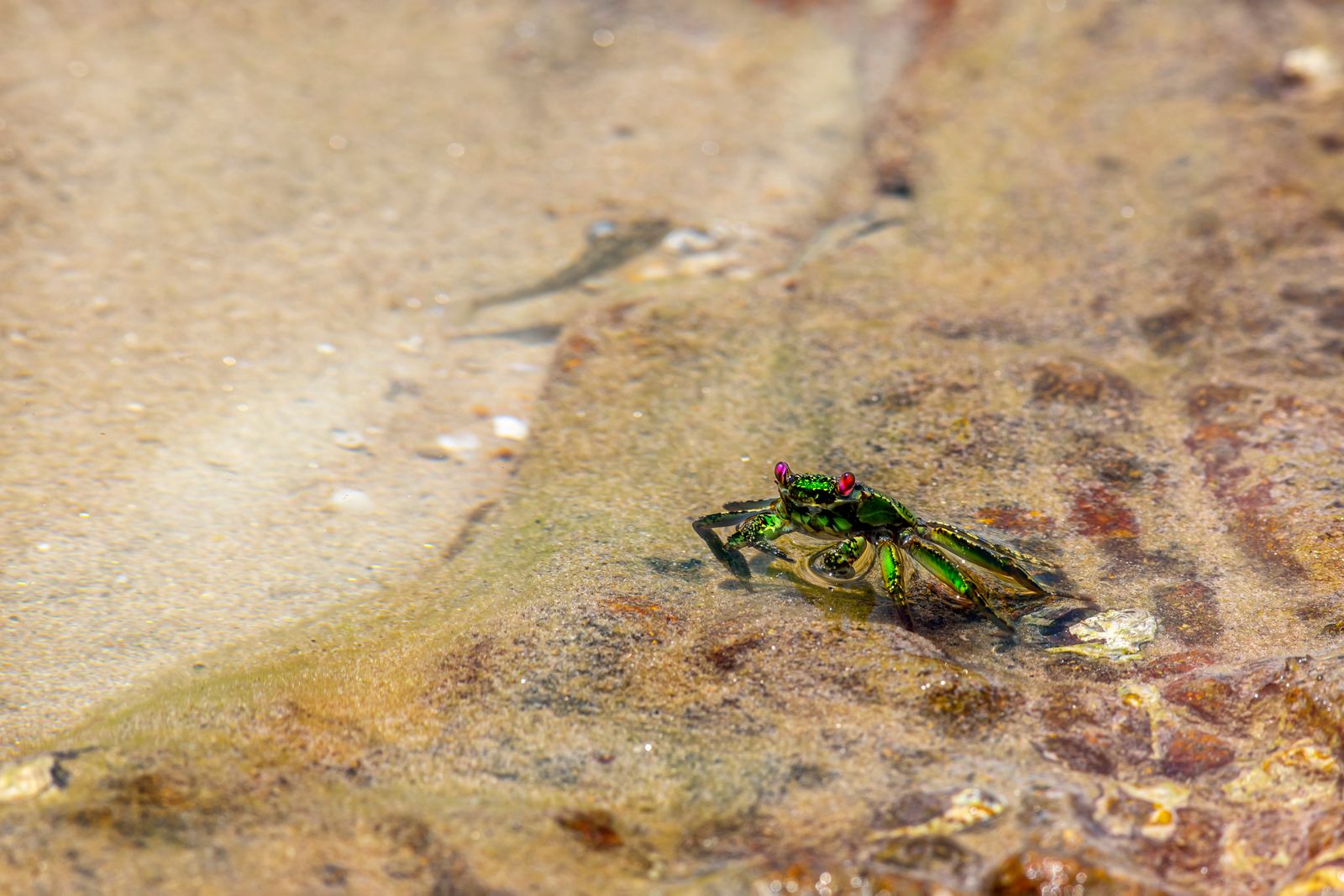
On a shore crab scuttling across a British tide pool, the strangest thing about it is often invisible. Under the carapace, threaded through muscle and gut and nerve cord, runs a network of pale rootlets belonging to another animal entirely — a barnacle called Sacculina carcini that has dissolved most of its own body to live inside its host. The crab still walks, still feeds, still fights other crabs. It just no longer belongs to itself.
Sacculina is a parasitic barnacle in the group Rhizocephala, and its life story is one of the most extreme examples of biological hijacking on the planet. It infects a substantial proportion of shore crabs in some populations. Once inside, it grows a root system through the crab’s organs, sterilises the host, and — if the crab is male — chemically feminises it until the animal behaves like a female tending a brood pouch. Except the brood pouch isn’t a brood pouch. It’s the parasite.
A barnacle that doesn’t look like a barnacle
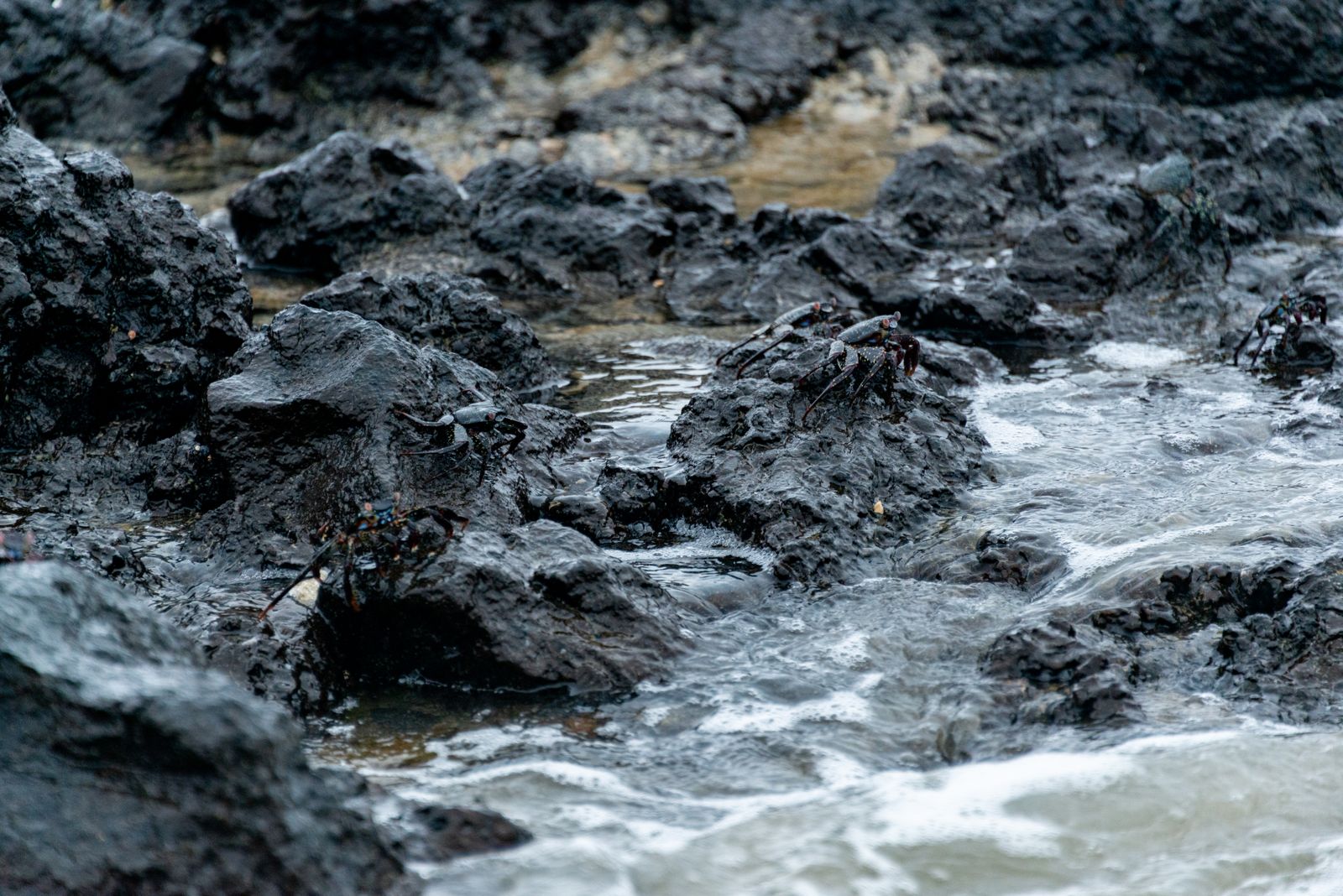
If you pictured a barnacle, you probably pictured the volcano-shaped white cones on a pier piling. Sacculina shares their ancestry — the DNA is unmistakably crustacean — but almost none of the anatomy. As a free-swimming larva it looks conventional enough: a tiny cyprid, drifting in the plankton, hunting by scent for a freshly moulted crab whose new shell has not yet hardened.
The female cyprid finds a soft joint, usually at the base of a bristle, and injects a slug of undifferentiated cells directly into the crab’s body cavity. Everything the barnacle was on the outside — shell, swimming legs, feeding apparatus — is left behind. What enters the crab is essentially a seed.
The seed grows. It sends out fine threads that branch through the crab’s tissues, wrapping the digestive tract, reaching into the thoracic ganglion, feeding on hemolymph. Biologists call this the interna. In a heavily infected crab, the rootlets can weigh more than the crab’s own gonads and liver combined.
The rewiring
The rootlets are not just plumbing. They are a chemical interface. A study in Scientific Reports mapping the boundary between rhizocephalan rootlets and crab nerve tissue identified specialised structures at the parasite-host nervous system interface that appear designed for direct signal exchange — points where the barnacle can dose the crab’s nervous system with molecules that alter behaviour.
The first thing the crab loses is its own reproductive future. Male crabs stop producing sperm. Their testes atrophy. Their bodies begin shifting toward a female phenotype — a broader abdomen, a wider apron of the sort female crabs use to shelter eggs. An infected male crab is not merely castrated. It is permanently reshaped into something closer to a functional female — a female whose sole biological role is now to protect and ventilate the parasite’s eggs.
The crab doesn’t know any of this. From its point of view — insofar as a crab has one — it is doing exactly what a mother crab should be doing.
The externa, and the fake egg sac
After months of growth inside, the parasite is ready to reproduce. A soft yellow-brown sac erupts through the crab’s abdomen at exactly the spot where a female crab would carry fertilised eggs. This is the externa, the reproductive body of the barnacle. It sits in the crab’s grooming reach, in the crab’s blood supply, in the crab’s care.
The crab treats it as its own brood. It grooms the sac with its rear legs. It fans oxygenated water over it. When the sac is ready to release larvae, the crab performs the same rhythmic abdominal pumping a healthy mother crab uses to launch her young into the current — sending clouds of Sacculina larvae, not crab larvae, out to find new hosts.
Male Sacculina larvae, meanwhile, home in on the externa and inject themselves into it, taking up residence as tiny sperm factories inside the female barnacle. The whole apparatus — feminised crab, dangling sac, resident males — is a mobile reproductive machine, and the crab is the machine’s chassis.
How the barnacle wins the biochemistry war
The mechanism behind the behavioural takeover is still being untangled, but the outlines are clear. Crab moulting, growth, and reproduction are governed by hormones released from a cluster of neurosecretory cells in the eyestalk. The parasite’s rootlets appear to interfere with this axis, suppressing moulting hormones so the crab stops shedding its shell — which would otherwise slough the externa off — and shifting the sex hormone balance toward the female pattern.
A review of emerging diseases in cultivated crabs published in Frontiers in Marine Science lists rhizocephalan infection among the most economically damaging conditions in coastal crab fisheries, precisely because infected animals stop growing and stop reproducing. A crab that would have shed its shell three times a season doesn’t shed at all. A male that would have fathered thousands of offspring fathers none.
Some crabs survive the encounter. Fieldwork has documented castrated males regenerating their testes after the parasite finishes its cycle and drops off, leaving only a scar on the abdomen. But by then the crab has spent months, sometimes more than a year, as a nursery.
Not the only body-snatcher
Rhizocephalans are one of several parasite lineages that manipulate host behaviour with disturbing precision. Horsehair worms drive crickets to drown themselves. Ophiocordyceps fungi steer ants to bite onto leaf veins before erupting from their heads. Toxoplasma gondii makes infected rats less afraid of cat urine. A survey of body-snatching parasites compiled by Mental Floss places Sacculina among the most complete examples: the host is not just redirected, it is repurposed.
Rhizocephalans have thrown away so much anatomy in the service of parasitism that for centuries taxonomists could not agree whether they were even crustaceans. Only their larvae, which briefly wear the standard crustacean uniform of jointed limbs and segmented body, give the game away.
The ecological footprint of a body-snatcher
Sacculina is native to European waters, and along the coasts of Britain, France, and the Netherlands it is a normal, if grim, part of the shore crab’s life. Where it becomes interesting to ecologists is where the shore crab has invaded. Carcinus maenas, the European green crab, is one of the most successful marine invasive species on Earth, having established populations on multiple continents.
An uninfected population of green crabs grows faster and reproduces harder than an infected one. The possibility of using Sacculina as a biological control agent in places where invasive crabs are eating their way through native shellfish has been considered, though the risk that the parasite would jump to native crab species has kept such plans from being implemented.
Which is a strange thought. Somewhere in a government risk assessment, in a spreadsheet of possible interventions, there might hypothetically be a line item for deploying castrating barnacles as a control measure.
What the crab experiences
It is tempting to describe an infected crab as a zombie, and popular writeups often do. But the crab is not a shambling corpse. It is a functioning animal doing a plausible version of crab life — foraging, hiding under stones, waving its claws at rivals. It just happens to be doing all of that in service of another organism’s reproduction.
The manipulation is so thorough that the infected crab and the parasite behave like a single organism, with the crab’s genome expression pattern shifting toward what the parasite requires. Rearing broods it did not lay. Defending eggs that are not its eggs. Grooming a sac of larvae that will never grow into crabs.
The wider ecology of these hidden manipulations is beginning to attract more attention as marine parasitism becomes a lens on ocean health.
The scar
When the parasite finally exhausts itself and the externa withers away, the surviving crab is left with a small pale mark on the underside of its abdomen. If it is a male whose testes have regenerated, it can mate again. If it is a female whose ovaries have shut down, it may recover fertility, or it may not.
The crab does not remember any of it. Crabs do not remember in the sense we mean. But the scar is a record — of months spent tending eggs that weren’t hers, of a body remodelled by an animal that entered as a droplet of cells, of a nervous system briefly on loan to a barnacle that never bothered to grow a shell.
On the next low tide, the crab goes back under a rock, and the tide pool refills, and somewhere in the water column a new generation of cyprids is drifting, sniffing for the chemical signature of a freshly moulted host.
