

Israel grows tomatoes, peppers, cucumbers and Medjool dates in the Negev and the Arava on a fraction of the water its neighbours spend, and the answer is not one technology but five of them stacked: drip irrigation, treated sewage, brackish groundwater, desalinated seawater, and a national price on water that treats it as a costed resource rather than a free public good. The first layer began with a tree. In the 1930s, while working on the Jordan Valley’s first modern aqueduct, a hydraulic engineer named Simcha Blass was shown a large tree growing in a farmer’s yard with no visible water reaching it.
Blass dug beneath the apparently dry surface and found the reason: a leaking pipe coupling was releasing water so slowly that it wet only a small circle at the surface, while spreading underground into an onion-shaped pocket that sat directly around that one tree’s roots — and not around its neighbours’. Tiny drops, delivered continuously to the root zone and nowhere else, had grown a giant.
He sat on the idea for roughly three decades, because the materials did not exist to build it. Cheap, extrudable plastics arrived in the 1950s. Between 1960 and 1965 Blass and his son Yeshayahu developed working drip systems, and in August 1965 they signed a contract with Kibbutz Hatzerim in the Negev establishing Netafim, 80 per cent kibbutz-owned and 20 per cent Blass. Production began in 1966.
What that stack now buys Israel is visible mostly by contrast. Across the Middle East and North Africa, nearly two-thirds of the population lives in areas without enough renewable water to sustain current levels of consumption, against a global average of about 35 per cent, according to the European Council on Foreign Relations’ 2018 policy brief drawing on World Bank data.
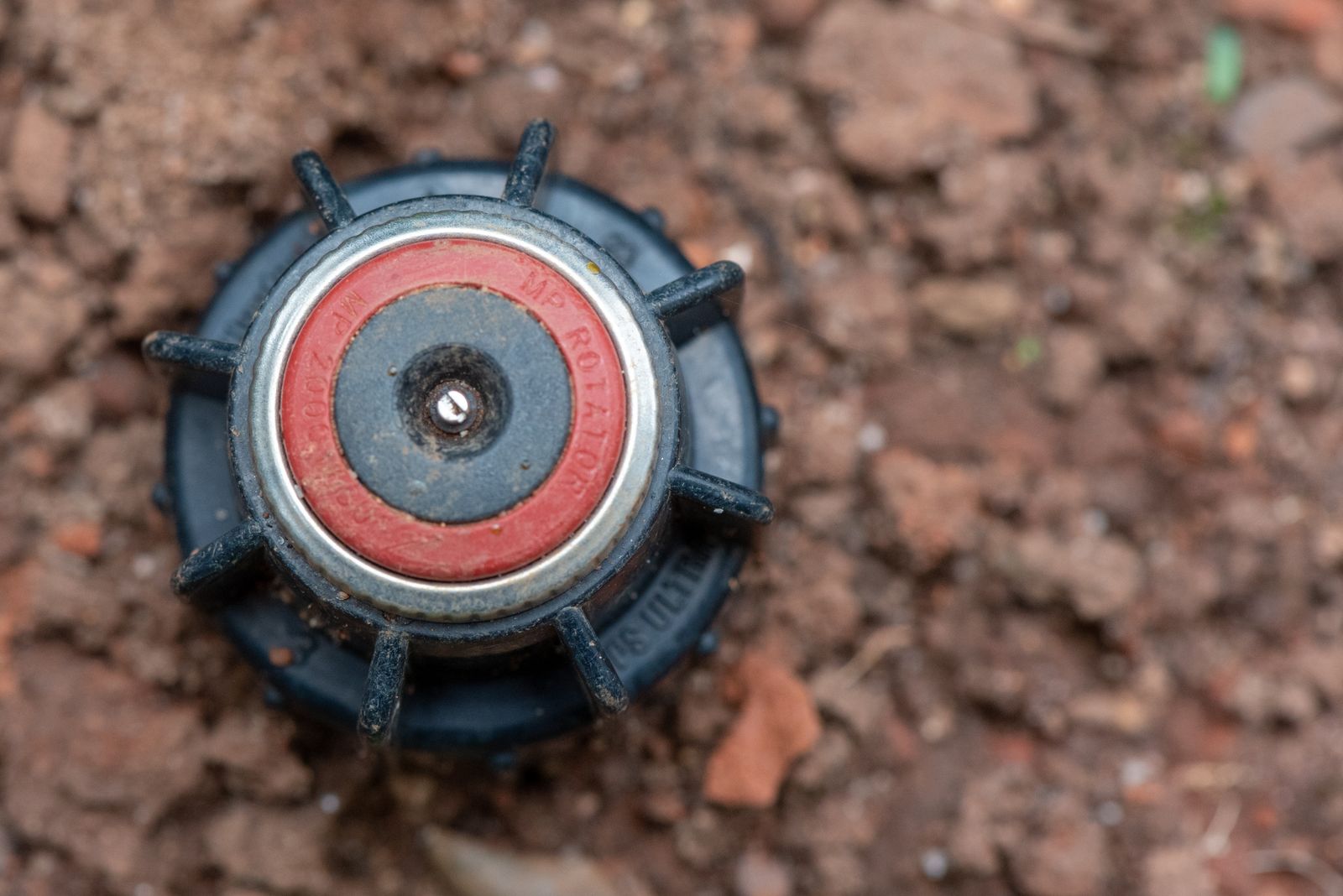
The mechanism itself is unglamorous. Emitters are small plastic devices spaced along a black polyethylene tube, each releasing water at a controlled rate — typically a few litres per hour — using friction and engineered pressure loss to hold that rate steady along the length of the line. A tomato plant in the Arava might receive only a few litres a day, delivered in short pulses, with a fertiliser dose mixed into the flow.
Flood irrigation, the method used across most of the world for most of history, drenches a field and lets gravity finish the job; much of the water evaporates, runs off, or sinks past the root zone. The Christian Science Monitor, reporting from the Arava in 2015, found that drip can yield as much as four times more produce for the same volume of water, and noted that while roughly 75 per cent of Israeli irrigation was drip-based, global adoption sat below 5 per cent — largely because installation costs cannot be justified where water is free.
Water counted in cubic metres
Drip lines alone do not explain how Israel gets peppers out of the desert. The second layer is accounting. Michael Zaide, planning director at Israel’s Water Authority, told The Media Line in June 2024 that domestic and urban water use is climbing by roughly 1.8 per cent a year while agricultural freshwater use has held flat, because farms have shifted onto recycled and brackish supplies instead.
Israel returns more than 80 per cent of its treated wastewater to agriculture, roughly four times the rate of Spain, the next-highest reuser. The gap is less about treatment technology than about plumbing: a parallel national network treats municipal effluent to irrigation grade and pipes it back to farms rather than discharging it to sea. Zaide put another 400 million cubic metres of treated effluent into the agricultural supply by 2050.
The third layer is price. Most MENA governments continue to incentivise heavy water use through tariffs set below the cost of supply, the ECFR brief found, and in Jordan — the fourth most water-scarce country in the world — faults in the distribution network, principally leaking pipes, combine with inefficient irrigation to waste significant volumes. Israel, by contrast, sets policy and price through a single national water authority, which is the unglamorous precondition for everything else. When water has a price, drip lines pay for themselves.
Desalination on the Mediterranean coast
The fourth layer sits on the coastline. Israel operates five large seawater reverse-osmosis plants — Ashkelon, Palmachim, Hadera, Sorek and Ashdod — which together desalinate some 585 million cubic metres a year, according to the Israeli Ministry of Finance, which administers the desalination tenders. A sixth plant at Sorek and a seventh in the Western Galilee are expected to lift the seven-plant total to 85–90 per cent of annual municipal and industrial consumption.
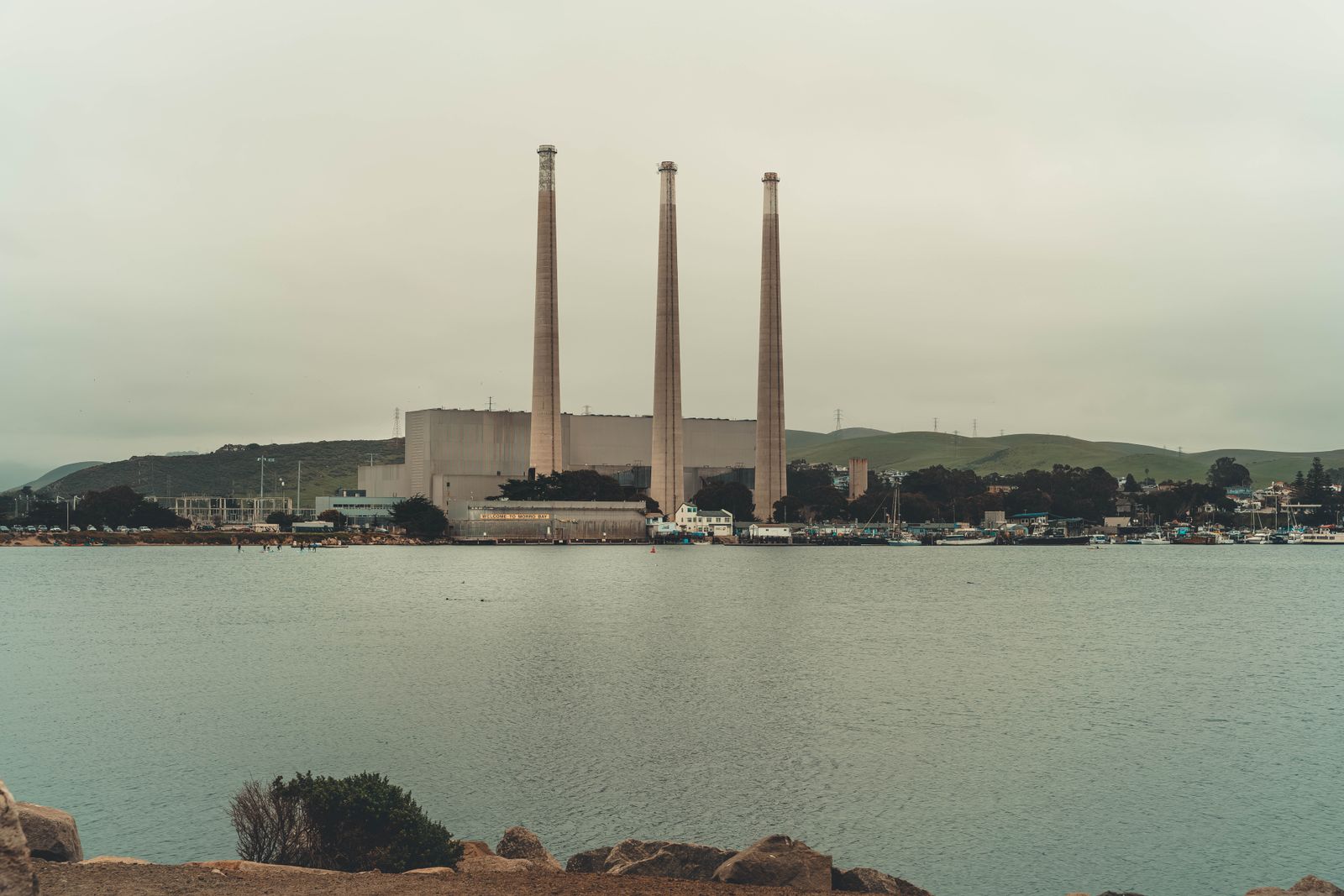
Sorek came online in 2013 as the largest reverse-osmosis desalination plant in the world, pumping seawater from roughly a mile and a half offshore through an array of more than eleven thousand pressurised membrane cylinders. The Monitor reported that Israel closed its driest year on record with a water surplus — a result driven overwhelmingly by the desalination build-out that began after the 1999 master plan.
The Gulf desalinates on a far larger scale. The six Gulf states operate more than 400 plants and produce roughly 40 per cent of the world’s desalinated water, around 7.2 billion cubic metres in 2023. But the cost per cubic metre is high enough that the output goes overwhelmingly to cities and industry rather than to fields — unless the field is coupled to a system that needs only a fraction of the volume. Which is where the Israeli stack becomes exportable.
Dates in the Arava
Drive south from Beersheba into the Arava Valley and the landscape flattens into gravel and salt. Rainfall runs to about an inch a year. And yet this narrow strip along the Jordanian border produced 65 per cent of Israel’s vegetable exports as of the Monitor’s 2015 survey — mainly tomatoes and peppers — alongside the Medjool dates that reach European supermarkets from autumn onward.
The trick is brackish groundwater. Aquifers beneath the Arava hold water too saline to drink but tolerable for date palms, grapes, melons and salt-adapted pepper and tomato cultivars. Oren Korin, chief executive of the Arava Water and Drainage Authority, told the Jerusalem Post that the non-potable underground water suits some crops and not others, and that salt build-up shortens the productive life of most of them — the aquifer is workable, but delicate, and does not recharge quickly.
Date palms tolerate that salinity better than almost anything else worth growing, which is why they dominate. Roughly a quarter of Israel’s date trees stand in the Arava, with most of the rest in the Jordan Rift Valley and the northern Dead Sea area; Medjool accounts for around 72 per cent of trees planted nationally. A mature palm drinks on the order of 170 cubic metres a year — a great deal of water, but water that would sterilise a wheat field, delivered drop by drop and at night to hold down evaporation.
What the neighbours face
The contrast with the wider region is stark, and it is not primarily a contrast in engineering. Jordan, which shares the Jordan basin with Israel, has near-universal access to drinking water on paper — 98.9 per cent of the urban population — but unreliable service in practice, with distribution losses and inefficient irrigation compounded by Palestinian, Iraqi and Syrian refugee inflows that pushed domestic demand beyond what the infrastructure could carry.
Iraq’s position is worse and more exposed. The Tigris and Euphrates both originate in Turkey, and Turkey’s Southeastern Anatolia dam programme has slowed the flow downstream at the same time as drought and sustained upstream consumption have cut river levels; Iraq’s water tariffs remain among the lowest in the world, which does nothing to restrain demand.
Louise Baker, managing director of the global mechanism at the UN Convention to Combat Desertification, told The Media Line that around 100 million hectares of land are being desertified worldwide every year. The layers Israel assembled — metered pricing, effluent reuse, drip — are individually cheap and collectively hard to install, because each depends on a governance step that subsidised water and fragmented authority make politically expensive.
The export of the model
Netafim opened its first overseas subsidiary in California in 1981 and by 2015 held more than 30 per cent of the global drip-irrigation market with customers in 110 countries. Israeli water firms now sell desalination membranes, leak-detection sensors, fertigation controllers and greenhouse climate systems from India to California, where the state that produced reverse osmosis in the first place has lagged badly on deploying it.
Population is the pressure that does not ease. A study in the Nature journal npj Clean Water projected that Israel could need to desalinate as much as 3.7 billion cubic metres a year by 2065, against 0.5 billion in 2020, potentially requiring 30 new desalination units and more than 11 TWh of electricity annually. The authors’ blunt finding was that population growth is likely to dwarf climate change as the driver of Israeli water demand.
The same paper flagged the mirror-image problem: more people means more effluent, possibly more than farmers have the capacity to absorb. Every cubic metre delivered still has to compete with every cubic metre used, which is why the demand-side layers remain exactly as load-bearing as the plants on the coast.
The leak that started it
Simcha Blass died in July 1982, the year after Netafim’s first overseas subsidiary opened. The kibbutz that housed his experiments still farms the same fields, now with newer generations of pressure-compensated emitters embedded in the ground. The plastic tubes are almost invisible under the canopy of a pepper greenhouse — thin black lines running along the base of each row, hissing quietly at dawn as the pulse controllers open.
The finding itself was almost nothing. One tree grew faster than its neighbours because water was reaching its roots and going nowhere else. Everything since — sixty years of emitters, membranes, recycled effluent and pricing formulas — has been an argument about what to do with that.
On an August afternoon in the Arava, the air temperature can push past 40C and the humidity drops into single digits. A date palm heavy with unripe Medjools stands in a grid of identical palms, each fed by a drip line the width of a pencil. The water it drinks that day comes from an aquifer whose salinity would ruin a wheat field. By December the fruit will be in a supermarket in Frankfurt. The pipe, this time, is not leaking.
