
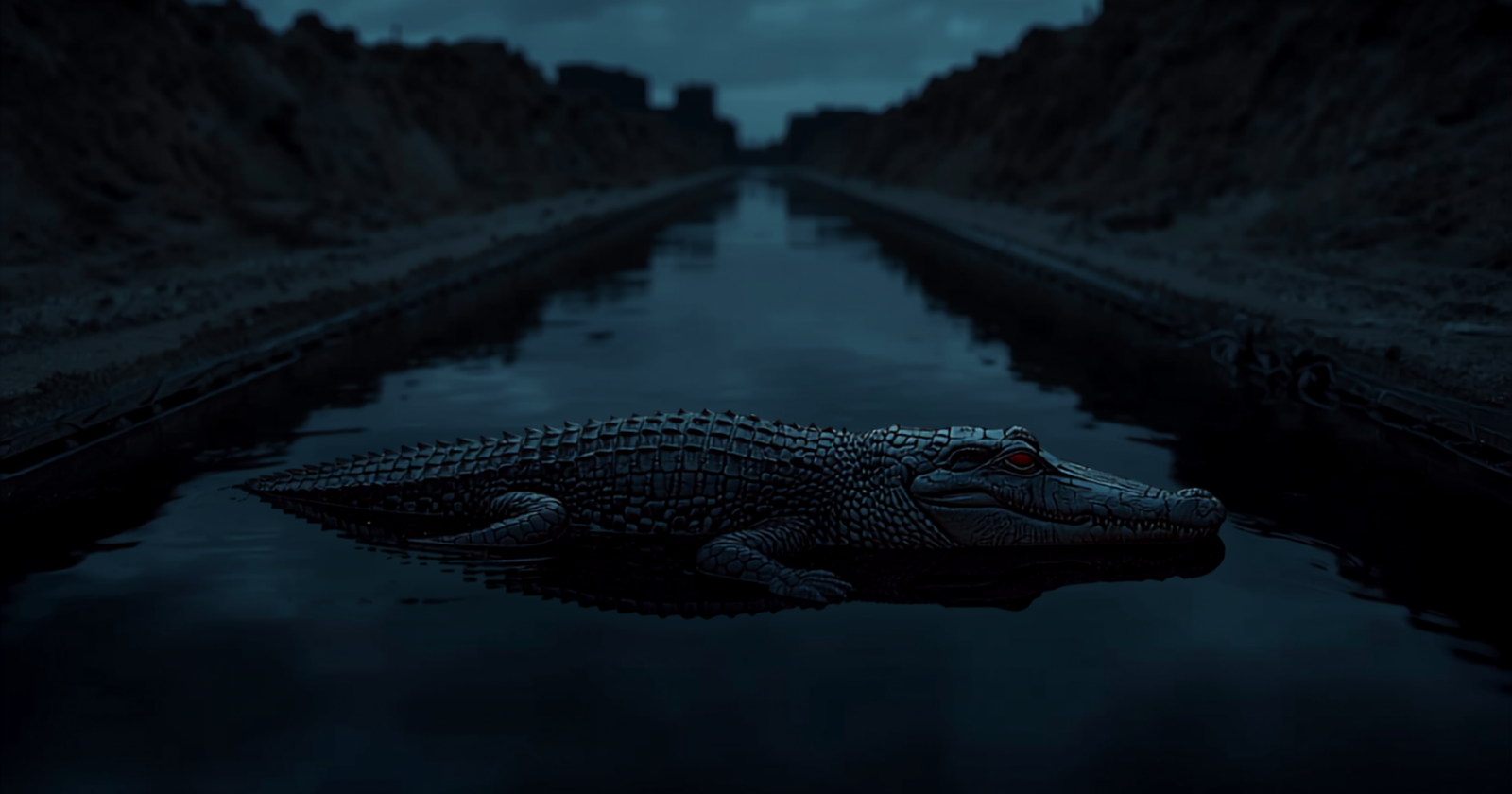
Drive south of Miami until the suburbs thin and the mangroves take the last of the light, and the road ends at a nuclear plant on Biscayne Bay. Homestead knows the place as Turkey Point. Two Westinghouse reactors have been making steam here since the early 1970s. What they needed was a way to dump heat. What they got, later, was crocodiles.
The cooling system is not a lake. It is a lattice of shallow earthen canals — 168 miles of them, about 270 kilometres — cut into the marl south of the plant. Nobody designed the spoil banks as nests. The berms just sat there, dry and warm, beside water that never quite goes cold.
Last season the night crews came back with a number the programme had never seen. They tagged more than 600 American crocodile hatchlings. The densest nesting ground for the species in the United States is a radiator.
A radiator, not a reserve
Turkey Point Units 3 and 4 sit about 25 miles south of Miami, on the western shore of Biscayne Bay. In the early 1970s the plant sent warm water into the bay and Card Sound. A federal order stopped that. Florida Power & Light dug a closed loop instead: heat out one end, a long slow slide through shallow ditches, cooler water back to the condensers. The Nuclear Regulatory Commission still describes the system as 168 miles — 270 kilometres — of earthen canals, a few feet deep, spread across a few miles of coastal Miami-Dade.
The first crocodile turned up on the property in 1976. The first nest was found in 1978, and FPL started a monitoring programme that has run every summer since. By 1979 most of the site had been designated critical habitat. The company did not set out to build a nursery. The berms were just the spoil from the digging: dry, warm, a few steps from water. For a species that lays eggs in sand and gravel above the tide, that is enough.
Two red lights in the canal
Hatchlings come out between late June and early August. The mother scoops them into her mouth and carries them to water. After that, she is largely done. The night work begins. A hatchling American crocodile gives itself away as two red points of reflected light, set close together. Someone leans off an airboat or walks a berm with a headlamp, lifts the animal, and takes it in.
At the lab the crew measures length, weight and tail girth. They determine sex. They insert a PIT tag and clip a unique pattern in the tail. Then the hatchling goes back. FPL’s published account is exact: biometrics, a chip, a lifetime of recapture.
The 2025 season was the first time the count cleared 600. Mike Lloret, the plant’s principal environmental specialist, told interviewers his team was calling it the 600 Club. FPL called it a record year. The year before, the company’s 2024 annual report listed 29 nests and 529 hatchlings — then the second-highest nest count and the third-highest hatchling count on the books. In 2021 the crew had tagged 565, which stood as the hatchling record. The canals keep producing. The numbers bounce with weather and salt.
Not an alligator
South Florida is the only place in the United States where American crocodiles and American alligators live together in the wild. People still mix them up. The crocodile’s snout tapers. The alligator’s is blunt. When a crocodile closes its mouth, the fourth tooth in the lower jaw stays visible. The skin runs olive to grey-green. The animal is shy. A splash into the canal is usually fear, not a charge.
Turkey Point is one of three primary nesting populations left in the country. The other two are Everglades National Park and Crocodile Lake National Wildlife Refuge on Key Largo. The cooling canals are not the largest landscape. They are the densest. On average, FPL says, 300 to 400 American crocodiles live in and around the canal system. That is a lot of animals in a few thousand acres of ditch.
A few hundred, then about two thousand
In 1975 the U.S. Fish and Wildlife Service listed the American crocodile as endangered. Florida’s population was a few hundred animals. The Florida Fish and Wildlife Conservation Commission still puts the 1970s figure at less than 300, with only 10 to 20 nests a year in the whole state. Hunting for hides and the paving of the coast had done most of the damage.
In 2007 the Service downlisted the Florida population to threatened. The species is still protected. FWC now estimates as many as 2,000 adult crocodiles in the state, not counting hatchlings. Nesting statewide has risen past 100 nests a year. Turkey Point is not the whole recovery. It is the strange industrial piece of it — a closed wastewater system that happens to offer dry ground, warm water and almost no people.
What the berms actually do
Hatchlings are born without salt glands. The cooling canals run saltier than the bay; evaporation concentrates what the loop already holds. So the company built freshwater ponds that collect rain and serve as nurseries. Crews clear vegetation from old nest sites. They keep the berms high enough that a summer flood does not cook a clutch. The Service has called those berms flood-proof nesting ground. The work is maintenance of a machine that also happens to be habitat.
None of this was in the original engineering. The canals were a court-ordered radiator. The crocodiles used the spoil. The postcard would be a crocodile in golden light, the reactors soft behind it. The real picture is smaller. A headlamp. Two red points in black water. A hatchling that fits in a gloved hand, measured and put back into a canal that was dug to cool steam. The animal does not know it is a success story. It knows the berm is dry and the water is warm. That is the whole design, and nobody designed it.
