
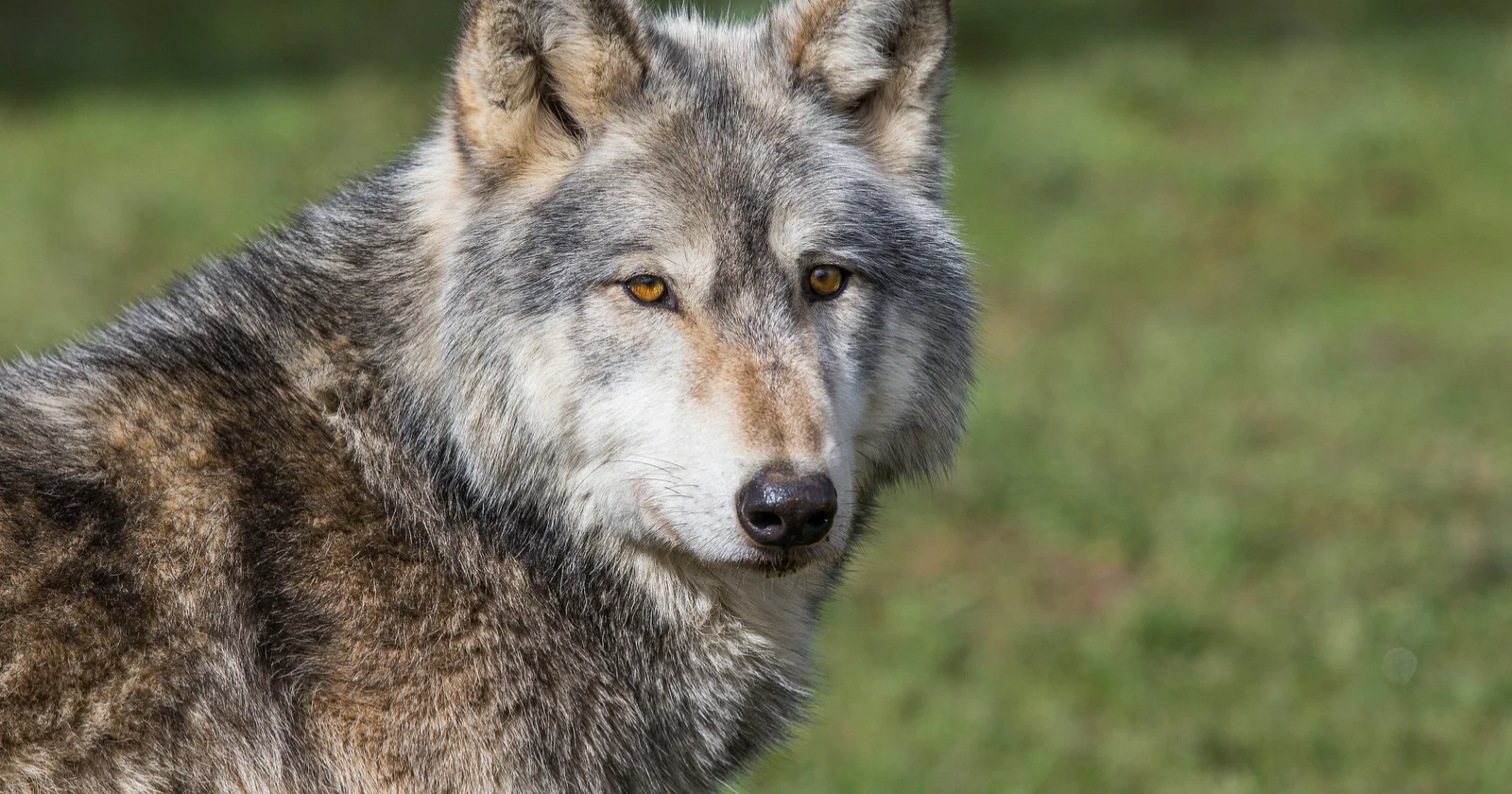
You have probably seen the version where the wolves fix everything. They come back, the elk stop hanging around in the valleys, the willows and aspens shoot up, the beavers return, the songbirds follow, and even the rivers start to bend differently.
It is a satisfying story, and it travelled far. The “How Wolves Change Rivers” video narrated by George Monbiot has been watched more than 46 million times.
The best long-term research on Yellowstone suggests that neat chain of cause and effect is not really what happened, or at least not on its own. The fuller picture involves water, geology, missing beavers, and a landscape that changed so much while the wolves were gone that simply bringing predators back was never going to reset it.
We are not ecologists or wildlife biologists, and nothing here is a verdict on wolf policy. This is our reading of a live scientific debate, drawn from published research and the researchers’ own words. The studies below look at specific stream sites, not every ecosystem everywhere.
The story we’ve all been told
The narrative has a clean logic. Wolves were removed from Yellowstone in the 1920s, along with cougars. That let elk numbers climb, and for decades those elk browsed young willows and aspens down to nubs. Wolves were reintroduced in 1995 after roughly seventy years away. In the popular telling, their return set off a “trophic cascade”: the predators thin out and spook the elk, the young trees get a chance to grow, and the whole valley greens up.
A trophic cascade just means an effect that ripples down a food chain, from predators to prey to plants. The idea spread through Monbiot’s video, which drew on research by William Ripple and Robert Beschta.
It captured something real about how top predators can ripple through a food web. But it also squeezed a messy, contested science into a single arrow pointing from wolves to rivers, and that is where the problems start.
What the 20-year experiment actually found
The most direct test of the willow part of the story ran for two decades. A Colorado State University team led by Tom Hobbs and David Cooper set up four intensive study sites in 2001 and worked them through 2020.
Instead of just watching and guessing, they tested the two things that might matter most. They fenced off some plots to stop elk browsing, and they built fake beaver dams to raise the water table.
The result cut against the simple version. Willows grew back strongly only where both conditions held: less browsing and more water. The willows the wolves were supposed to be rescuing stayed stunted.
The authors’ conclusion, published in the journal Ecological Monographs in early 2024, was blunt about its limits. Hobbs and Cooper wrote that “the restoration of apex predators to Yellowstone should no longer be held up as evidence of a trophic cascade in riparian plant communities of small streams on the northern range.”
Note the careful wording: small streams, northern range. This is about specific places, not a claim that wolves changed nothing.
Browsing, beavers and a stuck landscape
Without willows to slow the water and without beavers to pond it, the small streams cut down into their beds and dried out the land around them. Cooper describes the shift plainly: these streams had gone “from a beaver-willow system, which was wet and dynamic, to an incised, dried-up floodplain that we call the elk grassland state.”
That is what the researchers call an “alternative stable state.” The system settled into a new configuration that holds itself in place. Fewer willows means lower water tables, which means worse habitat for beavers, whose dams once kept the whole area wet.
Hobbs says the beaver problem is a slow one to fix: “The habitat for beaver has degraded because willows are not present, and it’s going to take a long time to put that back.”
The broader lesson they draw is that an ecosystem can carry the memory of a disturbance long after the original cause is gone. As Hobbs puts it, “Disturbing food webs can cause persistent changes in ecosystems.” Not every researcher fully agrees with that reading for this system, which is part of why the debate is still going.
So did the wolves matter at all?
Yes, and the pushback has to be careful not to overcorrect. The scientists poking holes in the viral version are not saying the wolves were irrelevant. Cooper, who spent twenty years on this, is explicit: “Our work supports the fact that wolves are important components of ecosystems.” His summary of two decades of fieldwork is less a takedown than a note of humility: “We learned from the science that it was way more complicated.”
Dan MacNulty, a wildlife ecologist at Utah State, draws the line more usefully. He told Mountain Journal: “What’s not in doubt in my mind is whether a trophic cascade has happened or not. The question boils down to how strong is that cascade?” The disagreement among these researchers is not “cascade or no cascade.” It is about how large the effect was, and how much credit belongs to wolves versus everything else changing at the same time.
The “everything else” list is long. Elk numbers were also pushed down by hard winters, by human hunting outside the park, and by other recovering predators. MacNulty argues the single-arrow story leaves out grizzlies and cougars: “A major problem with the simple trophic cascade story is that it ignores the role of these other predators.” That is his read, and it is contested, but it points at a real gap in the tidy version.
The dispute has since gotten sharper. In a formal comment on a 2025 paper by Ripple and colleagues, MacNulty and his co-authors argue the numbers behind the strong-cascade claim don’t hold up.
MacNulty said “our re-analysis shows their conclusion is invalid because it relies on circular reasoning and violations of basic modeling assumptions.” His team says a reported 1,500 percent jump in willow volume was an artefact of a flawed model that used plant height both to work out and to predict that volume. This is one side of a published back-and-forth and the argument is very much still open.
A truer, messier picture
The version where wolves single-handedly heal a landscape is appealing partly because it flatters a comforting idea: that ecological damage is reversible if we just put the missing piece back. The Yellowstone record suggests something more sobering and, we think, more useful. Removing a top predator can push a system past a tipping point, and once it settles into a new state, bringing the predator back does not automatically undo it. Water, geology, and the animals in between all have to cooperate.
That is not an argument against bringing wolves home. It is an argument against expecting any single lever to do the whole job.
The fair answer to “did the wolves change the rivers” is probably that they were part of a change that was always bigger, slower, and less obedient than a five-minute video could show. For anyone thinking seriously about how to repair a damaged place, that is worth knowing before you start.
