

On the morning of 9 August 1965, a 41-year-old lawyer named Lee Kuan Yew sat in front of a television camera in Singapore and cried.
He had reason to. His country of 1.9 million people had been formally expelled, that morning, from the Federation of Malaysia — kicked out after two years of increasingly bitter political and ethnic conflict. Singapore was now an involuntary independent state. It had no natural resources. It had a GDP per capita of roughly $400. It imported its drinking water from the country that had just thrown it out. Unemployment was above 14 percent. Nearly 70 percent of the population lived in overcrowded slums.
Every serious international observer at the time gave Singapore a short life expectancy as an independent country. The consensus view was that it would either collapse economically or be reabsorbed by Malaysia, or Indonesia, within a decade.
Sixty years later, Singapore has the fifth-highest GDP per capita in the world.
What the transformation actually was
The specific numbers of Singapore’s rise between 1965 and 2025 are difficult to fully absorb.
GDP per capita went from approximately $400-500 in 1965 to approximately $85,000 in 2025. That is a roughly 165-fold nominal increase. In inflation-adjusted terms, adjusting for the substantial depreciation of the US dollar over those six decades, the real per-person purchasing power has increased by approximately 30-fold.
Home ownership rose from a small minority to over 80 percent of households. Life expectancy rose from around 65 years to over 83 years, one of the highest in the world. Educational outcomes, as measured by international standardised tests including PISA, are now among the best globally. Infant mortality dropped from 26 deaths per 1,000 live births in 1965 to under 2 per 1,000 today, better than most of Western Europe.
The country now hosts the regional headquarters of most multinational corporations operating in Southeast Asia. Its port is one of the three busiest container terminals in the world. Its national reserves are estimated at over one trillion US dollars. Its currency, the Singapore dollar, is one of the most stable in Asia.
By any economic metric that development economists use, Singapore’s transformation over sixty years is one of the two or three most dramatic single-generation national economic rises ever recorded, along with post-war Japan and South Korea. Unlike Japan and Korea, however, Singapore did it without a substantial domestic market, without natural resources, and without the security-cooperation cushion of American Cold War infrastructure that both East Asian success stories received.
What actually had to happen
The genuinely useful question is not whether Singapore’s rise was impressive. It was. The useful question is what specifically had to be true for it to happen at all.
The first thing that had to be true is that Singapore had to choose, at independence, to be integrated into the global economy rather than protected from it. Most post-colonial governments in the 1960s and 1970s did the opposite — imposed tariffs, expropriated foreign businesses, promoted state-owned enterprises to insulate their economies from international competition. Lee Kuan Yew and his colleagues did the reverse. They aggressively welcomed foreign multinational corporations, kept import tariffs low, positioned Singapore as a manufacturing and services platform for the wider Asian region, and courted specifically the technology and financial firms that other post-colonial governments were suspicious of.
The second thing that had to be true is that Singapore had to build a state that was, by regional standards, exceptionally clean. Government corruption was ruthlessly prosecuted from the earliest years. Civil servants were paid competitive salaries specifically to reduce the incentive for bribery. Ministers were paid, and continue to be paid, at levels comparable to top private-sector executives, on the reasoning that this attracts competent people and reduces the temptation of side income. The country now ranks in the top five globally on the Transparency International Corruption Perceptions Index.
The third thing that had to be true is that Singapore had to invest continuously and aggressively in human capital. Education became a national obsession. Housing was heavily subsidised. Healthcare was made universal and inexpensive. Bilingual education in English and one Asian language became mandatory. The idea, articulated repeatedly by Lee Kuan Yew across his political career, was that Singapore had no natural resources except its people, and that developing those people was the only viable long-term economic strategy.
The fourth thing that had to be true, and the most controversial internationally, is that Singapore had to accept substantial constraints on political freedom. The People’s Action Party has been in power continuously since 1965. Independent journalism is heavily regulated. Public protest is restricted. Political opposition, while legal, has been kept structurally weak through a combination of gerrymandering, defamation lawsuits, and the sheer competence of the governing party. Whether this was necessary to the economic transformation, or merely coincident with it, remains one of the most-debated questions in political economy. Singapore’s own official view is that the tradeoff was worthwhile; many international observers, including some Singaporeans, disagree.
What Lee Kuan Yew understood
The specific quality that made the Singaporean model work, in retrospect, was something Lee Kuan Yew articulated repeatedly in his speeches and memoirs.
He treated Singapore as a country that could not afford ordinary mistakes. Larger countries with natural resources, defensible borders, or geopolitical importance to great powers could survive corruption, inefficiency, ethnic conflict, or short-term policy errors, because they had strategic and material cushions. Singapore had none of these. Every decision that could plausibly go wrong had to go right, because there was no margin.
This produced a specific style of governance. Decisions were made carefully, executed aggressively, and evaluated ruthlessly. Programs that did not work were killed quickly. Programs that worked were expanded. Corruption was punished with prison sentences. Long-term planning happened at the level of decades rather than election cycles.
The Slovenian philosopher Slavoj Žižek, writing in the Financial Times after Lee’s death in 2015, argued that Lee had accidentally invented one of the most important political ideologies of the twenty-first century: authoritarian capitalism, a model that combined free markets with restricted democracy and that has since been adopted, in various forms, by China, Vietnam, and others.
Whether this is a compliment or a warning depends heavily on one’s political priors. What is undisputed is that the model produced, in Singapore, the fastest single-generation economic transformation in modern history, and that it produced it in a place where every conventional predictor said failure was the overwhelming expected outcome.
What Singapore is now
Sixty years after Lee cried on television about the future of his country, Singapore’s 2025 GDP per capita of approximately $85,000 places it above the United Kingdom that once colonised it, above France, above Japan, and above the United States.
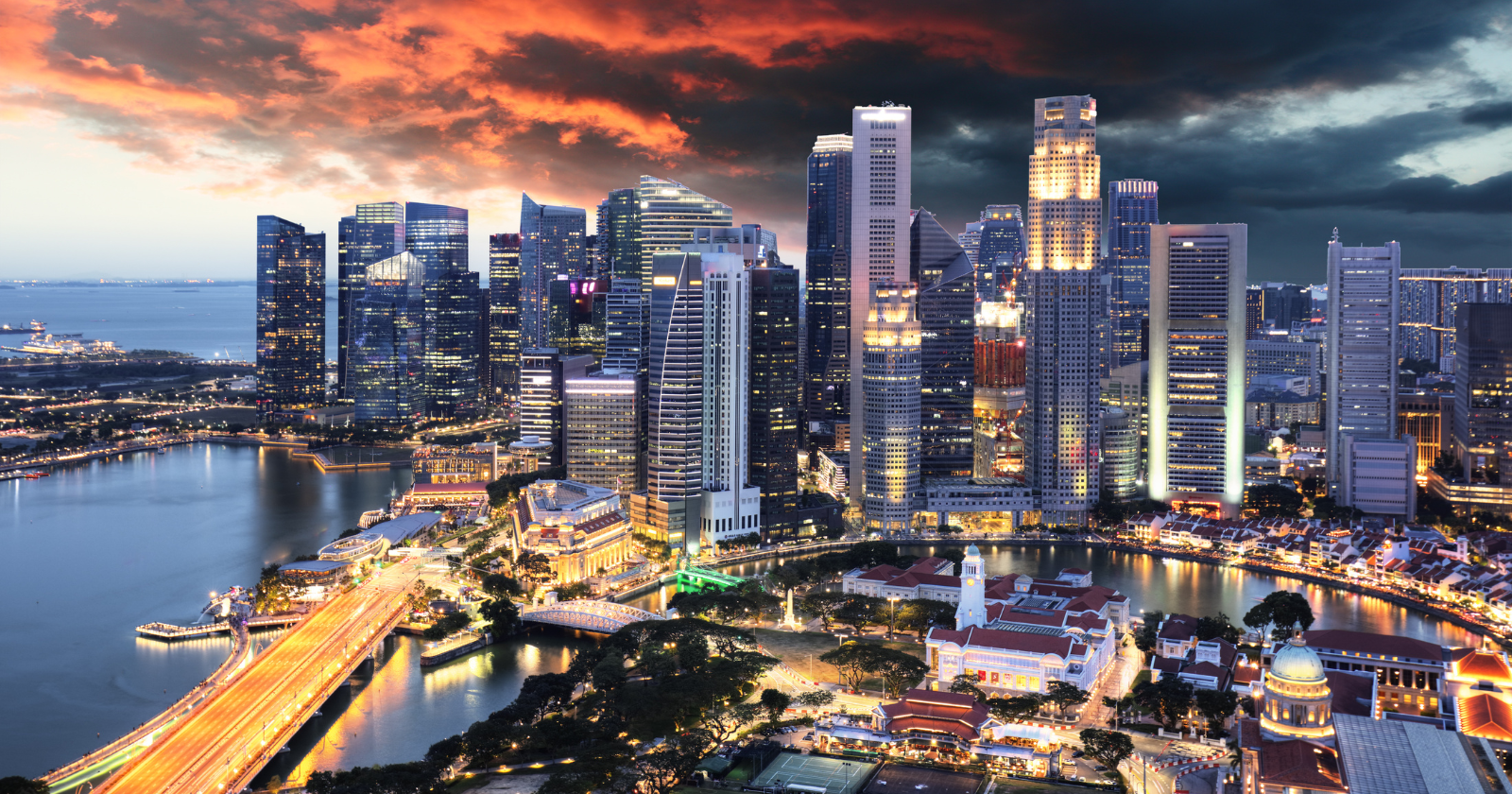
Its 1.9 million people at independence have grown to over 5.5 million. Its skyline is one of the densest and most striking in Asia. Its financial sector is one of the four or five largest in the world. Its national reserves fund a sovereign wealth apparatus that invests globally in every major asset class.
The transformation was not inevitable. It was not lucky. It was not the product of oil wealth or geopolitical patronage. It was the specific product of a small set of decisions made carefully and executed relentlessly over six decades, by a government that treated its own survival as an urgent daily question rather than a settled fact.
Sixty years is not a long time. In geological terms it is nothing. In the history of nations it is a single lifespan. The people who watched Lee Kuan Yew cry on television in August 1965 are, many of them, still alive. They live now in one of the wealthiest countries on Earth — a country that, when they were children, was widely expected not to survive.
