

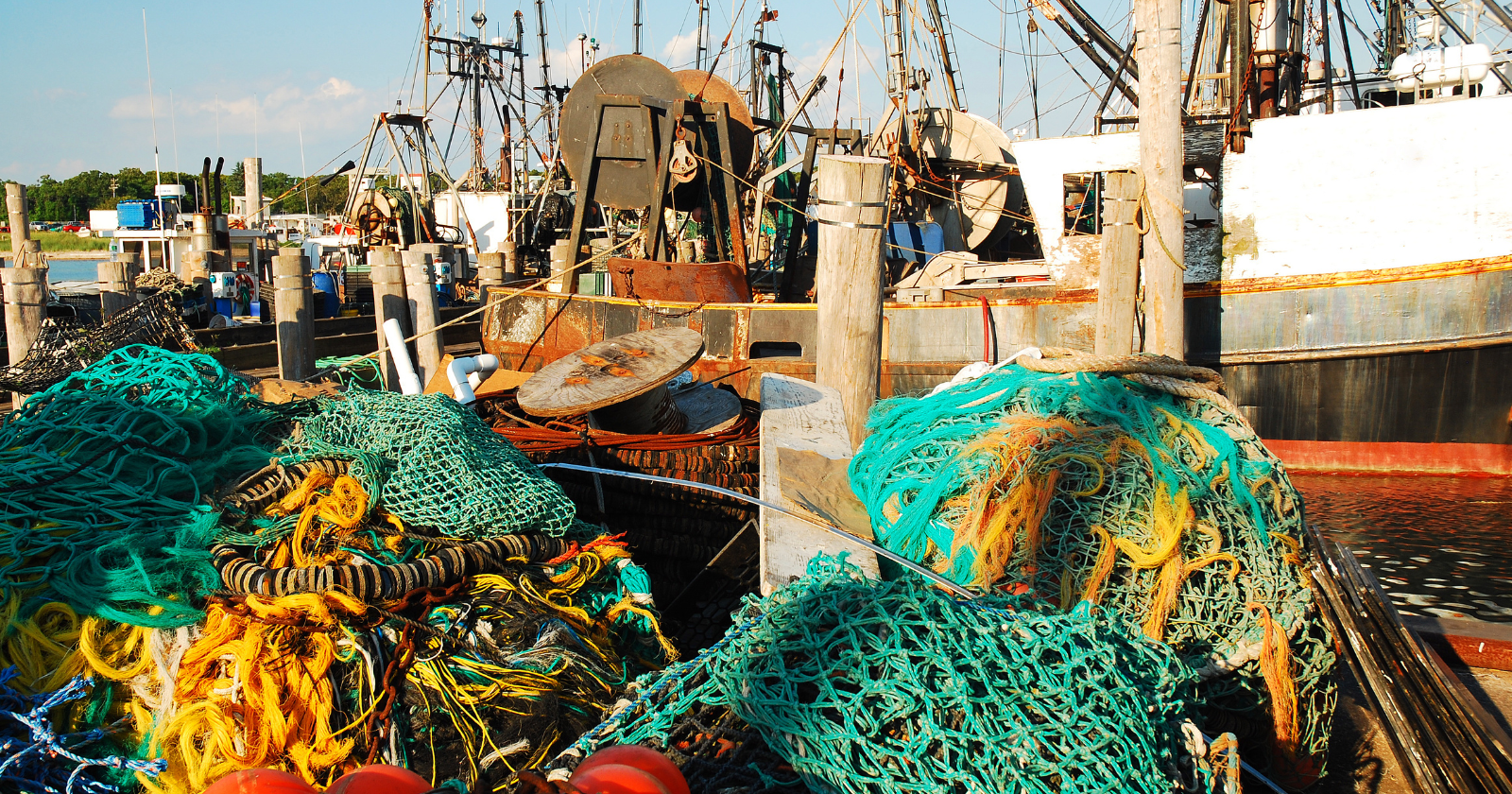
Two days before Christmas, in the port of East London on South Africa’s east coast, a 32-year-old woman took a taxi to the docks to look at a pile of dead fish.
Her name was Marjorie Courtenay-Latimer. She was the curator of the East London Museum, a small provincial institution she had been running since she was 24, when she had somehow talked her way into the job despite having no formal scientific training whatsoever. She had a standing arrangement with the local trawler captains: if they netted anything unusual, they should call her. One of them, Captain Hendrik Goosen, had called that morning to say his boat had a strange fish in among the day’s catch.
Courtenay-Latimer arrived at the docks around ten in the morning of 22 December 1938. She began sifting through the pile of sharks and rays and starfish. Roughly halfway through, she saw a fin.
The fish she pulled out was about five feet long. It was steel-blue with an iridescent sheen, covered in armour-plated scales, and had four thick fleshy fins that looked more like the beginnings of limbs than ordinary fish fins. She had never seen anything like it. Nobody at the museum had ever seen anything like it. It did not match any species in any reference book she owned.
What it did match, she thought as she stared at it, were the illustrations of certain fossils she had seen — fossils of a group of fish that had, according to every serious biology textbook, been extinct since the end of the age of the dinosaurs.
What she was actually looking at
The fish was a coelacanth.
Coelacanths are lobe-finned fish, a specific group that first appeared in the fossil record about 400 million years ago and were thought to have died out approximately 66 million years ago at the end of the Cretaceous period — the same mass extinction event that killed the non-avian dinosaurs. Every biologist working in the 1930s treated the group as unambiguously extinct. There were no coelacanths anywhere in the modern ocean. There had been no coelacanths for the entire span of time from the last dinosaurs to the last two days before Christmas 1938.
Except, apparently, there had been. One had just been pulled up in a trawl net.
Courtenay-Latimer knew immediately that this was scientifically important. What she did not know was what specifically to do about it. The nearest fish expert she trusted was J.L.B. Smith, an ichthyologist at Rhodes University in Grahamstown. She sent him a telegram and a letter with a rough sketch of the fish, describing what she had found in careful detail.
Smith was away for Christmas.
For the following several days, the coelacanth sat in the East London Museum’s back room, beginning to spoil in the summer heat. Courtenay-Latimer tried desperately to preserve it. There was no refrigeration facility in the town large enough to accommodate a fish of that size. She eventually made a difficult decision: she had it mounted by a local taxidermist. The internal organs — which would have been scientifically priceless — were discarded before anyone qualified to examine them ever saw the fish.
By the time Smith received her letter in early January and read her sketch, all that remained of the world’s first modern coelacanth was skin and skeleton.
The identification
Smith’s response to the letter has become one of the most quoted moments in twentieth-century biology.
“From your drawing and description,” he wrote back to her, “the fish resembles forms which have been extinct for many a long year. I feel it must be of great scientific value.”
He spent the next six weeks trying to arrange transportation to East London to see the specimen in person, and reportedly barely slept the entire time. He wrote to Courtenay-Latimer on 9 January that the fish had caused him “much worry and sleepless nights.” By early February, he could not contain himself any longer. He reached the museum on 16 February 1939.
His account of the moment he first saw the mounted coelacanth is one of the more emotionally direct passages any scientist has ever written about their own work. “That first sight [of the fish] hit me like a white-hot blast and made me feel shaky and queer, my body tingled,” he wrote. “I stood as if stricken to stone. Yes, there was not a shadow of doubt, scale by scale, bone by bone, fin by fin, it was a true Coelacanth.”
Smith formally announced the discovery in the journal Nature on 18 March 1939. He named the new species Latimeria chalumnae — the genus after Courtenay-Latimer herself, the species after the Chalumna River where the fish had been caught. The naming was a specific acknowledgement that without her, the fish would have been discarded with the rest of the catch and the world would still, at the time of Smith’s writing, believe coelacanths to be extinct.
What Courtenay-Latimer saw that nobody else would have
The genuinely extraordinary part of this story is not that a coelacanth was found alive. It is who found it.
Courtenay-Latimer had no formal scientific training. She had no PhD. She had no research team. She had a small museum in a provincial South African port, a standing arrangement with local fishermen, and enough general natural-history knowledge to recognise something anomalous when she saw it.
Every trawler that had operated off the East African coast for the previous several centuries had, statistically, almost certainly caught coelacanths before. The species turned out to be reasonably widespread in the region — a second population off the Comoros Islands was later found to be the primary habitat, and a second species was identified in Indonesia in the 1990s. Fishermen had presumably been discarding these fish, or eating them, or throwing them back, for as long as there had been fishing along that coast.
None of them had thought to have the fish identified by science. And none of them had, until 1938, happened to bring their catch to a museum curator with enough pattern-recognition ability to look at an unusual fish and think: this reminds me of a fossil.
The recognition was the discovery. The fish had been there all along. Courtenay-Latimer was the specific person whose combination of natural-history reading, curiosity, and standing arrangements with the fishermen made recognising it possible.
The mounted specimen from December 1938 is still on display at the East London Museum today. Courtenay-Latimer died in 2004 at the age of 97, having lived long enough to see coelacanths photographed alive in the deep waters off the Comoros, filmed in submersibles, and studied genetically. Every one of those later observations was possible because, on a hot morning in a South African port two days before Christmas 1938, she happened to be the one going through the fish pile.
She had spent seven years asking to be called when something unusual turned up. What she had asked for, and what she got, was almost impossibly good.
