

Picture the Mediterranean almost gone. Not merely lowered or shrunk, but reduced to separated hypersaline basins sitting far below the ocean outside.
That is not a thought experiment. It happened, and the rock under the seafloor still carries the receipt. The event has a name that sounds oddly bureaucratic for something this large: the Messinian Salinity Crisis. By the best current reckoning it ran from 5.97 to 5.33 million years ago.
What strikes me is how ordinary the trigger was. The slow convergence of the African and Eurasian plates, combined with changes in global sea level, progressively restricted the Atlantic-Mediterranean gateways around southern Spain and northern Morocco. The Mediterranean sits in a warm, dry belt where the sun pulls up more water than the rivers and rain put back. With Atlantic resupply severely restricted, it did the only thing physics allowed. It started to evaporate.
And it kept going. A 2024 study estimated that during one rapid phase the water level fell by 1.7 to 2.1 kilometres in the eastern Mediterranean and about 850 metres in the western Mediterranean. Other estimates are lower, and the scale of the drawdown remains debated. But large parts of the continental margins were exposed while the deepest eastern basins still held brine more than a kilometre deep.
Think about standing in that. Cliffs of dry rock where the coast used to be. Salt crusting out along the edges of shrinking lakes. A landscape closer to the floor of Death Valley than to any sea, stretched across a whole basin.
What the water left behind is hard to argue with. Geologists call it a salt giant. Across the Mediterranean basins lies nearly a million cubic kilometres of evaporite salts deposited as brines concentrated and minerals precipitated. In places the evaporitic sequence reaches about three and a half kilometres thick. A recent review is careful to say the real story is messier than a bathtub simply drying out, with shifting plates, continued or intermittent Atlantic exchange and long climate swings all feeding into how the salt was laid down. But the headline holds. For a stretch of deep time, the Mediterranean’s floor was being buried beneath salt.
Then fully marine conditions returned, and this is where the numbers stop behaving like numbers.
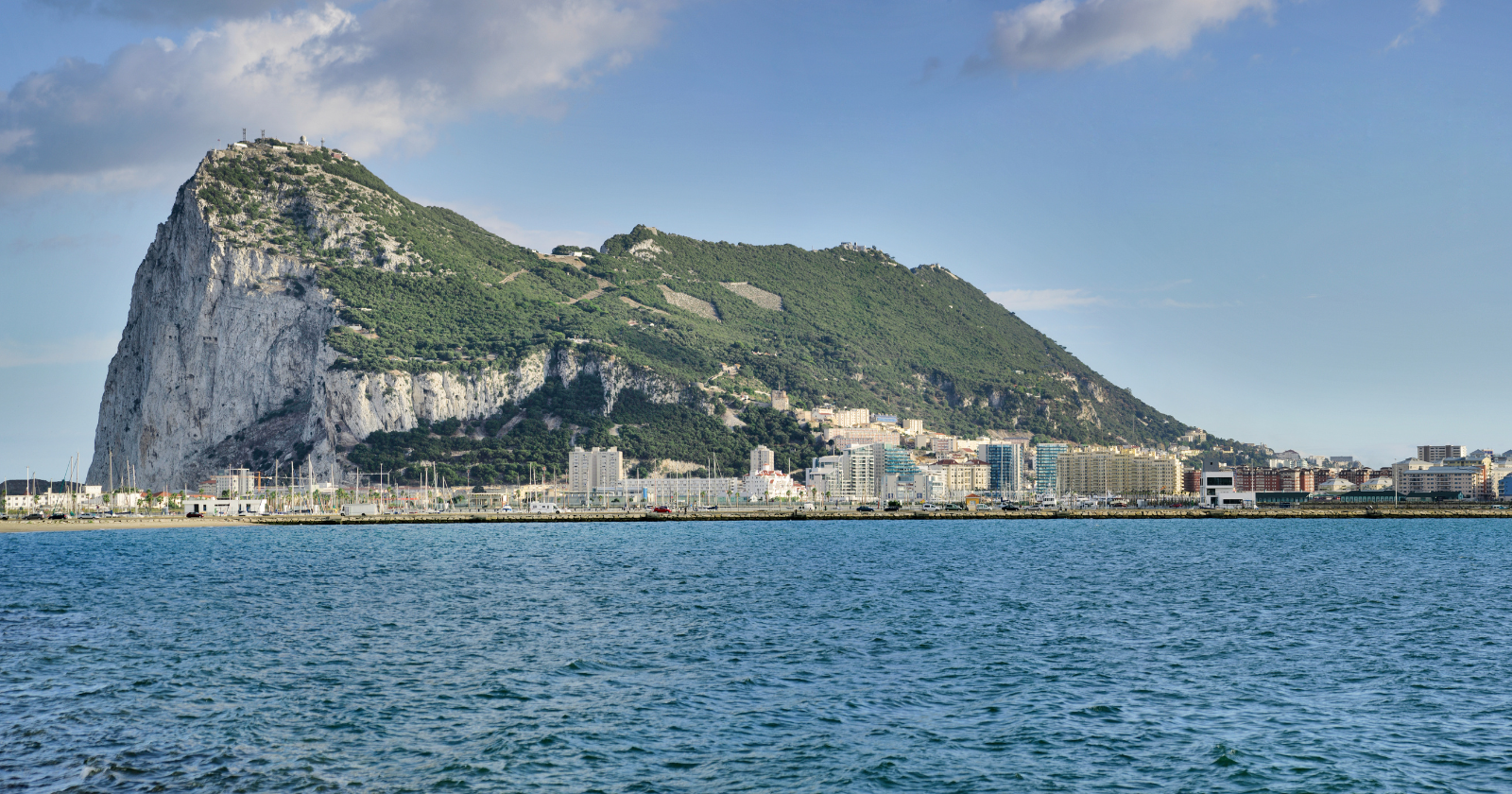
Around 5.33 million years ago, Atlantic water surged through the Gibraltar region in what’s now called the Zanclean flood. The most dramatic estimates of its speed come from a 2009 Nature modelling paper by Daniel Garcia-Castellanos and colleagues, so it’s worth holding the specifics lightly. Later studies have found additional geological evidence for a catastrophic flood, but the Mediterranean’s condition before the event and the precise manner of its refilling are still argued over. I’m no geoscientist, and the people who are haven’t fully settled this.
What researchers identified in the strait was a roughly 200-kilometre erosional channel incised more than 250 metres into the bedrock in places. Feed that shape into a model of how rushing water cuts rock and you get a refill that is genuinely hard to picture. The authors write that “our results suggest that 90 per cent of the water was transferred in a short period ranging from a few months to two years”. A basin transformed over hundreds of thousands of years may have returned to near-modern levels in a time you could mark on a calendar.
The peak flow the model implies is around 100 million cubic metres per second, roughly a thousand times the flow of the modern Amazon River pouring through a single gap. The line that gives the whole thing its scale is how fast the sea surface climbed. As the authors put it, “this extremely abrupt flood may have involved peak rates of sea level rise in the Mediterranean of more than ten metres per day”. Not per year. Per day.
It’s tempting to imagine a wall of water, some giant Niagara at the mouth of the strait. The authors head that off directly. “We do not envisage the flood as a waterfall, as is often represented,” they write. The model points instead to water flowing down a broad, long slope, cutting deeper as its discharge increased. That somehow makes it worse, not better. A waterfall is an image the mind can file away. A ramp kilometres across, speeding up as it eats its own bed, is harder to shelve.
What I keep turning over is this. An event that reshaped an entire sea, that may have transferred most of its water in months to two years, barely registers as a moment in the rock. Against the roughly 640,000 years of the Messinian Salinity Crisis, the flood is nearly instant, a sharp transition where evaporitic and brackish deposits give way to marine sediment. The planet did something colossal, and deep time swallowed it almost without a mark.
We measure our own history in centuries and feel the weight of them. The Mediterranean was transformed and then returned to open-marine conditions in a geological blink, and the only witnesses were the plates and the salt. There’s no tidy moral to extract from that, no lesson about resilience or scale. Just a flood so fast it barely counts as an event, sitting quietly in a layer of rock, waiting to be read.