
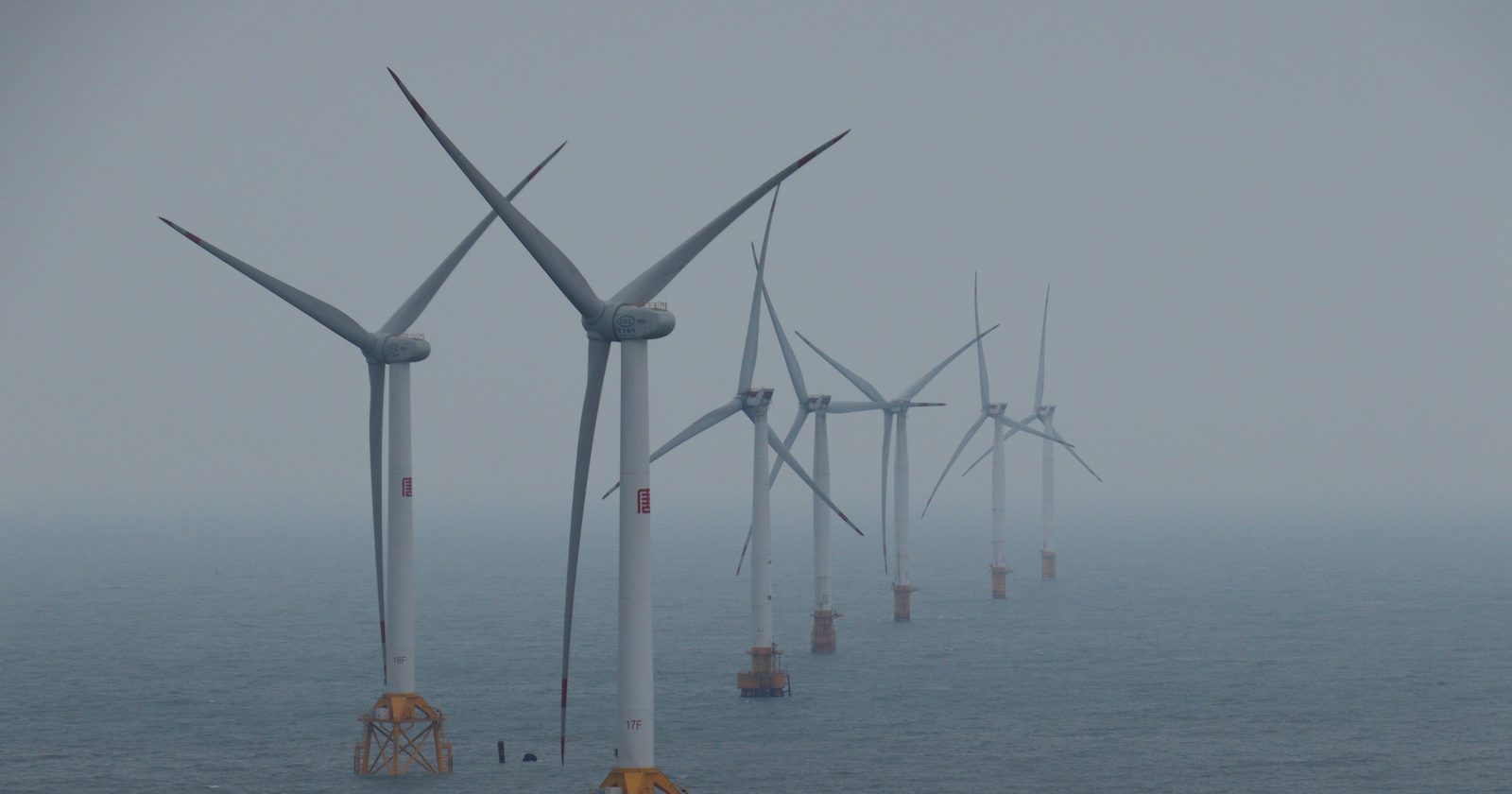
On most nights, the wind turbines standing in the Dutch North Sea do what they were built to do: spin, and feed power into the grid. On the night of Saturday, 13 May 2023, a cluster of them did the opposite. For four hours, the machines at the Borssele wind farms and a wind farm near Egmond aan Zee were slowed almost to a stop, turning no faster than two rotations per minute.
Nothing was broken. The wind was fine. The turbines were stilled on purpose, because millions of birds were expected to pass overhead in the dark.
What makes this worth attention is not the one dramatic night. Someone worked out how to see the birds coming two days early, and built a repeatable procedure around that forecast.
Turbines running, turbines stilled
The shutdown itself was short and undramatic to watch. The turbines were brought close to standstill and held there for four hours during the peak of the expected migration, then allowed to spin back up. Dutch Climate and Energy Minister Rob Jetten leaned hard into the moment. Jetten described it as “an international first, nowhere in the world are wind farms at sea shut down to protect birds during massive bird migration.”.
The more durable point sits underneath the ceremony. This was never meant to be a one-off gesture. It was a test run of a rule that could be used again.
How the call gets made
The trigger was a forecast. A computer model built at the University of Amsterdam predicts how heavy bird migration over the North Sea will be, roughly 48 hours ahead. It does this by combining weather data with readings from bird radar. Getting reliable warning that far out is what makes the whole thing work.
The two-day lead time is not really about the birds. It is about the electricity. A wind farm dropping offline on short notice is a headache for whoever has to keep the high-voltage network balanced. The Dutch government’s own explanation put it plainly: “the time span of two days gives grid operator TenneT time to guarantee the stability of the high-voltage grid.” Knowing on a Thursday that the following Saturday night will be busy lets the grid operator line up power from elsewhere before the turbines go quiet.
What four dark hours cost
Switching off a working wind farm has an obvious price: the power you do not generate. That is the case against doing this casually, and it is a fair one. The Dutch answer is not “shut down often” but “shut down rarely, and only when it counts.”
That is the logic in the peer-reviewed work from the Amsterdam group. Their paper in the Journal of Applied Ecology argues that turbines in a major migration route can raise collision deaths for vulnerable bird populations. Limiting shutdowns to short, intense migration windows, guided by near-term forecasts, keeps the lost power small while cutting the harm. Four hours, a couple of nights a season, is a very different bargain from keeping a wind farm dark all spring.
The specific risk this targets
The measure is aimed at one narrow, predictable danger: mass migration at night.
Tim van Oijen of the Dutch bird protection group Vogelbescherming Nederland described the pattern this way: “twice a year, in spring and autumn, millions of birds migrate over the North Sea on some nights.” Not most nights. Some nights. The migration packs into a handful of dark hours when conditions line up, which is exactly why a forecast can catch it and a timed shutdown can meet it.
Experts have put the toll at around 50,000 birds a year killed by offshore turbine blades as wind farms spread along migration routes. The risk is not spread evenly. It spikes on the nights the birds move in bulk, and those are the nights the procedure is designed to cover.
From one night to a standing rule
The May shutdown was the pilot. The actual policy arrived that autumn. The “Start/Stop” procedure was put together by the Dutch infrastructure agency Rijkswaterstaat with wind farm owners, TenneT, the bird protection group and the North Sea Foundation, and it took effect for the autumn 2023 season. On the predicted big-migration nights, shutdown advisories went out.
The first real test of the standing rule came in October. Advisories were issued for the nights of 8, 16 and 31 October 2023, and an early read of the bird-radar data found a migration peak at two of the three predicted times. Two out of three is not a failure and it is not perfection. It is roughly what you would expect from a young forecasting tool doing something no one had put into practice before.
Jetten was pleased. He said that “all parties involved worked well together and set this up in a relatively short time, so it is a great initiative that I am very proud of.” He also framed the intent: “we want to keep the impact of wind farms on nature as small as possible.”
The famous part of this story is the single quiet night in May, the one that got the “international first” label. The useful part is the plain machinery behind it: a forecast that fires two days out, a grid operator with enough warning to stay stable, and a written procedure anyone can run again next season. A one-off shutdown protects one night of birds. A repeatable, forecast-triggered rule is what another country with turbines in a flyway can actually copy. The model, not the ceremony, is the export.
