

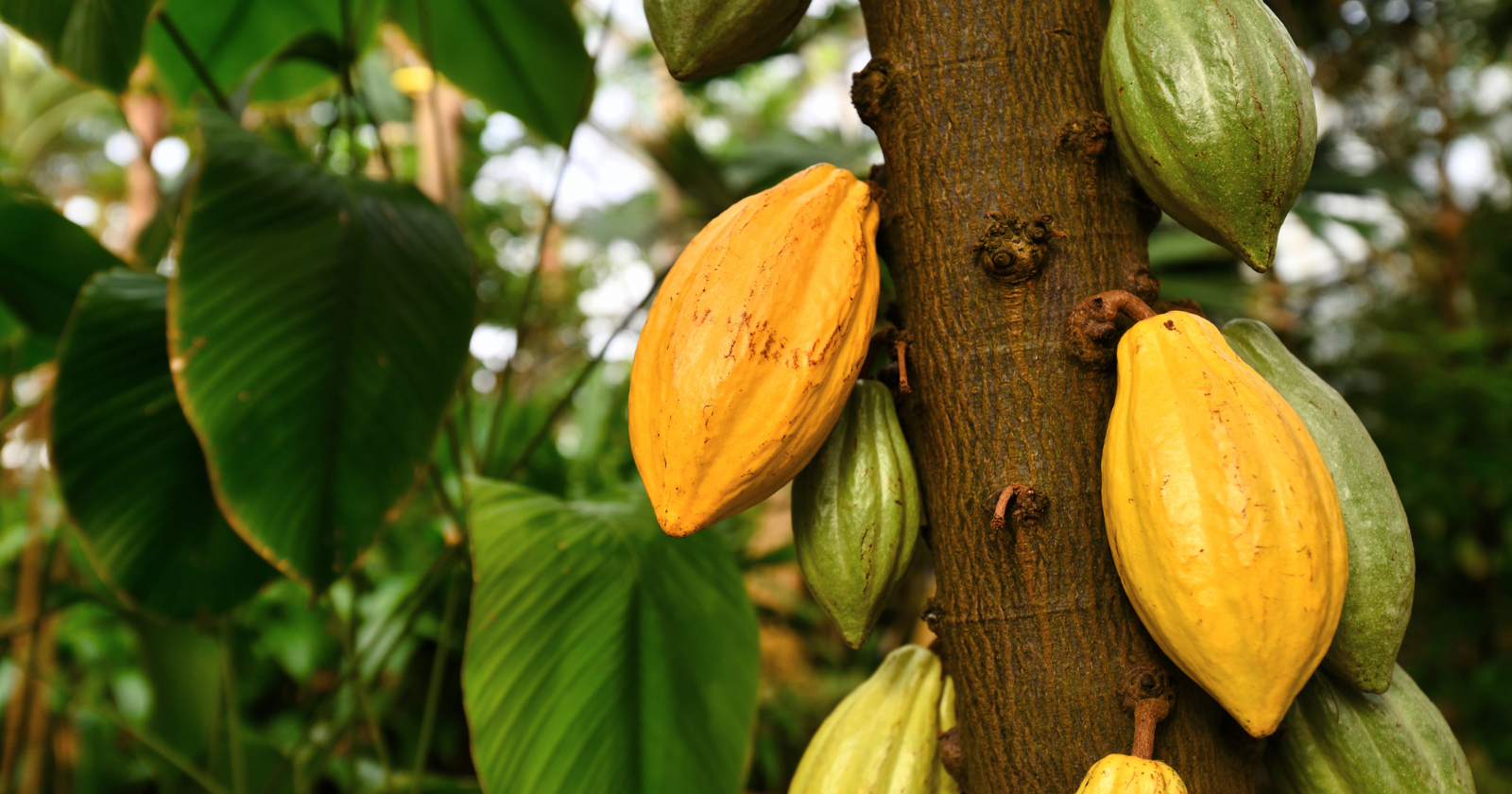
Picture a market in Tlaxcala in 1545, a generation after the Spanish arrived. A shopper wants a tomato. She hands over a single cacao bean, the same dried seed you’d roast and grind to make chocolate, and walks away. No silver coin changes hands. The bean is the small change.
Not a metaphor. Across Mesoamerica, cacao beans worked as commodity money long before European coins reached the continent and continued circulating alongside Spanish money after the conquest. Their use is well documented among the Aztecs, and professor Joanne Baron argues that they had taken on monetary functions among the Classic Maya by around the eighth century.
So when people say money doesn’t grow on trees, they’re describing an exception. For centuries, in one part of the world, it did.
The bean that ran an empire
Cacao makes an odd kind of sense as money once you look at what it had to do.
The beans are small, easy to count and portable. People also genuinely wanted them. Useful, countable and portable is close to a textbook description of what a low-value coin needs to be.
Scarcity did the rest. Cacao grows in hot, humid lowlands, not in the cool highlands where the Aztec capital sat. The beans had to be carried up from tropical regions, and rulers pulled them in as tribute, which kept them valuable where most people lived.
What a bean was worth
We know the prices because someone wrote them down. A 1545 market-price ruling from Tlaxcala records exchange rates in cacao beans, and reading it feels like flipping through a very old menu. A large tomato cost one bean. A good turkey hen ran about 100 full beans, while a male turkey cost about 300. A turkey egg cost three beans.
What strikes me is how fine-grained this was. A currency where one unit buys a single tomato can price almost anything, right down to the cheapest thing in the market. That’s a real economy running on chocolate.
When money grows on trees, someone will fake the harvest
The tell that cacao was real money: people forged it. You don’t bother counterfeiting something nobody values.
The best early account comes from the Florentine Codex, compiled by the Franciscan friar Bernardino de Sahagún and his Nahua collaborators in the sixteenth century. Describing the “bad cacao seller,” it lists his methods: with “amaranth seed dough, wax, avocado pits” he counterfeits cacao, then covers the fakes with real cacao bean hulls. He made a fake bean out of cheap material and dressed it in a real shell.
Later retellings add other tricks. According to Mental Floss, some forgers painted or dyed imitations, while others emptied real beans and filled them with mud or sand.
Why chocolate money is more than a novelty
The most interesting recent work reaches further back, to the Classic Maya period of roughly 250 to 900 CE, centuries before the Aztecs. Prof. Joanne Baron studied about 180 scenes on murals, painted pots and carvings, and noticed cacao showing up more often as tribute and payment from the eighth century onward.
She argues that “these products, originally valued for their use in status display, took on monetary functions within a context of expanding marketplaces among rival Maya kingdoms.” Things once shown off to signal status started being used as money as trade between rival kingdoms grew.
Part of her reasoning is about surplus. Looking at scenes of cacao flowing into palaces, Baron notes that rulers were “collecting way more cacao than the palace actually consumes”, which she thinks was probably used to pay workers or buy goods rather than drunk. This is one researcher’s reading of the artwork.
What stays with me is how the strangeness fades the longer you sit with it. A cacao bean has no more built-in “money-ness” than a coin or a banknote; a slip of paper is only worth something because enough people agree it is. Cacao was scarce, countable and wanted, and a whole society agreed to keep score with it.
The odd part was never that they used chocolate. It’s that we’ve convinced ourselves our own version is any less arbitrary…but that’s a post for another day.