
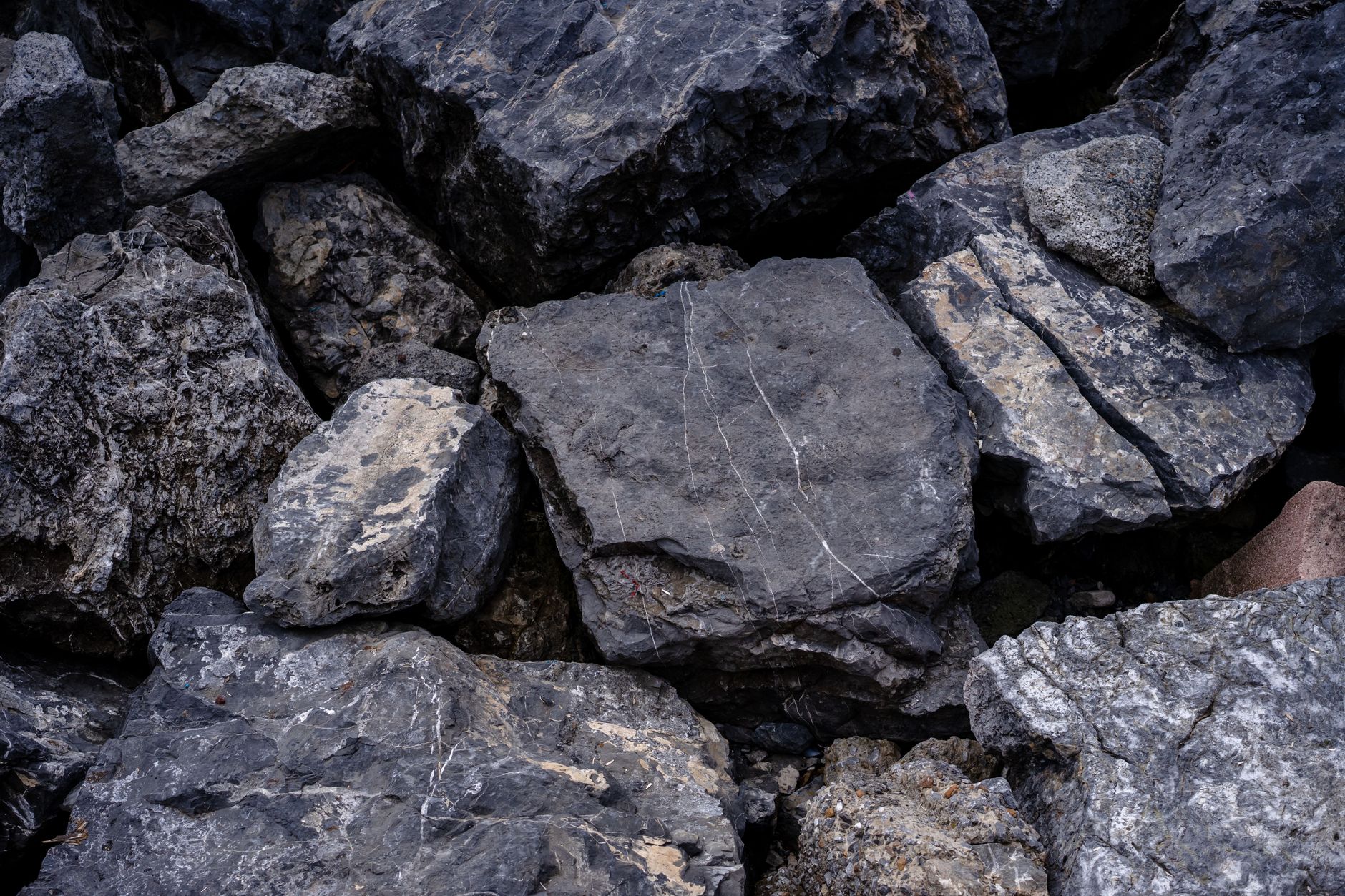
On the morning of 28 September 1969, a meteorite broke apart over the town of Murchison in Victoria, Australia. Local people collected fragments from roadsides, paddocks and roofs, and the material quickly became one of the most studied meteorites in the world.
That would have been enough to make Murchison scientifically important. It is a carbonaceous chondrite, a primitive, carbon-rich meteorite that preserved chemistry from the early solar system. But half a century later, the same fall gave scientists something even older than the solar system itself: tiny grains of stardust that formed before the Sun, before Earth, and before any planet in our neighbourhood existed.
The grains are not old in the way ordinary rocks are old. They are older than the body that carried them. They are older than the cloud of gas and dust that collapsed to make the Sun. In a 2020 PNAS paper led by Philipp Heck, researchers reported cosmic-ray exposure ages for presolar silicon carbide grains extracted from the Murchison meteorite. The grains’ interstellar exposure ages, added to the age of the solar system, implied that some of the material was up to roughly 7 billion years old.
What makes a grain presolar
A presolar grain is exactly what the word says: a solid particle that existed before the Sun.
Stars manufacture elements and shed material into space, especially late in their lives. In the outflows from some ageing stars, minerals can condense as tiny solid grains. Those grains drift through interstellar space. Most are destroyed, altered or reworked before they can become part of a new planetary system. A few survive.
Murchison preserved some of those survivors. The Field Museum, which holds a major portion of the meteorite, describes presolar grains as solid samples of stars, trapped inside meteorites and left largely unchanged for billions of years. That wording is vivid, but it is not an exaggeration in the basic sense. The grains formed around earlier stars and later became locked inside the material that built our solar system.
The particular grains in the 2020 study were silicon carbide, a compound of silicon and carbon. They are extremely small. The Field Museum notes that presolar grains are rare and tiny, found in only a small fraction of meteorites. The scientific value is not in their size. It is in their isolation from the later history of Earth.
How scientists dated dust older than Earth
Dating a presolar grain is not like dating a fossil or an ancient lava flow. The grains did not form on Earth, and they did not come with a simple clock that started when the meteorite landed.
The PNAS study used cosmogenic neon, especially neon-21, produced when galactic cosmic rays struck the grains while they travelled through interstellar space. The longer a grain was exposed to cosmic rays, the more of certain products could accumulate. Heck and colleagues describe these as interstellar cosmic-ray exposure ages, not calendar dates in the ordinary archaeological sense.
That distinction matters. The measured exposure ages in the paper ranged from only a few million years up to about 3 billion years before the beginning of the solar system, with large uncertainties for the oldest grains. Add those presolar residence times to the Sun’s age of about 4.6 billion years, and the oldest grains reach the familiar headline figure of around 7 billion years.
This is why careful wording matters. The study did not say the whole Murchison meteorite is 7 billion years old. The meteorite is a solar-system object, and its parent material belongs to the early history of our own system. What is older are particular presolar grains inside it, microscopic survivors that predate the meteorite and the Sun.
Why Murchison mattered so much
Murchison was useful partly because so much of it was recovered. Museums Victoria lists a total weight of 108 kilograms for one Murchison specimen record and gives the fall date as 28 September 1969. The Field Museum’s Murchison meteorite page similarly notes that about 100 kilograms were recovered and made available to science.
That availability made a difference. Meteorites are not just space rocks. They are archives, and some archives are only readable if enough material exists for different laboratories to work on different questions over decades. Murchison has been studied for amino acids, organic compounds, presolar grains and the chemistry of the early solar system.
Its fame is often linked to organic chemistry, and rightly so. A 1973 Geochimica et Cosmochimica Acta paper by James Lawless and colleagues reported a wide variety of amino acids in Murchison and interpreted them as the result of extraterrestrial, abiotic synthesis. That finding belongs to a separate line of research from the 7-billion-year-old stardust claim, but together they show why Murchison became such an unusually rich object for planetary science.
The oldest solid material on Earth
The phrase “oldest solid material ever identified on Earth” can sound almost too neat, so it is worth unpacking. Earth itself is about 4.5 billion years old. The Sun is about 4.6 billion years old. The oldest minerals formed on Earth, such as ancient zircons, are younger than those presolar grains.
The Murchison grains are older because they did not form here. They arrived as passengers inside a meteorite. They were not made by Earth’s geology, and they were not made by the solar system. They are pieces of an earlier generation of stellar material that survived long enough to be incorporated into the birth environment of our Sun, then later into a meteorite, then finally into a fall observed over rural Australia.
The PNAS paper is cautious about what the ages mean. It notes that neon exposure-age dating is currently the only viable method for dating presolar grains, and that the method has large uncertainties. The authors also interpret the age distribution as possibly connected to an episode of enhanced star formation around 7 billion years ago. That interpretation is interesting, but it should not be confused with the simpler claim: some Murchison grains are older than any solid material known from Earth itself.
A rock that made Earth’s age feel local
There is something disorienting about holding a meteorite and realising that part of it is older than the planet beneath your feet. We normally treat Earth as the old thing, the stable floor under the younger details of life. Murchison reverses the scale.
The town, the fall, the collected fragments, the museum drawers and the laboratory acids all belong to recent human history. The meteorite belongs to the early solar system. But the smallest grains inside it belong to an even older story, one written before the Sun had begun to shine.
That is the quiet force of the Murchison discovery. The oldest material identified on Earth did not come from the deepest mine or the oldest exposed rock. It fell out of the sky, landed near an Australian town, and waited inside a black, carbon-rich stone until scientists learned how to read dust as a record of stars that died before our world existed.
