
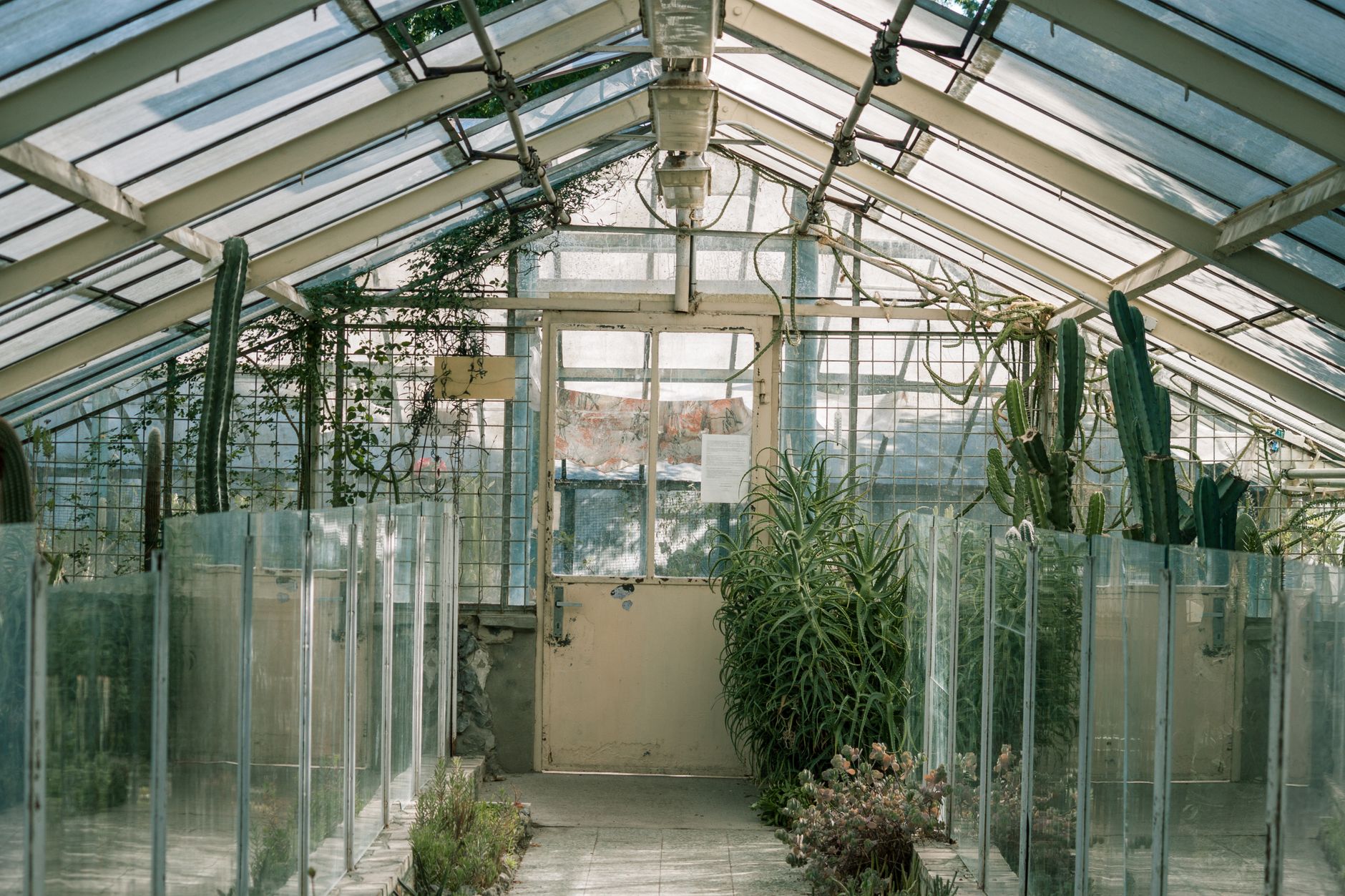
The point of Biosphere 2 was that nothing important was supposed to leave.
On 26 September 1991, eight people stepped into a vast glass-and-steel enclosure near Oracle, Arizona, and the doors were sealed behind them. Inside were living quarters, farmland, a rainforest, a savanna, a desert, wetlands and a small ocean. The aim was not simply to make a greenhouse large enough for people. It was to test whether a closed ecological system could keep human beings alive by cycling air, water, food and waste inside a miniature world.
For a while, the experiment looked like a strange public rehearsal for off-world living. Then the air began to change.
The University of Arizona, which now runs Biosphere 2, describes the original facility as a sealed glass enclosure used for two human missions between 1991 and 1994 to study survivability and closed-system behaviour. The first crew remained inside for two years, from 1991 to 1993, in a structure the university says became a tool for asking how large ecological systems behave under controlled conditions.
The question turned out to be harder than the architecture made it look. The problem was not only growing food or managing morale. It was oxygen.
The air was thinning
In a normal room, oxygen concentration is stable because the room is connected to the atmosphere outside. Open a door, run ventilation, allow leaks, and the air is constantly refreshed. Biosphere 2 was different. It was not perfectly sealed in the absolute sense, but it was sealed tightly enough for slow internal imbalances to accumulate instead of being washed away by outside air.
A 1994 paper in Eos, Transactions American Geophysical Union by Jeffrey P. Severinghaus, Wallace S. Broecker, William F. Dempster, Taber MacCallum and Martin Wahlen described the core failure plainly. During the first 16 months of closure, oxygen inside Biosphere 2 fell from ambient levels, about 21 percent, to about 14 percent. The authors wrote that the decline was enough to cause health problems in the human occupants.
That number is the heart of the story. Fourteen percent oxygen is not a subtle environmental shift when people are living inside the system every hour of every day. Accounts of the mission describe fatigue, headaches and impaired concentration. Earth Magazine’s account of the experiment notes that by the time oxygen had fallen near 14 percent, the biospherians were effectively living at high altitude, and the project eventually added oxygen from outside.
That intervention damaged the public image of Biosphere 2 because the experiment had been sold, at least in its most romantic version, as a closed world. But the oxygen problem was also exactly the kind of thing a closed-world experiment was capable of revealing.
The obvious explanation was not enough
If oxygen drops in a sealed living space, the first explanation seems straightforward. People breathe oxygen. Animals breathe oxygen. Soil microbes use oxygen as they break down organic matter. Plants release oxygen during photosynthesis. If the balance goes wrong, oxygen falls.
That was part of what happened. The soils inside Biosphere 2 had been packed with organic matter, including compost and peat, to support crops and ecosystems. Microbes in those soils respired rapidly, consuming oxygen and releasing carbon dioxide.
But the chemistry still did not balance. If oxygen was being consumed and carbon dioxide was being produced, carbon dioxide should have accumulated in a matching way. It did rise, sometimes sharply. But it did not explain all the missing oxygen.
The 1994 Eos paper argued that the missing piece was not alive at all. Carbon dioxide produced by soil respiration was reacting with exposed concrete inside Biosphere 2, forming calcium carbonate. In a normal building, this kind of concrete carbonation is slow background chemistry. In a closed ecological system, it becomes part of life support.
That is why the oxygen seemed to disappear. Some of it had been used in respiration, while the carbon dioxide that should have revealed the full process was being trapped in the structure itself.
The building joined the ecosystem
This was the unnerving lesson. Biosphere 2 did not merely contain an ecosystem. It became one.
The soil was not just a place for plants to grow. It was an oxygen-consuming microbial engine. The glass was not just a roof. It affected how much sunlight reached the plants. The concrete was not just a foundation. It reacted chemically with the atmosphere. The people were not just observers. They were breathing inside the experiment they were measuring.
A later paper in Advances in Space Research by William F. Dempster described Biosphere 2 as a tightly closed ecological system that made subtle atmospheric processes visible. According to that paper, oxygen declined at an average rate of about 140 parts per million per day during the first 16 months, reaching about 14.4 percent after roughly 475 days. Dempster argued that the facility’s low leakage rate allowed slow changes in air composition to accumulate instead of being masked by dilution with outside air.
That is the difference between Biosphere 2 and an ordinary greenhouse. A greenhouse can tolerate imbalance because the outside world is always available. A closed world has to account for everything.
A public experiment became a private warning
Biosphere 2 became famous partly because it was so visible. The crew were sealed in front of cameras. The structure looked like a futuristic promise. It invited a simple question: could humans build a small version of Earth?
The oxygen decline made the answer awkward. The system could grow food, recycle water and keep people alive for a long time. But it could not do so without intervention. The outside oxygen added in 1993 was not a minor footnote. It showed that the atmospheric budget had moved beyond what the crew could safely endure.
Earth Magazine’s retrospective describes the same sequence as the “case of the missing oxygen”: oxygen fell, carbon dioxide rose, soil respiration exceeded expectations, and geochemists Wallace Broecker and Jeffrey Severinghaus helped trace the problem to a combination of soil metabolism and concrete chemistry. The article notes that exposed concrete provided an efficient sink for carbon dioxide, helping explain why the carbon dioxide did not simply remain in the air in proportion to the oxygen loss.
The human side of that story is easy to dramatise. Eight people were trapped under glass, breathing a thinning atmosphere, while the system around them behaved in ways the designers had not fully predicted. But the deeper story is more useful than the spectacle. Biosphere 2 showed how quickly a closed environment turns every material into part of the survival equation.
Why Earth makes this look easy
Earth is also a closed system in some ways, but it is not Biosphere 2 scaled up neatly. It has an enormous atmosphere, oceans, rocks, soils, ice sheets, forests, plankton and weather systems operating across vast timescales. Local imbalances can be buffered by reservoirs that dwarf any human-built enclosure.
Biosphere 2 had no such margin. Its air volume was limited. Its soils were newly assembled. Its light supply was filtered through glass and structure. Its crops, microbes, animals, humans and building materials all shared the same atmospheric account.
That is why the oxygen loss still matters. It was not only a historical curiosity from the 1990s. It was a warning for any attempt to build closed habitats for submarines, spacecraft, Moon bases, Mars missions or disaster-resilient ecological systems. Keeping people alive is not just a matter of supplying oxygen. It is a matter of understanding every process that removes it, stores it, hides it or turns it into something else.
Joel Cohen and David Tilman made a related argument in a 1996 Science article on Biosphere 2 and biodiversity, writing that the experiment offered lessons about the interdependence of organisms and the difficulty of maintaining ecosystem services in a closed system. Their article treated Biosphere 2 not simply as a failed spectacle, but as a large and imperfect experiment that revealed how dependent humans are on ecological functions that are usually invisible.
The glass world did not fail simply
It is tempting to reduce Biosphere 2 to a punchline: people built a miniature Earth and had to pump in air. But that version misses the value of what happened.
The first mission did complete its two-year closure. The crew survived. Food was grown. Water was recycled. The system produced data that researchers are still able to discuss decades later. At the same time, the experiment exposed a failure that could not be waved away by better slogans.
In a sealed world, the background becomes foreground. Soil microbes matter. Concrete matters. Light levels matter. Every invisible exchange between oxygen, carbon dioxide, plants, people and minerals becomes part of whether the next breath is easy or difficult.
That is why the disappearing oxygen remains the most enduring image from Biosphere 2. The experiment nearly unravelled not because people forgot that humans breathe, but because a closed living world is less like a machine than a negotiation. The air was not just inside the building. It was being argued over by every living and non-living part of the system.
