
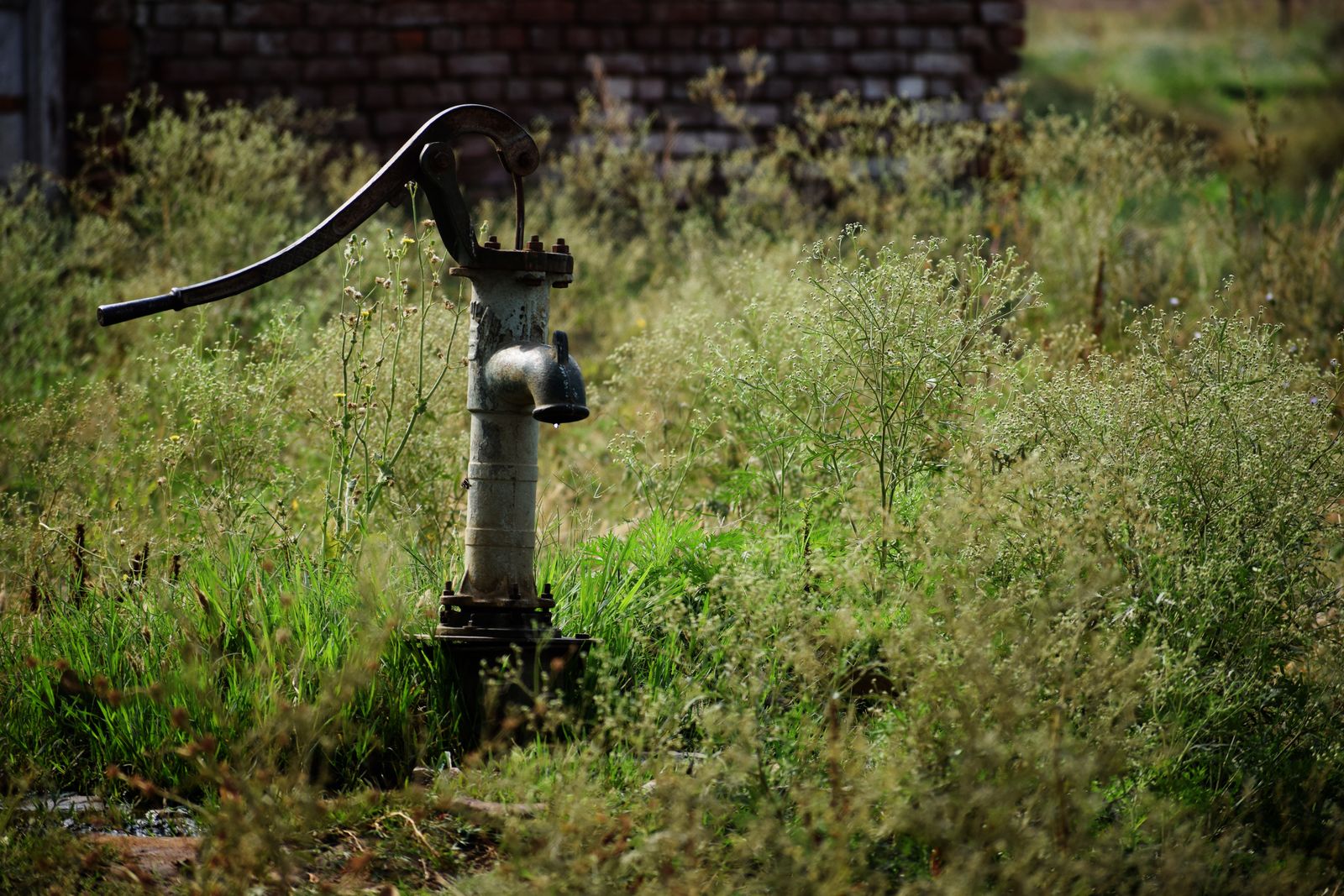
On September 8, 1854, a Soho physician named John Snow persuaded the Board of Guardians of St James’s parish to unscrew the handle from a water pump on Broad Street. The cholera outbreak that had killed 616 people in ten days was already ebbing, but the new cases collapsed almost immediately after. The handle came off decades before germ theory was accepted, before anyone in London medicine believed water could carry disease, and before the word bacteria meant anything to a doctor. Snow had no microscope evidence. He had a map, a list of addresses, and a hunch he had spent five years refining.
A replica pump now stands on what is now Broadwick Street, its handle deliberately missing, a few steps from a pub named for him.
A neighbourhood that died in ten days
Soho in 1854 was one of the most densely packed districts in Europe. Cesspits sat under floorboards. Slaughterhouses shared walls with tenements. When cholera arrived at the end of August, it moved through the streets around Broad Street with a speed that terrified even doctors accustomed to epidemics.
Whole families died between breakfast and supper. Contemporary accounts of the Soho outbreak describe carts collecting bodies through the night. Most of the residents who could flee did. Businesses shut. The Reverend Henry Whitehead, a young curate in the area, stayed and buried his parishioners.
The prevailing explanation was miasma: bad air rising from the Thames, from open drains, from the rotting matter that gave Victorian London its famous smell. It was a reasonable theory in a city where cholera did seem to strike hardest in the foulest-smelling streets. It was also wrong.
The doctor who kept knocking on doors
Snow was a Yorkshire-born anaesthetist who had administered chloroform to Queen Victoria during childbirth. He was already known in medical circles for arguing that cholera was spread not by air but by something swallowed — a disease agent carried in water contaminated by the discharges of the sick. The idea had been almost universally dismissed.
When the Broad Street outbreak began, Snow walked into the parish and started asking questions. Where did each dead person get their water? Which pump? How often? He worked with Whitehead, who knew the residents by name and could vouch for their habits.
The pattern that emerged, mapped as a series of black bars stacked on the addresses of the dead, clustered visibly around the pump at the corner of Broad and Cambridge streets. Deaths thinned out as the distance from that pump grew. Outliers had explanations. A widow in Hampstead, miles north, had died of cholera without ever going near Soho — her son told Snow she had water brought from Broad Street because she preferred its taste.
The anomalies that clinched it
Two clusters of buildings in the outbreak zone were almost untouched. One was the Lion Brewery on Broad Street itself, where the workers drank the beer they were allowed as part of their wages and used the brewery’s own deep-bore well. None of the employees fell ill. The other was the Poland Street workhouse, which had hundreds of inmates packed into buildings surrounded by dying households; the workhouse had its own pump, and only a handful of inmates died.
The absence of cases at the brewery and the workhouse was as important to Snow’s argument as the presence of cases everywhere else. Miasma could not explain why one building on Broad Street was spared while the tenement next door was gutted. Water could.
The contamination itself was traced later by Whitehead, doggedly re-interviewing survivors. An infant living at 40 Broad Street had died of what a doctor called “diarrhoea” in early September. The child’s mother had rinsed the soiled nappies in a bucket and tipped the water into a cesspit in the front area of the house. The cesspit sat close to the Broad Street well. Its brick lining had decayed. Sewage had been seeping into the drinking water for days before the outbreak began, and the case that started the epidemic was the baby whose waste had leaked in.
Removing the handle
Snow presented his findings to the Board of Guardians. The board was skeptical — miasma was orthodoxy, and Snow’s theory sounded strange — but they agreed to remove the pump handle as a precaution.
The outbreak was already declining by then; many of the susceptible were dead or had fled. But new cases stopped almost entirely within days. Snow’s report, published the following year, laid out the case anyway.
His larger project, sometimes called the Grand Experiment, compared households south of the Thames served by two water companies. The Southwark and Vauxhall Company drew its water from a filthy stretch of the river; the Lambeth Company had recently moved its intake upstream, above the tidal reach of London’s sewage. Snow found dramatically higher cholera death rates among Southwark and Vauxhall customers compared to Lambeth customers. Same neighbourhoods, same streets, sometimes the same buildings — different pipes, different rates of death by an order of magnitude.
Why medicine refused to listen
The response from the establishment was, essentially, a shrug. The medical establishment reviewed Snow’s evidence and concluded that the miasmatic theory remained the best explanation. William Farr, the great Victorian statistician, initially believed cholera was tied to elevation above the Thames — the higher you lived, the cleaner the air, the safer you were.
Germ theory did not become respectable until Louis Pasteur’s work in the 1860s and Robert Koch’s identification of Vibrio cholerae in the 1880s, three decades after Snow drew his map. The Broad Street investigation is now taught as the founding moment of modern epidemiology, but at the time Snow was arguing with a medical culture that had no framework for what he was describing. He died in 1858 before either Pasteur or Koch had confirmed him.
What changed London was not the acceptance of Snow’s theory but the smell. The Great Stink of 1858, when the Thames grew so foul that Parliament could not sit, prompted the construction of Joseph Bazalgette’s sewer system. That engineering project ended cholera in the capital. It was built for the wrong reason — to remove miasma — and worked for Snow’s reason.
The lineage of the handle
The Broad Street pump became a template. Every subsequent outbreak investigation — yellow fever in New Orleans, plague in San Francisco, Legionnaires’ disease in Philadelphia, Ebola in West Africa — has some genetic material from Snow’s method: map the cases, find the shared exposure, cut the link. The door-to-door case finding deployed during the 2014 Ebola outbreak is Snow’s Soho door-knocking scaled up by a factor of several million.
Contact tracing during COVID-19 ran on the same logic. So does every restaurant closure after a norovirus cluster, every water advisory issued when E. coli shows up in a municipal supply, every schoolyard measles investigation. The instinct to ask where were you, what did you drink, who did you touch is a direct descendant of the notebook Snow carried through Soho.
The institutional shape of modern public health — sanitary inspectors, notifiable diseases, disease registries, the whole architecture of prevention rather than cure — took decades to build on the foundations Snow laid.
What survives on Broadwick Street
The original pump was removed long ago. A replica stands near the corner, its handle missing on purpose. A pink granite kerbstone marks where the well shaft opened onto the street. The John Snow pub, a few paces away, is the closest thing London offers to a cholera monument.
Cholera itself has few public memorials, which historians of medicine find telling. As one recent essay on plague memorials observed, the disease killed by the mass grave rather than the battlefield, and grieving cities preferred to forget. Monuments to cholera dead were often built decades after the outbreaks themselves. The dead of Broad Street lie in unmarked pits across London.
What remains is the missing handle, a piece of iron that isn’t there. The absence is the memorial. A doctor once looked at a list of addresses, saw a shape emerge around a single well, and persuaded a board of parish officials to trust him for one night. The world in which water is expected to be safe to drink — the world of chlorinated taps and boil-water notices and municipal treatment plants — begins at that intersection, on a September evening when nobody yet believed him.
