
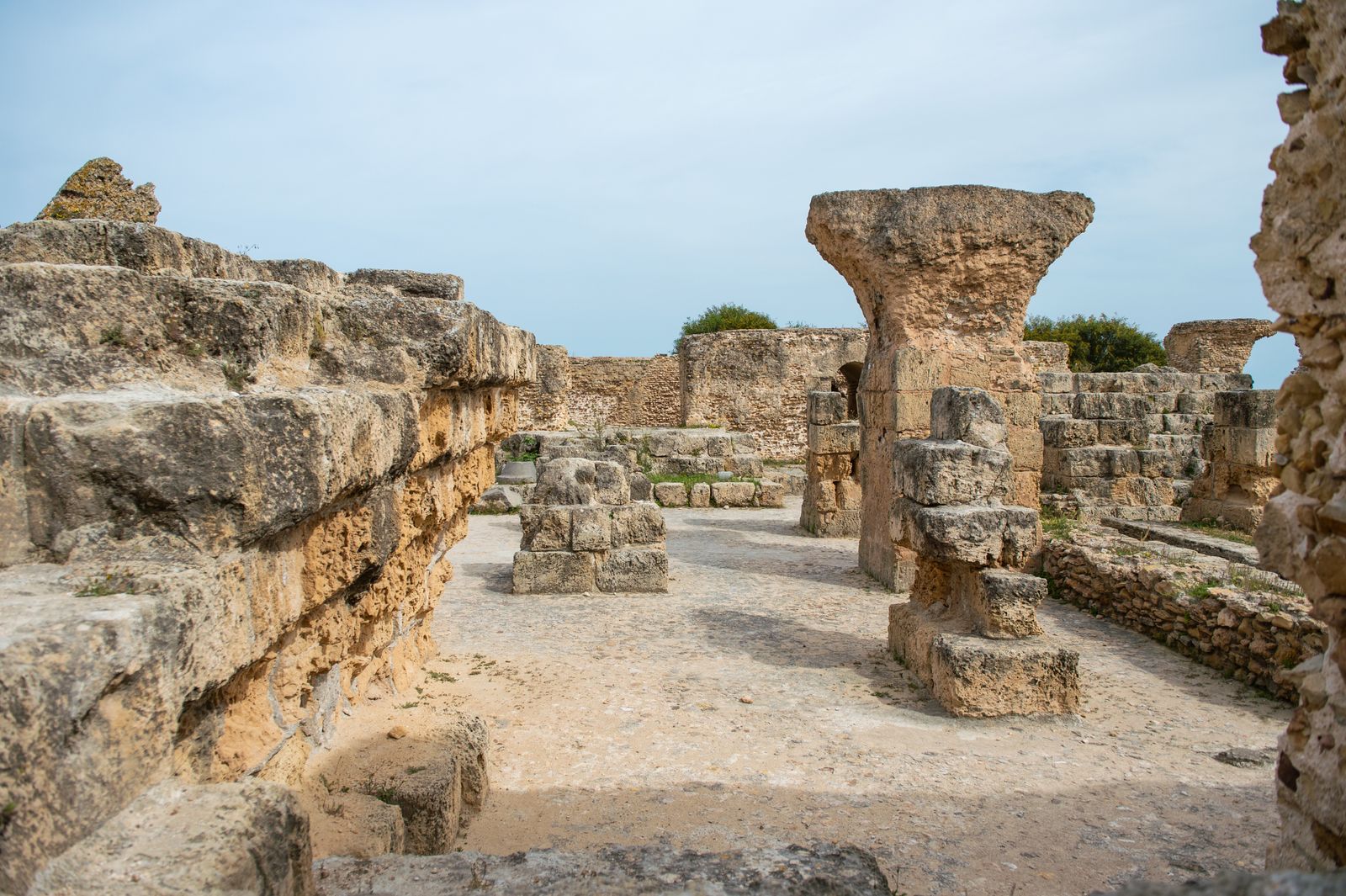
At Hadrian’s Villa in Tivoli, concrete poured beneath a communal latrine roughly 1,900 years ago survived because its lime-and-volcanic-ash binder never became completely chemically inert. A 2026 study in Science Advances, led by Xiaohong Zhu and Paulo Monteiro, found that atmospheric carbon dioxide and moisture gradually converted lime-derived material into calcite networks that filled pores and fine cracks. Modern reinforced concrete can undergo the same basic carbonation reaction, but when carbonation or seawater chlorides reach embedded steel, corrosion can split the surrounding concrete apart.
The ancient sample came from the waste collector beneath the toilet seats in the western substructures of Hadrian’s Villa. Because the latrine had escaped the extensive restoration applied to more celebrated Roman monuments, its concrete preserved an unusually undisturbed record of how the material changed across almost two millennia.
That does not mean researchers watched the wall become stronger century by century. They examined the material that exists today and found mineral structures capable of densifying the binder, bridging pores and limiting the pathways through which water and damaging chemicals move. The evidence supports long-term durability and potential self-healing, rather than a direct measurement showing that every surviving Roman wall becomes steadily stronger with age.
A toilet that preserved the chemistry
Roman concrete was not a single standardized material. The Hadrian’s Villa sample contained volcanic rock fragments and volcanic ash held together by a lime-based binder, a formulation suited to inland construction rather than direct immersion in seawater.
Zhu, Monteiro and their colleagues studied it with powder x-ray diffraction, electron microscopy, spectroscopy and synchrotron-based computed tomography. These tools allowed them to move from the bulk composition of the concrete to three-dimensional structures only tens of micrometres across.
The resulting images showed calcite growing around lime-derived particles and extending into nearby voids. Fibrous and radially arranged crystals formed bridges through the binder, improving contact between different parts of the material and reducing the connected spaces through which water could travel.
Calcite forms through carbonation, in which carbon dioxide reacts with calcium-bearing compounds. In the unreinforced Roman sample, that process created stable mineral cement inside pores and fractures. As Scientific American reported, the latrine gave researchers a rare natural experiment that had been left largely undisturbed for 19 centuries.
The finding adds to a second proposed Roman mechanism. In 2023, Admir Masic and colleagues reported evidence that some Roman builders mixed quicklime directly with volcanic material, producing high local temperatures and leaving reactive lime clasts inside the hardened mortar. Their Science Advances study argued that these clasts could later supply calcium when water entered a crack.
Three pathways through the ancient concrete
The carbonation seen at Tivoli and the lime-clast mechanism are related, but they are not identical. Carbonation describes the long-term formation of calcium carbonate throughout the binder. Lime-clast healing begins when water reaches a calcium-rich inclusion, dissolves material from it and carries that calcium into a fracture where new minerals can precipitate.
To test the second mechanism, Masic’s team produced modern blocks containing quicklime-derived clasts, deliberately cracked them and ran water through the fractures. Within two weeks, the cracks in the hot-mixed specimens had filled sufficiently to stop the water flow, while otherwise similar blocks made without quicklime did not heal.
Roman volcanic ash also participated in conventional pozzolanic reactions. Silica and alumina from the ash reacted with lime to form durable calcium-aluminium-silicate-hydrate phases around aggregates. The 2026 Tivoli study found that this interfacial chemistry remained important even though calcite dominated much of the surviving binder.
Marine Roman concrete followed another pathway. In a 2017 study in American Mineralogist, Marie Jackson and colleagues examined ancient harbour concrete from sites including Baiae and Portus Cosanus. Seawater moving through the volcanic material helped generate phillipsite and aluminium-rich tobermorite within pores and altered fragments of ash.
Those marine structures were not strengthened by the same dominant process identified beneath Hadrian’s latrine. The latrine records slow atmospheric carbonation in an inland structure. The harbour samples record low-temperature reactions among seawater, lime and volcanic ash, which continued after the initial concrete had set.
Why steel reverses the advantage
Fresh Portland-cement concrete normally creates a highly alkaline environment around reinforcing bars. That alkalinity allows a thin passive layer to form on the steel, greatly slowing corrosion as long as the concrete remains sufficiently alkaline and aggressive ions do not reach the metal.
Carbonation gradually lowers the alkalinity of the cement paste. A National Institute of Standards and Technology review describes carbonation and chloride ingress as two principal routes by which reinforcing steel can lose its passive protection.
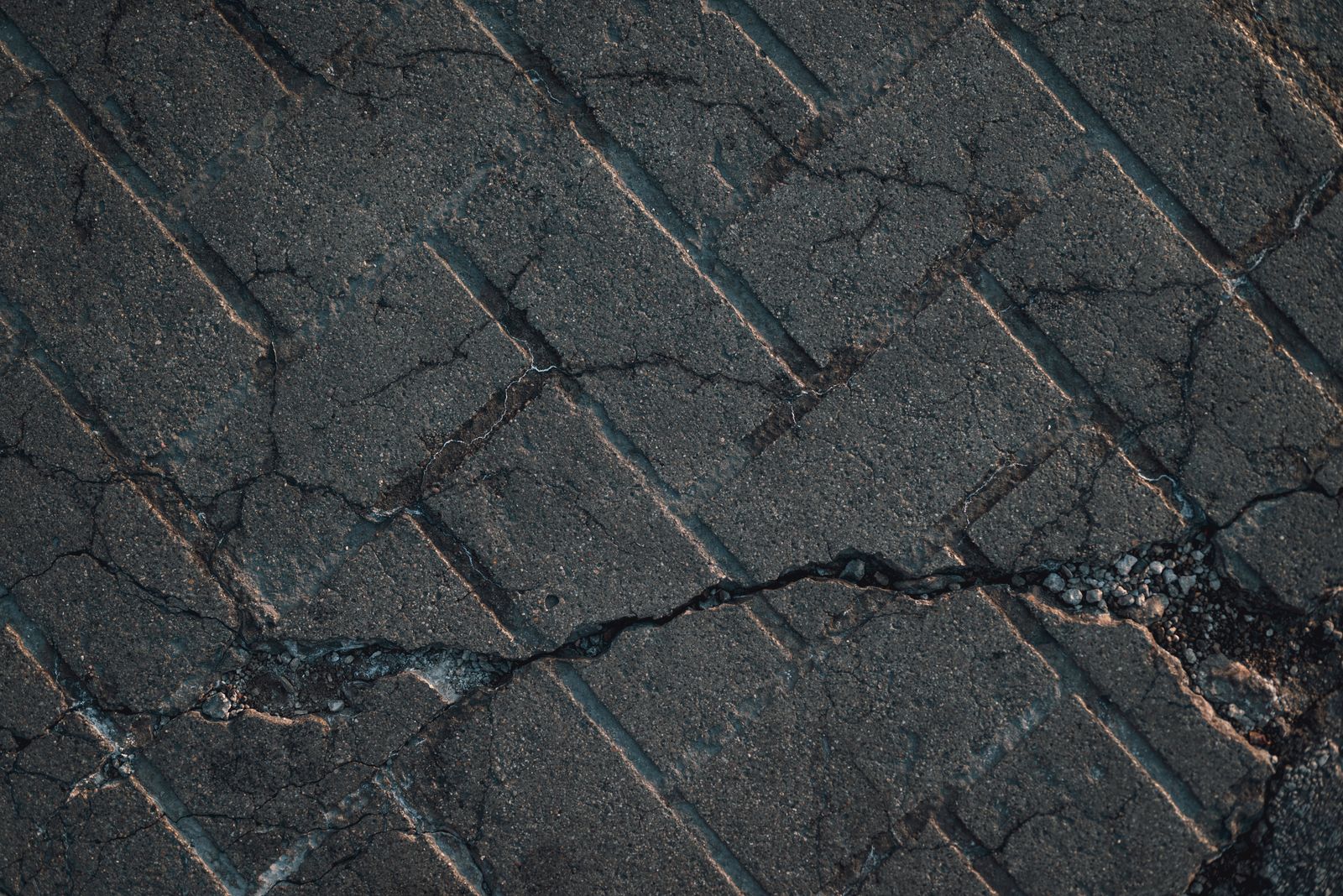
In marine structures, chlorides are often the more immediate danger. They penetrate through pores and cracks, accumulate near the reinforcing bars and can destabilize the protective film even before carbonation reaches the steel. The resulting corrosion products take up more space than the original metal, generating pressure that cracks and eventually dislodges the concrete cover.
The US Federal Highway Administration identifies chloride penetration as a major environmental threat to reinforced-concrete bridges, capable of causing early repairs or premature replacement. There is no universal moment at which every pier begins to fail, however. The timetable depends on concrete permeability, cover depth, cracking, workmanship, exposure, reinforcement type and maintenance.
Roman builders avoided this particular weakness because their concrete contained no embedded steel. Their massive walls, vaults and harbour blocks carried loads mainly through compression, while many modern structures rely on steel to resist tension and permit thinner, longer and more ambitious forms.
Modern concrete also does not simply finish reacting after 28 days. Hydration can continue for years, and supplementary cementitious materials can keep forming additional binding phases. The important distinction is that Roman mixes sometimes retained unusually reactive mineral reservoirs and contained no rebar whose corrosion could turn a beneficial pore-filling reaction into a structural liability.
What Pompeii added to the evidence
For several years, the hot-mixing argument rested largely on mineral evidence from completed Roman structures and on successful modern replicas. Then archaeologists uncovered an unfinished building site in Pompeii that had been frozen in the middle of construction by the eruption of Vesuvius in 79 C.E.
A 2025 Nature Communications study examined completed walls, partly built walls and piles of raw material left beside them. The researchers found quicklime mixed dry with pozzolanic material before water was added, providing direct archaeological evidence that hot mixing was used at that site.
The discovery does not prove that every Roman workshop followed the same recipe. Ancient construction varied by place, period, available rock and the skill of individual crews. Some Roman concrete failed in antiquity, and the material visible today is inevitably biased toward structures that were well made, well situated and fortunate enough to survive later demolition.
Researchers are now testing several ways to reproduce mineral crack filling without copying Roman construction wholesale. One route uses microorganisms that precipitate calcium carbonate inside damaged concrete.
In a 2026 Scientific Reports paper, researchers treated porous recycled aggregates with Bacillus pasteurii before using them in concrete mixed or cured with saltwater. In specimens cracked after 56 days of curing, calcium carbonate appeared after one day of air exposure, and cracks up to 0.5 millimetres wide were substantially repaired after 91 days.
The publisher identifies the available paper as an early, unedited version, so its results should be treated as promising rather than definitive. Any practical system would also have to survive years of loading, temperature changes, salt exposure and repeated cracking, not merely a controlled laboratory curing period.
The durability and carbon trade-off
Longer-lived concrete could reduce the repeated extraction, firing and transport required to replace damaged infrastructure. Cement production remains one of the world’s largest sources of industrial carbon dioxide because kilns require high temperatures and limestone releases additional CO₂ as it is converted into clinker. The International Energy Agency says major reductions will require material efficiency, alternative fuels, lower-clinker formulations and carbon capture.
Carbonation can return a portion of emitted carbon dioxide to mineral form inside concrete. The conflict is that mixtures designed to carbonate rapidly may also lose the alkalinity protecting ordinary steel reinforcement. Engineers therefore have to control where and when carbonation occurs rather than treating maximum carbon uptake as an automatic benefit.
Roman recipes are not automatically low-carbon recipes either. As Terra Daily previously reported, recent life-cycle comparisons found that ancient-style formulations can require comparable energy and produce comparable or greater initial emissions per unit of material. Their strongest sustainability advantage may come from avoiding replacement over a much longer service life.
The scale of modern demand also changes the problem. Concrete production consumes enormous quantities of carefully graded aggregate, a pressure visible even in places where sand appears limitless. Terra Daily has examined how desert nations can still need imported construction sand because wind-smoothed grains are often poorly suited to structural concrete.
Beneath Hadrian’s Villa, the surviving latrine wall does not offer a recipe that can simply be poured into a modern bridge. It offers something more useful: a record of a binder that remained chemically responsive instead of becoming merely old. In its pores, calcite bridges preserve the evidence of reactions that began under the Roman Empire and continued slowly enough for researchers to map them nearly 1,900 years later.
