
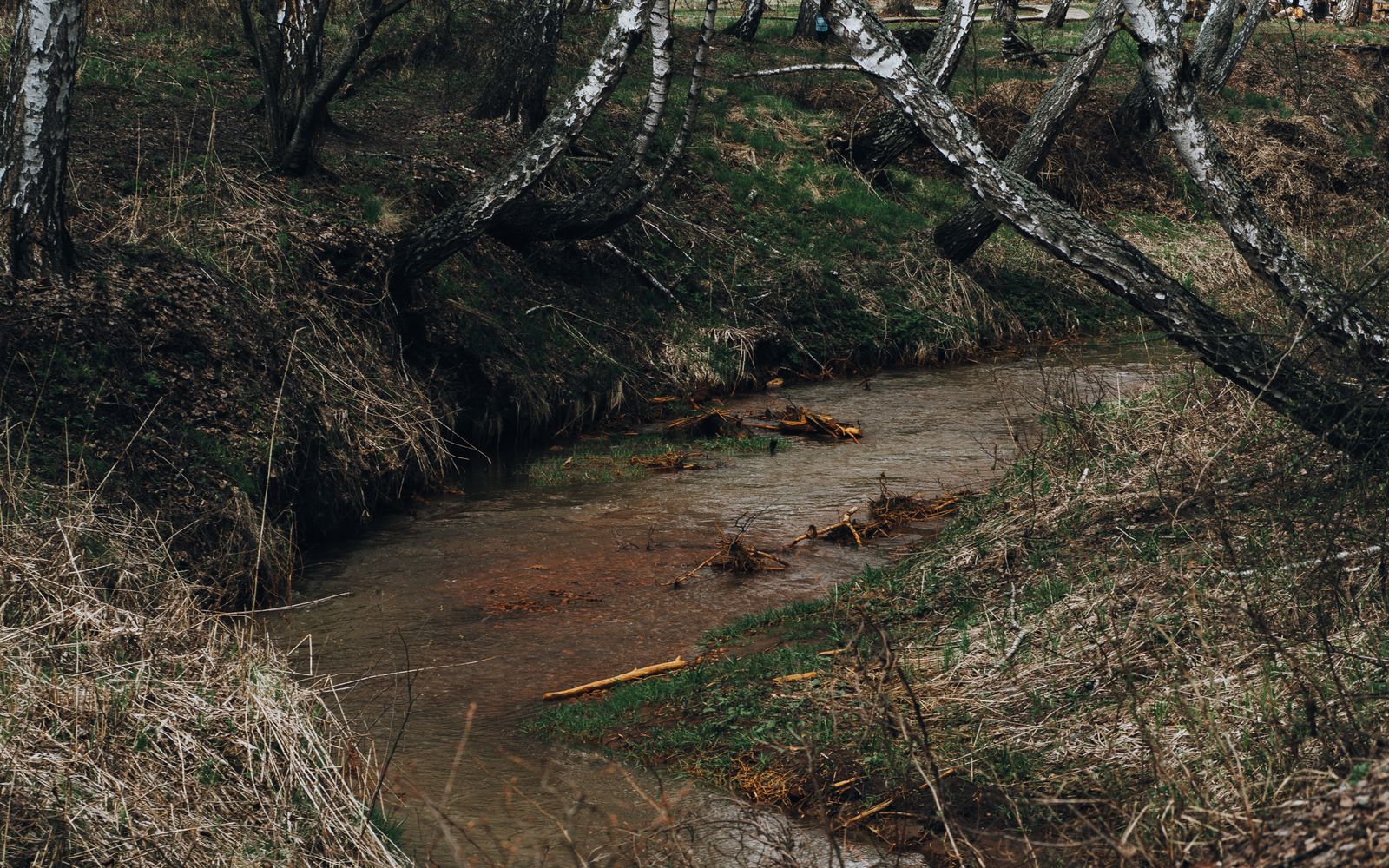
At 6:30 on the morning of November 4, 2025, crews working for the Lake Champlain Fish and Wildlife Management Cooperative began metering a compound called TFM into the Boquet River in upstate New York — 8.4 miles of water in two zones, the main stem from the Jersey Street bridge down to the mouth, the North Branch, and a patch of lake off Willsboro. The target was not the adult fish savaging Lake Champlain’s salmon and trout. It was the finger-length larvae buried in the river’s silt, filter-feeding on organic matter for years before they ever grow teeth. The U.S. Fish and Wildlife Service treatment log shows the water-use advisory lifted four days later, on November 8.
That treatment is one small node in what has quietly become one of the longest-running invasive species control programs on the planet. The backbone is chemical and physical: lampricides poured into tributaries, and barriers on spawning streams. Around that sit the supplemental tools — traps, synthesized pheromones, and sterile males — some registered, some still experimental. It runs on both sides of the U.S.–Canada border. It has been running for decades.
And it works. The Great Lakes Fishery Commission reports that control has cut sea lamprey numbers by roughly 90 percent from pre-control abundance. Before the program, lampreys killed an estimated 103 million pounds of Great Lakes fish a year. Today the figure is under 10 million, in a basin whose fishery is valued at $5.1 billion.
The parasite that filter-feeds before it bites
A sea lamprey is not an eel. It is a jawless fish, older than dinosaurs, native to the Atlantic Ocean and equipped with a mouth like a suction cup lined with concentric rings of keratinized teeth. In the middle sits a rasping tongue that grinds through the skin of a lake trout or whitefish so the lamprey can drink blood and body fluids for days or weeks at a time.
A single adult can kill up to 40 pounds of fish during its parasitic phase. A single female can produce as many as 100,000 eggs, though most larvae never reach adulthood.
What makes the animal so hard to catch is its double life. The parasitic adult everyone pictures is the last act. For years before that, the larva — called an ammocoete — lives buried in the silt of a tributary, blind, toothless, filter-feeding on algae and detritus like a tiny worm. That long, hidden larval stage is both the vulnerability and the reason the control program has to be so patient.
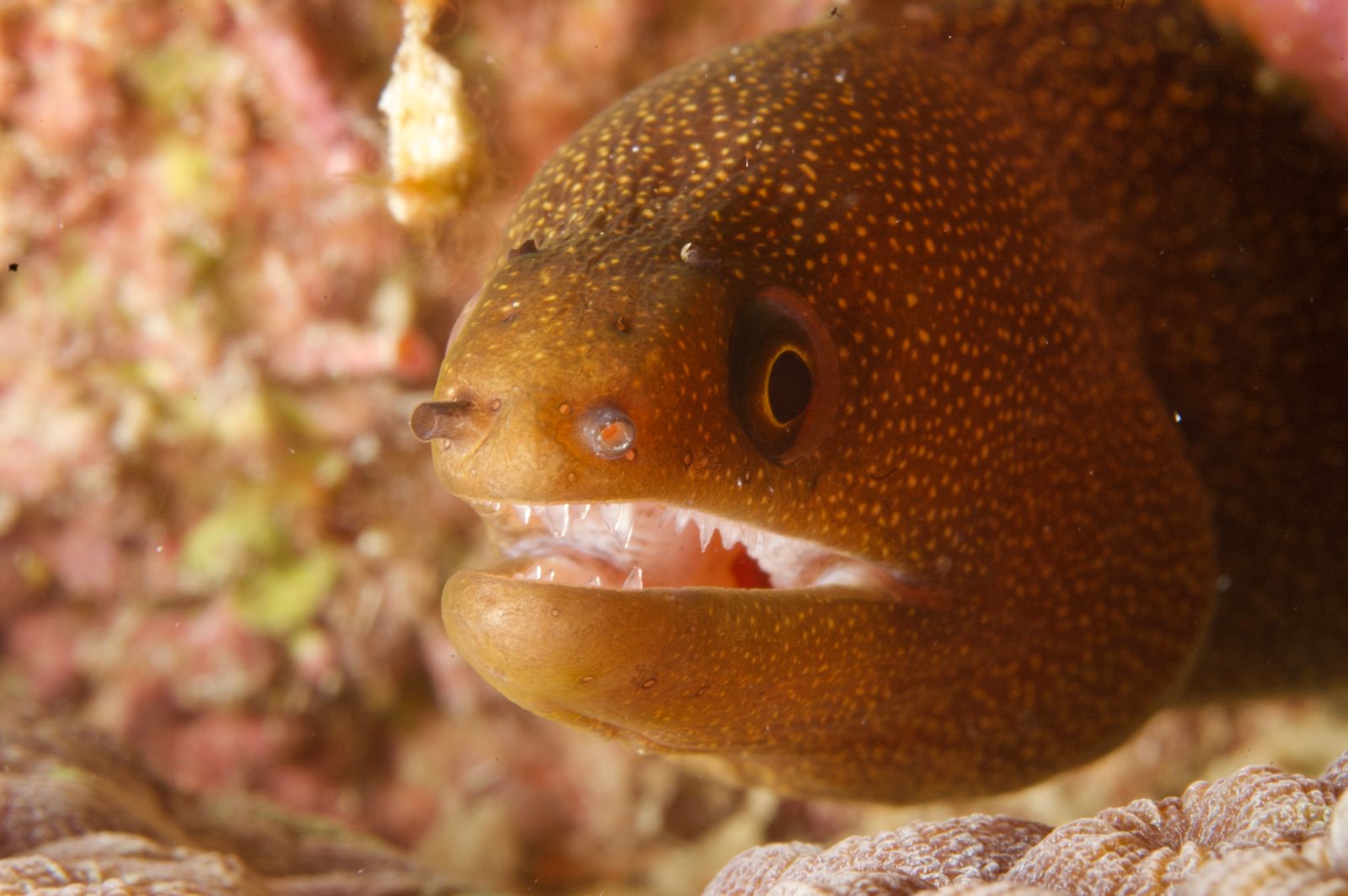
How they got into freshwater is partly settled and partly still argued. The first recorded sighting in the Great Lakes was in Lake Ontario in 1835. Whether the animal was native there or arrived from the Hudson through the Erie Canal is disputed; commission staff lean toward the canal. Either way, Niagara Falls locked it out of the upper lakes. Then came improvements to the Welland Canal in the late 1800s and early 1900s, which gave it a ladder around the falls. Lampreys turned up in Lake Erie by 1921, Lakes Michigan and Huron by 1936 and 1937, and Lake Superior by 1938.
The collapse that followed is measurable. Before the invasion, the U.S. and Canada took about 15 million pounds of lake trout a year from the upper Great Lakes. By the early 1960s the catch had fallen to roughly 300,000 pounds — about two percent of the old average. At peak lamprey abundance, up to 85 percent of the fish that survived an attack carried the wound.
By the mid-1950s the crisis was too big for any single state or province. The U.S. and Canada signed the Convention on Great Lakes Fisheries in 1954, establishing the Great Lakes Fishery Commission the following year with a single blunt mandate. Chemical control began in 1958.
Lampricide: a molecule tuned to a single fish
The first tool, and still the workhorse, was TFM. Researchers screened thousands of compounds looking for something that would kill lamprey larvae in their burrows without wiping out every other fish, frog, and insect in the stream. They found 3-trifluoromethyl-4-nitrophenol, universally shortened to TFM.
TFM exploits a quirk of lamprey biochemistry. Most fish can detoxify the compound through their livers. Lampreys cannot — or at least, not efficiently enough to survive the doses used in treatments. Poured into a river at carefully calibrated concentrations, TFM kills the larvae in their sediment tunnels while leaving trout, bass, and most invertebrates largely untouched.
A second compound, Bayluscide, is used in deeper water and as a survey tool. In an August 2026 announcement about surveys in Alger County, Michigan, the U.S. Fish and Wildlife Service described how the 3.2 percent granular formulation is bonded to sand grains and coated for time-release, sprayed over a measured patch of water, and sinks to the bottom. The granules dissolve, the burrowed larvae flee to the surface, and biologists scoop them up to count.
Both chemicals have been reviewed by the U.S. Environmental Protection Agency and Health Canada’s Pest Management Regulatory Agency and cleared for continued use at treatment concentrations. Crews survey hundreds of Great Lakes tributaries for larvae every year to decide which ones need treating.
Barriers: the second line of defense
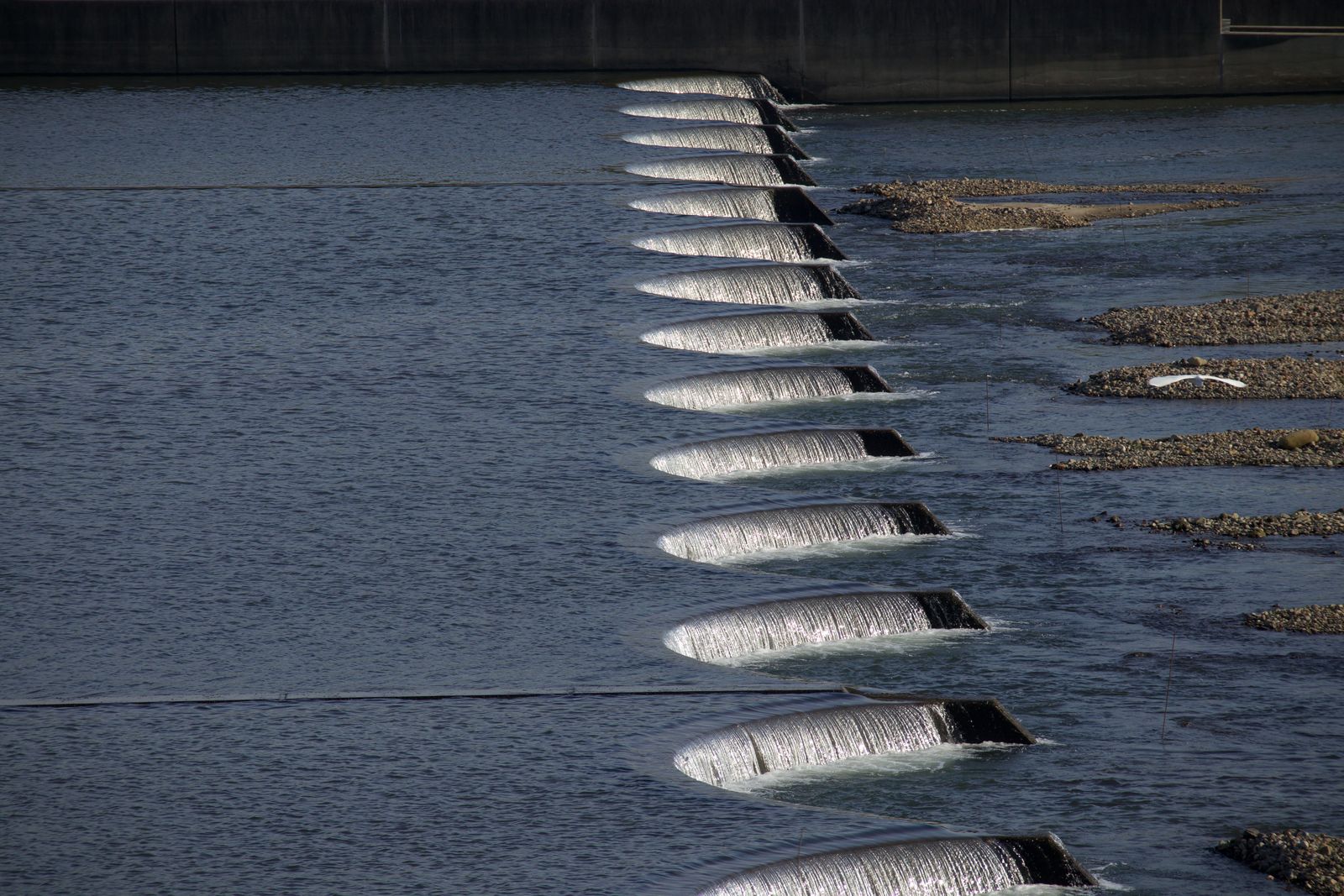
Chemistry alone is not enough. Adult lampreys, returning from the lakes to spawn in the spring, can be stopped physically before they ever reach gravel beds. The commission maintains a network of low-head barriers on Great Lakes tributaries — short concrete or steel weirs that adult lampreys, poor jumpers, cannot clear, but that jumping fish can pass, with trap-and-sort fishways handling the species that cannot jump.
New ones are still being commissioned. In August 2025 the commission received a $2.1 million federal grant to design a new sea lamprey barrier on Michigan’s Grand River, where the Restore the Rapids project will dismantle the downtown Grand Rapids dams that currently do the blocking by accident. Commission chair Ethan Baker put the design-and-build estimate near $30 million, against roughly $2 million a year in avoided control costs. The barrier would work along the lines of FishPass on the Boardman River — selective passage for native fish, a wall for lamprey.
Pheromones, sterile males, and the tools that never quite scaled
The third tool is the most elegant. Sea lampreys navigate by smell. Larvae in a river release a bile-acid pheromone that signals to returning adults that good spawning habitat is upstream. Adult males on the spawning grounds release a different scent, a mating pheromone, that draws ovulated females onto their nests.
It is the male mating pheromone that made it into the regulatory system. In late December 2015, the EPA registered 3kPZS as the first vertebrate pheromone biopesticide, following work by the commission, the U.S. Geological Survey, Michigan State University, and Bridge Organics. Dripped into a tributary at vanishingly low concentrations, it can pull females toward a trap. No toxin, no dam, almost no dose. The animal walks itself in. It remains a supplemental technique rather than a load-bearing one.
Sterile-male release is the fourth tool, and the one that has been dialed furthest back. Males captured during spring runs were sterilized with the chemosterilant bisazir and returned to the water. They spawned normally. Females laid eggs. The eggs did not develop.
Crews released sterile males into Lake Superior tributaries from 1991 to 1996, and roughly 410,000 into the St. Marys River between 1991 and 2011 — about 20,000 a year. The results were equivocal enough that the technique was discontinued after the 2011 season, with the St. Marys effort shifting to granular Bayluscide instead.
It did not vanish. Since 2017 the U.S. Geological Survey has run sterile-male releases as a research project in the Pigeon, Sturgeon, and Maple rivers of Michigan’s Cheboygan watershed, and a decade-long evaluation published in Scientific Reports in 2024 found that lampricide treatments in those streams could be spaced further apart as a result. It is less a Trojan horse than a hypothesis still under test.
What COVID revealed
The whole system depends on continuous, hands-on fieldwork. In 2020 and 2021, much of it stopped. Border restrictions grounded binational crews. Tributaries to Lakes Ontario and Erie received no lampricide treatment at all in 2020, and the other lakes saw at most about 45 percent of normal field effort.
The lampreys noticed. A team of 15 scientists from six agencies, led by USGS fish biologist Ben Marcy-Quay, published the accounting in Fisheries in March 2025: sea lamprey abundance in Lake Ontario rose roughly tenfold, and wounding on chinook and coho salmon there increased more than tenfold. Anglers began pulling up fish carrying three or more fresh scars — something an entire generation of Great Lakes fishers had rarely seen.
The recovery has been real but uneven. In the commission’s 2025 status report, 37,800 adults were captured basin-wide, just under the pre-COVID three-year average of 38,167. The three-year average abundance fell in Lakes Michigan, Huron, Erie, and Ontario, but rose in Lake Superior. Lake Ontario’s index dropped from about 56,000 in 2023 to 11,584 in 2025 and still sits above target; of the five lakes, only Erie is currently below the target set by fisheries managers. Commission vice chair Earl Provost, noting the pattern, said there is still much work to do.
Champlain, and a program that never finishes
The Great Lakes are the big story, but the same integrated approach is running on Lake Champlain, the long narrow lake between New York and Vermont that drains north into the St. Lawrence. Whether sea lampreys are native there is still argued. What is not argued is that their numbers exploded after human alteration of the watershed, and that by the late 20th century they were savaging the lake’s stocked Atlantic salmon and lake trout.
The Lake Champlain program, run jointly by the U.S. Fish and Wildlife Service, Vermont, and New York, uses the same lampricide protocol on the same kind of rotation across two dozen tributaries. A 2024 assessment found 11 sea lamprey wounds per 100 Atlantic salmon and 39 per 100 lake trout. The lake trout figure is above the cooperative’s goal of 25, and far below the historic highs when nearly every adult salmonid pulled from the lake carried a fresh scar.
What is striking about sea lamprey control, looked at across seven decades, is how much it resembles a slow experiment. Lampricide chemistry was refined over decades. Barrier design was rethought to accommodate native fish passage. Pheromone identification was a breakthrough of the 2000s and 2010s. Sterile-male work was run hard, shut down, and restarted as a research question. Surveys now use environmental DNA in some tributaries to detect larvae without electrofishing every gravel bar.
Terra Daily has covered other cases where sustained, coordinated intervention has bent an invasion curve; New Zealand’s clearance of introduced mammals from 117 offshore islands is one. Globally, though, the picture is worse. The 2023 IPBES assessment on invasive alien species counted more than 37,000 established alien species worldwide, with roughly 200 new ones recorded every year.
Against that backdrop, the Great Lakes program is one of the few cases where a runaway invasion was pulled back and held down for generations. It is done with pumps, weirs, drums of chemical, dripped pheromone, and crews in waders working rivers at the cold end of the year. On the Boquet, the advisory came off on November 8 and the river went back to being a river. Somewhere in the silt under it, larvae that hatched years ago — larvae that would have slipped out into Lake Champlain the next spring with a mouthful of teeth — did not.
