
About 13 minutes after the Tohoku-Oki earthquake tore open the seafloor east of Japan on March 11, 2011, GPS stations from Hokkaido to Kyushu registered a small, uniform lurch — 5 to 6 millimetres eastward, spread across roughly 1,800 miles of island. No aftershock explained it. For years the signal sat in the record as either a curiosity or a data glitch. A June 2026 study led by University of Chicago geophysicist Sunyoung Park traced it to seismic energy that had travelled roughly 1,800 miles down to Earth’s liquid outer core and bounced back — a round trip of about 3,600 miles — before shifting four tectonic plates when it reached the surface.
Seismologists had long known these deep-diving waves existed. This is the first time one has been shown to slip plates near the surface.
The signal nobody noticed
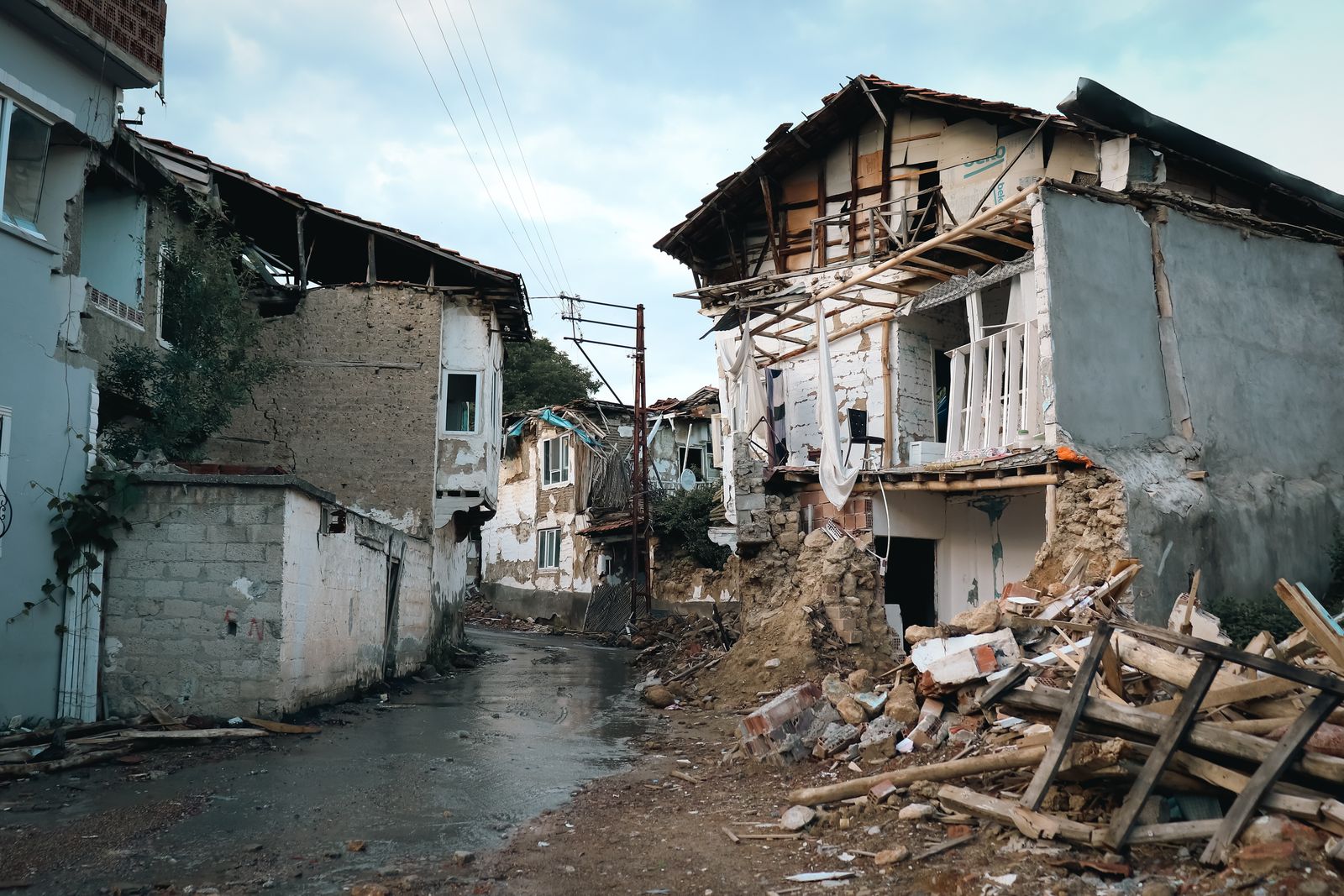
The Tohoku-Oki quake began at 2:46 p.m. local time. It killed roughly 20,000 people, flooded more than 500 square kilometres of coastline with waves up to 14 metres high, and triggered core meltdowns at the Fukushima Daiichi nuclear plant. In the raw immediacy of the disaster, a 6-millimetre shift arriving a quarter of an hour late was invisible.
But Japan’s Geonet observation network draws on 1,300 GPS stations tied into global navigation satellites. It records the ground with sub-centimetre precision. Somewhere in that archive was a country-length pulse that didn’t match anything in the aftershock catalogue.
Park’s team pulled the record apart. The offset happened almost simultaneously across the entire main island chain — not the pattern you would expect from a local rupture or an underwater landslide. Both of those would fall off sharply with distance. This didn’t.
A ball dropped through the planet
The timing pointed to a specific culprit: an ScS wave. These are shear waves that travel down through the mantle, hit the boundary with the liquid outer core, and reflect back toward the surface. The round trip covers about 5,800 kilometres, roughly the distance of a nonstop flight from New York to London, and takes around 15 minutes.
Big earthquakes have been sending ScS waves down to the core for as long as there have been earthquakes and a core. Seismologists routinely use them to probe Earth’s deep interior. The assumption had always been that by the time such a wave completed its bounce, its energy had spread thin enough to be a whisper at the surface — useful for imaging, not for breaking anything.
The 2011 wave was not a whisper. According to the analysis reported in Scientific American, the displacement it produced released energy comparable to a magnitude 7.5 earthquake, spread across an area six or seven times larger than the mainshock’s rupture zone, so almost nobody at the surface would have felt it as shaking.
Why the plates were ready to slip
The returning wave didn’t create the fault slip on its own. The Tohoku-Oki rupture had already done violent preparatory work. The two plates grinding past each other under northeastern Japan moved by roughly 10 metres during the mainshock, and Honshu itself shifted about 20 centimetres east — the shaking and tsunami came out of that motion.
What Park’s team argues is that the mainshock also reduced friction along fault zones hundreds of kilometres away, priming them. When the ScS wave arrived minutes later, it was enough of a nudge to trigger simultaneous slip along boundaries that would otherwise have stayed locked.
The affected zone crossed two major plate junctions: the Pacific–Okhotsk boundary in the northeast, and the Philippine Sea–Eurasian boundary to the southwest. As CNN reported on the finding, the length of the slip region matched the length of mainland Japan itself.
Ruling out the alternatives
Park’s group ran simulations to test what else could produce a country-wide, near-simultaneous 6-millimetre shift. An undersea landslide would have concentrated its effect near the coast. A slow slip event confined to the epicentral region would have shown a clear falloff with distance from the mainshock. Neither matched.
The only scenario that reproduced the Geonet observations was slip distributed along the four-plate fault system at depths between 20 and 60 kilometres. The affected region’s overall length was similar to that of mainland Japan (approximately 3,000 km), and independent researchers cited by Scientific American put its area at six to seven times the size of the zone that broke in the mainshock.
Goran Ekstrom, a geophysicist at Columbia University who was not involved in the work, told CNN that the mainshock rupture — the plates sliding 10 metres past each other — was what generated the shaking, the tsunami, and the 20-centimetre eastward jump of Honshu. The newly identified 6-millimetre shift is a separate, later, subtler event, and it is broader than anything previously recorded from a single earthquake.
A hazard hiding in the record
The practical implication is uncomfortable. Hazard models treat aftershocks as the main post-mainshock threat, and aftershocks can’t be predicted precisely — they cluster in time and space but arrive when they arrive. A core-reflected wave is different. Its round trip is a fixed physics problem. Roughly 15 minutes down, off the outer core, and back.
That means, in principle, the arrival of such a wave after any sufficiently large earthquake could be anticipated to the minute. Whether it triggers a broad slip event depends on the state of surrounding faults, but the timing window is knowable.
The 2011 event distributed its 7.5-magnitude-equivalent energy across such a wide area that surface shaking would have been mild, and any damage would blend into the mainshock and aftershock chaos. Park told CNN, in an interview carried by KSL, that it would be very difficult to distinguish. That doesn’t make the mechanism harmless — it means it has been slipping through hazard accounting.
Amanda Thomas, a geophysicist at UC Davis who did not take part in the study, told CNN the broader implication is that large earthquakes may keep influencing fault systems in unexpected ways for many minutes after the main rupture, not just through aftershocks but through the passage of later-arriving seismic waves. Vedran Lekić of the University of Maryland made a related point: Japan has one of the densest seismic and satellite monitoring networks on the planet, and this phenomenon might well happen elsewhere in regions where the instruments aren’t there to catch it.
Seismic instruments are tuned to the sharp, high-frequency signals that conventional earthquakes produce. The slow, distributed offset from a returning ScS wave — a permanent shift of a few millimetres across an entire country — is easier to miss, particularly in the noise following a magnitude 9.0 rupture. GPS caught it because GPS measures position, not shaking.
Separating the passing wave from the permanent displacement required cross-referencing the two record types across the full Japanese network, which is why the finding took years of reanalysis rather than showing up in 2011. Discover Magazine notes that the event is now the broadest seismic event on record and the first known to involve multiple major tectonic plate boundaries at once.
The 15-minute window
The finding reframes something basic about how big earthquakes interact with the planet. A magnitude 9.0 rupture is not just a local tearing of two plates. It sends energy through the whole Earth, and that energy can come back — literally, from the core — and act on faults thousands of kilometres from where the mainshock happened.
What Park’s team has added is a mechanism connecting a mainshock to distant slip on a timescale of minutes, through the deep Earth rather than along the surface. Whether the same thing happened after the 1960 Chilean magnitude 9.5 or the 2004 Sumatra magnitude 9.1 is an open question. Neither region had a Geonet-equivalent GPS array at the time.
For the moment, one earthquake and one signal. But the physics is generic. Any earthquake large enough to send a strong ScS wave to the core will send one back. Whether the surrounding faults are close enough to failure to respond is a separate question — and one hazard modellers now have to ask.
In the published study itself, Park and her co-authors frame the practical takeaway plainly: the finding points to a previously unrecognised source of seismic hazard that could reactivate the mainshock area and the broader surrounding megathrust, potentially even tens of minutes after the mainshock.
Fifteen years on, the ground under Japan is still where the wave from the core left it — a few millimetres east of where it sat before 2:46 p.m. on March 11, 2011. The offset is smaller than the width of a pencil. It runs the length of a country.
