
This week the Atlantic is still sliding under three concrete lids a third of a kilometre off Hutchinson Island, Florida. The lids are velocity caps on Florida Power & Light’s St. Lucie nuclear plant. Two reactors drink seawater to cool their condensers. The water is supposed to go in. The turtles are not.
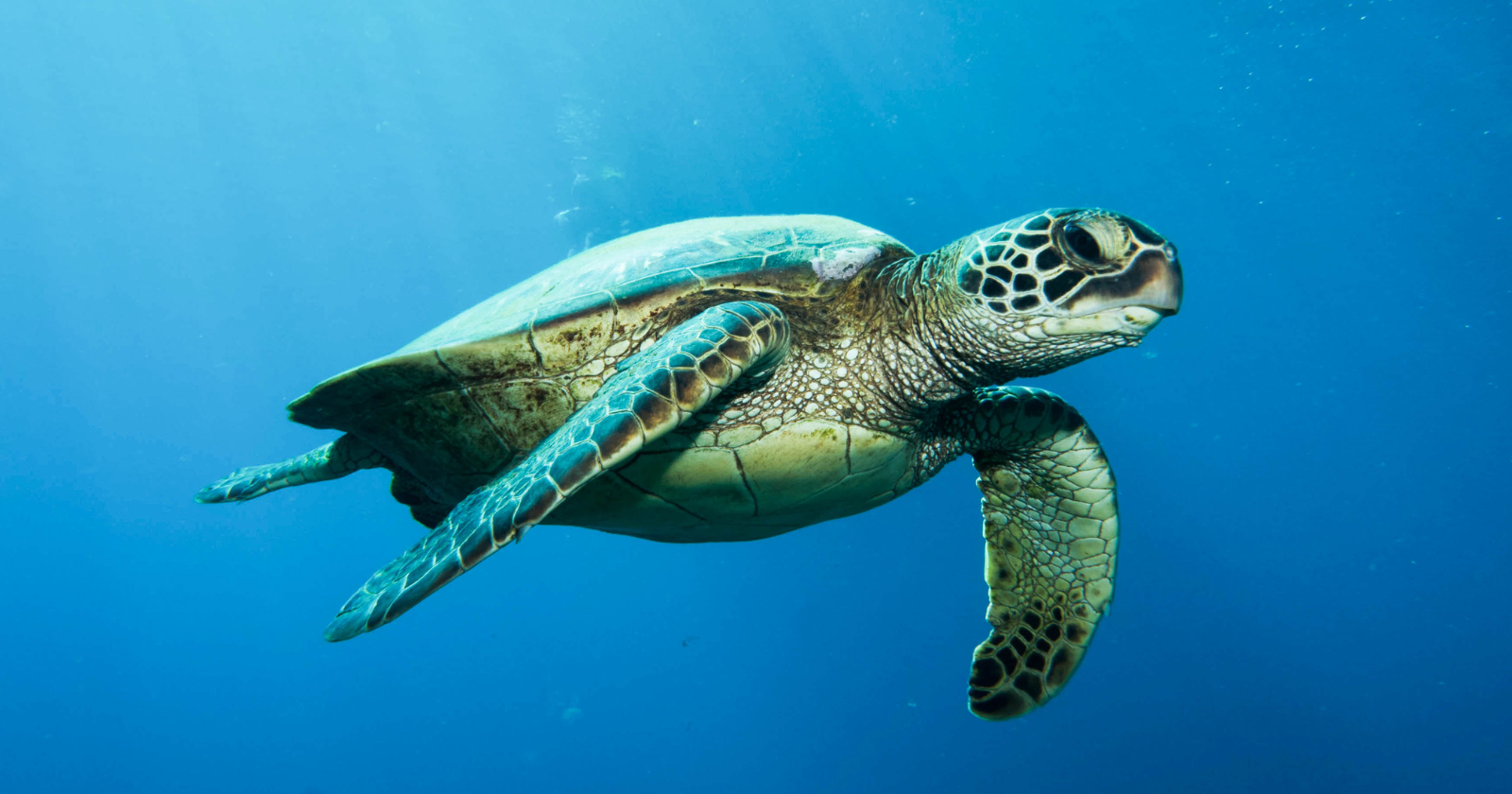
Green turtles graze the growth on those lids and rest in the shade. Some of them take one stroke too far. Past the lip, the current owns them. Buried pipes dump them into a 1,500-metre intake canal that has no way home.
The last full year the plant filed with the Nuclear Regulatory Commission, 2023, that canal delivered 921 sea turtles. Five hundred and fifty-seven were greens. Crews put 97.7 per cent back in the Atlantic alive.
Three mouths under the swell
St. Lucie sits on South Hutchinson Island, a barrier strip between the Atlantic and the Indian River Lagoon, about eight miles — 13 kilometres — southeast of Fort Pierce. Unit 1 came online in March 1976. Unit 2 followed in 1983. Together they make about 2,000 megawatts.
Cooling water enters through three submerged intake structures 365 metres offshore. Each structure wears a velocity cap — a lid that turns a vertical suck into a sideways slide, meant to keep fish from being pulled straight down. There are no grates across the mouths. Two pipes 3.7 metres wide and one 4.9 metres wide run under the beach and empty into the canal.
A turtle that swims into one of those mouths is carried with the cooling water and must be taken out by hand. The velocity caps grow a garden of marine life. That is the wrong use. The machine is a straw. The animal uses it as a rock.
A canal that only goes one way
The intake canal runs about a kilometre and a half inland. Three barrier nets stretch the full width: a primary five-inch mesh, an eight-inch net at the A1A crossing, and a ten-inch backup. They hold turtles in the eastern reach, short of the intake wells and the travelling screens at the plant.
This week the nets are still there. Biologists from Inwater Research Group, who have run the capture work for FPL since 2009, still take turtles out with tangle nets, long-handled dip nets, and, when the water is clear enough, by hand. A small one comes up in a dip net from a boat. A tired one is lifted off the sediment at the primary net.
Healthy animals are identified, measured, weighed, tagged and photographed, then walked back over the dune the same day. Since 2001 each turtle also gets a PIT tag — a chip under the skin of the right front flipper — so the next time is not logged as a first time. Sick or injured animals go to a clinic after the state wildlife agency is consulted. FPL’s own sea-turtle page calls the work-up a health check at the St. Lucie Marine Research Station.
Nine hundred and twenty-one
Florida Power & Light’s 2023 Annual Environmental Operating Report is the latest full calendar year on the federal docket. No later official annual with a complete species total has been posted. That 2023 file lists 921 removals from the intake canal: 355 loggerheads, 557 greens, four Kemp’s ridleys, two hawksbills, two leatherbacks, and one olive ridley.
Most of them — 97.7 per cent — were captured alive and released. Twenty turtles, 2.2 per cent, went to rehabilitation for injury or disease: ten loggerheads and ten greens. One turtle, 0.1 per cent, was recorded deceased. The plant also logged one injury it classed as caused by the canal, and one death it classed the same way. Both were greens.
An olive ridley in this canal is still a rare line in the ledger. The 2023 animal was the second in the history of the programme. The first came through in 2019.
Captures, not a headcount
Since the plant started in 1976, the same reports count 20,220 captures, including recaptures: 11,356 loggerheads, 8,631 greens, 110 Kemp’s ridleys, 74 hawksbills, 47 leatherbacks, and two olive ridleys. That is not 20,220 different turtles. It is 20,220 times a turtle came through the pipes.
Over the life of the programme there have been 3,643 recapture events — 879 loggerheads, 2,763 greens, and one Kemp’s ridley. In 2023, 12.1 per cent of the loggerheads and 24.8 per cent of the greens had been in the canal before. Greens come through more than once. The tags are why anyone can say so.
FPL’s public page still says “over 18,000” health checks. The 2023 filing is later and higher, and it keeps recaptures in the total. Inwater, which does the hands-on work, puts the running figure above 20,000 animals put through a work-up and sent back to the ocean.
The same beach, the same machine
Hutchinson Island is also a nesting beach. Loggerheads, greens and leatherbacks crawl up the same sand the pipes run under. The 2023 filing is a canal count, not a nest count. The animals in the nets are often juveniles and sub-adults — the ones a night walk never sees — plus the odd giant that took the same wrong turn as a dinner-plate green.
Twenty turtles that year left the canal in a truck. One did not leave. The rest went over the dune and into the Atlantic, tagged, on the same island that pulled them in.
The plant is still taking water. The caps are still out there, growing a garden. A green turtle on a cooling intake is using an energy machine the wrong way. The crews are still on the canal. The number they keep posting is the one that matters on this strip of island: almost all of them go back.
