
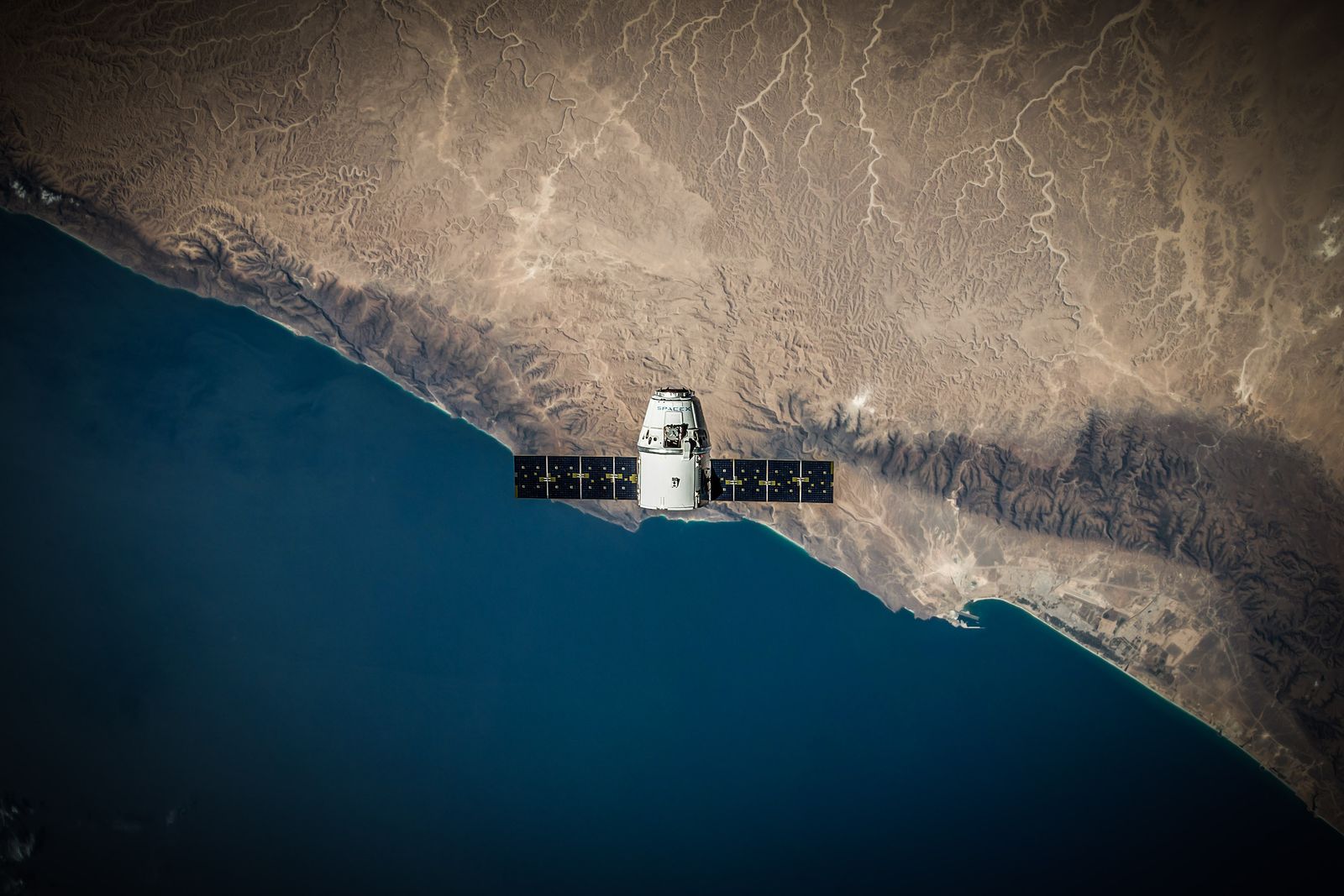
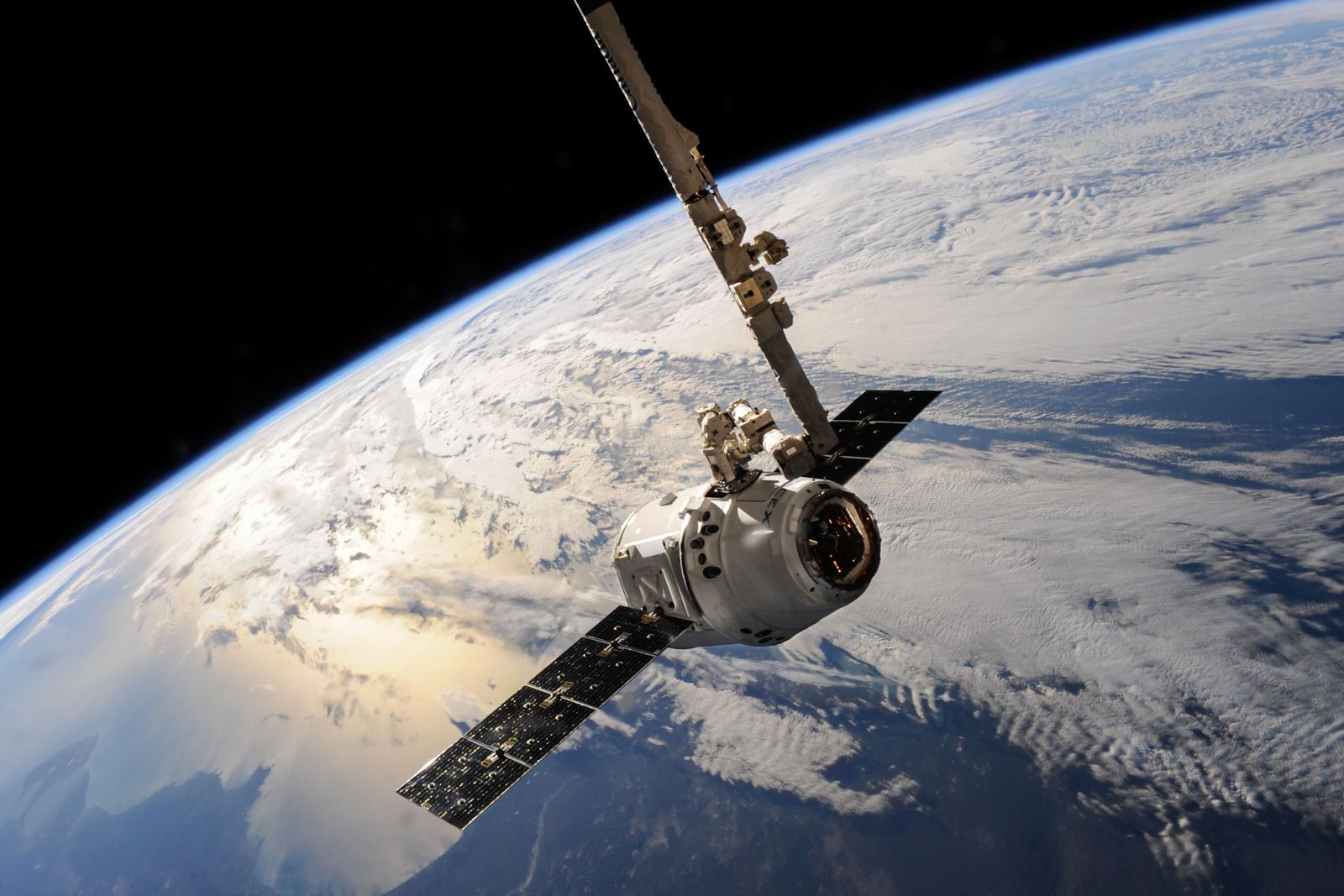
In September 2007, a Russian Foton-M3 capsule fell back through Earth’s atmosphere carrying a payload that would rewrite what biologists thought animals could endure. Bolted to the outside of the spacecraft, in aluminium trays with the lids slid open to the void, were tardigrades — eight-legged microanimals no bigger than a grain of salt. For ten days they had been exposed to the raw vacuum of low Earth orbit, extreme temperature swings between sunlit and shadowed sides, and intense ultraviolet radiation. When they were rehydrated back in the lab, most of them walked away and laid viable eggs.
They are the first animals known to have survived direct exposure to open space.
The experiment that shouldn’t have worked
The mission was called TARDIS — Tardigrades in Space — and it flew as a piggyback experiment on the European Space Agency’s Foton-M3 capsule, launched from Baikonur Cosmodrome on 14 September 2007. The scientific idea was almost absurd on its face. Take an animal, dry it out, tape it to the outside of a spacecraft, open the lid, and see if anything is alive when the capsule comes home.
Tardigrades were collected from moss and lichen in Europe. Before launch they were dehydrated into the shrunken, glassy husk tardigrades enter when their environment turns hostile. In that state they contain almost no free water, their metabolism slows to something biologists have measured at less than 0.01% of normal, and they can be stored for years like grains of sand.
The trays holding them were opened once the capsule reached orbit. For ten days the animals sat in hard vacuum — a pressure far emptier than any laboratory vacuum chamber and low enough to boil the water out of an unprotected human lung in seconds. Some samples were shielded from sunlight. Others were exposed to the full solar UV spectrum, including the wavelengths below 200 nanometres that Earth’s ozone layer normally absorbs before they reach the surface.
What came home
When the capsule parachuted back into Kazakhstan and the samples were rehydrated, the results split cleanly along the shielding boundary. Tardigrades exposed to vacuum alone recovered at rates comparable to controls that had never left the ground — most survived and produced normal offspring, and the team reported in Current Biology that space vacuum caused no measurable loss in survival at all. Vacuum, on its own, barely bothered them.
The UV-exposed group fared worse. The full solar spectrum, unfiltered, killed most of them. But a small number from the fully-irradiated trays still recovered, walked, ate, and laid eggs that hatched into healthy juveniles. Those animals had absorbed intense UV exposure — the sort of dose that shatters DNA into fragments and cross-links proteins into useless tangles in almost any other living tissue.
Ten days in space, no suit, no atmosphere, no magnetic shielding. And a fraction of them came home fertile.
The dehydration trick
The mechanism behind this is called cryptobiosis. When a tardigrade dries out, it retracts its legs, expels almost all of its body water, and replaces the water inside its cells with a sugar called trehalose along with tardigrade-specific proteins that form a glassy matrix around delicate cellular machinery. The membranes, the DNA, the mitochondria — all of it gets frozen in place inside a kind of biological amber.
In that state, the animal is not really alive in any conventional sense. It doesn’t respire. It doesn’t repair itself. It can’t be killed the way ordinary living tissue is killed, because most of the reactions that damage tissue — oxidation, enzymatic breakdown, the propagation of radical chain reactions through water — need water and metabolism to proceed. Take those away and you have something closer to a seed than an animal.
Once water returns, the glass melts, trehalose dissolves, and the tardigrade unfolds. Post-flight specimens returned to full activity after rehydration. They laid eggs on schedule. The eggs hatched.
Radiation, and the protein that shields the DNA
Vacuum is one problem. Radiation is another, and it kills through a different pathway. Cosmic rays and solar UV break the chemical bonds in DNA directly, and they generate reactive oxygen species inside cells that shred everything from lipids to enzymes. Tardigrades have been documented surviving radiation exposure that would be lethal to most organisms.
Part of the answer arrived when a team including researchers at the Beijing Institute of Lifeomics described a new species, Hypsibius henanensis, collected from moss in China’s Henan province. When they blasted it with heavy-ion radiation and tracked which genes switched on, roughly 2,800 genes became more active. One of them, a gene called DODA1, produces pigments known as betalains — the same red-purple compounds that give beetroot its colour. Betalains mop up the reactive chemicals that radiation creates inside cells before they can damage DNA.
When the Chinese team treated human cells with tardigrade-derived betalains and then irradiated them, the treated cells survived at markedly higher rates than untreated ones. It is one of several tardigrade proteins now being studied as a potential shield for astronauts on long-duration missions and for cancer patients undergoing radiotherapy.
A separate line of work has identified a tardigrade-specific protein called Dsup — short for damage suppressor — which binds to the nucleosomes that spool DNA and shields the double helix from the hydroxyl radicals that radiation scatters through a cell. Human cells engineered to express Dsup show significantly less DNA damage after X-ray exposure than unmodified cells.
What space cannot do to them, Mars apparently can
For nearly two decades, tardigrades wore the reputation of the most indestructible animal on Earth. They have flown multiple times on space missions and survived. In 2019 a few thousand were spilled onto the lunar surface after Israel’s Beresheet lander crashed during its descent, prompting a brief flurry of speculation about whether Earth had accidentally seeded the Moon. Microbiologists concluded the animals had almost certainly stayed dormant — no water, no oxygen, no chance of colonisation.
But recently, a team at Penn State led by microbiologist Corien Bakermans reported the first close look at how animals fare in Martian soil itself. They mixed active tardigrades into two laboratory-made Martian regolith simulants — MGS-1, modelled on the average Martian surface, and OUCM-1, modelled on a deposit in Gale Crater — and watched. In the MGS-1 simulant, the tardigrades slowed, stopped moving, and many were dead within two days, while controls in ordinary beach sand stayed active. Something in the fake Martian dirt was lethal.
The twist came next. When the researchers pre-rinsed the regolith with water before adding the animals, survival recovered sharply — which points to a water-soluble toxin in the soil. The oxidising perchlorate salts that are abundant in Martian regolith are the leading suspect, though the team has been careful to say they have not yet pinned down the exact culprit. Whatever it is, it does something to a tardigrade that vacuum and raw radiation never managed.
The open vacuum of space, it turns out, may be a gentler place for a tardigrade than a handful of unwashed Martian soil.
Why an animal evolved for this
Nothing about tardigrade biology suggests it was selected for space travel. Tardigrades live in moss, lichen, leaf litter, temporary puddles, and the water films on beach sand. What connects those habitats is not radiation or vacuum — it is unreliability. A patch of moss dries out. A puddle evaporates. A tuft of lichen freezes. The evolutionary pressure that shaped the tardigrade lineage was the routine, weekly disaster of running out of water.
The machinery that lets them survive vacuum — the trehalose glass, the DNA-binding proteins, the antioxidant pigments — is machinery for surviving desiccation on a moss cushion in a Norwegian summer. Space is just a place where all of those stresses happen at once, and tardigrades happen to have solutions for each of them stacked in the same genome.
This is a recurring theme in extreme-longevity biology. Animals that evolved for a world of feast and famine are often the ones best equipped to shrug off conditions no vertebrate could withstand.
The living cargo in orbit right now
Tardigrades returned to orbit in 2021, this time to the International Space Station rather than the outside of a capsule. The experiment, run by Thomas Boothby’s lab at the University of Wyoming, is looking at how tardigrade genes behave across generations born and raised in microgravity. Which stress-response genes stay switched on? Which ones fade? Do the offspring inherit any of the parents’ adaptations?
According to NASA, Boothby’s research aims to understand how tardigrades adapt to space conditions across multiple generations, including whether offspring inherit their parents’ space-survival adaptations. Researchers are investigating whether tardigrades’ survival mechanisms remain consistent across generations or evolve when exposed to space conditions over time.
The practical goal is human. Astronauts on a Mars mission would spend at least six months in transit each way, absorbing cosmic radiation the whole time. A gene, a protein, or a small-molecule drug derived from tardigrade biology that could reduce the DNA damage from that exposure is a serious research target for agencies planning crewed deep-space missions. The radiation environment beyond low Earth orbit is the single largest medical unknown for a crew heading to another planet.
What ten days in the vacuum actually looked like
Picture the trays on the outside of Foton-M3. Each one is the size of a paperback. Inside, dried tardigrades sit on strips of filter paper, invisible without a microscope. The capsule spins slowly for thermal control, so the trays swing from full sunlight — surface temperatures climbing above 100°C — to the shadow of Earth’s night side, where the metal drops below minus 80°C. The cycle repeats every 90 minutes as the capsule orbits.
UV from the sun, unfiltered by atmosphere, sterilises the exposed surfaces. Cosmic rays pass through the trays and through the animals without noticing them. The water that was inside each tardigrade before launch is gone — sublimed away into the vacuum in the first minutes after the lids opened, exactly as designed. What is left is a glassy husk holding a genome, a set of dormant enzymes, and a suite of protective proteins locked in place.
Ten days later the trays close, the capsule fires its retros, and something the size of a wine barrel drops through the atmosphere at 7 kilometres per second. Parachutes open over the Kazakh steppe. Technicians recover the trays. In the lab, they add a drop of distilled water to a dish of what looks like grey dust.
Within thirty minutes, the dust starts to walk.
Some of those animals lived out the rest of their natural lives in laboratory cultures. Their eggs hatched. Their offspring produced offspring. As of this writing, distant descendants of the 2007 flight are still alive in European research collections — great-great-great-grandchildren of the first animals to survive open space, still walking around on lab benches, still built from the same roughly 20,000 genes their ancestors carried into the void.
