
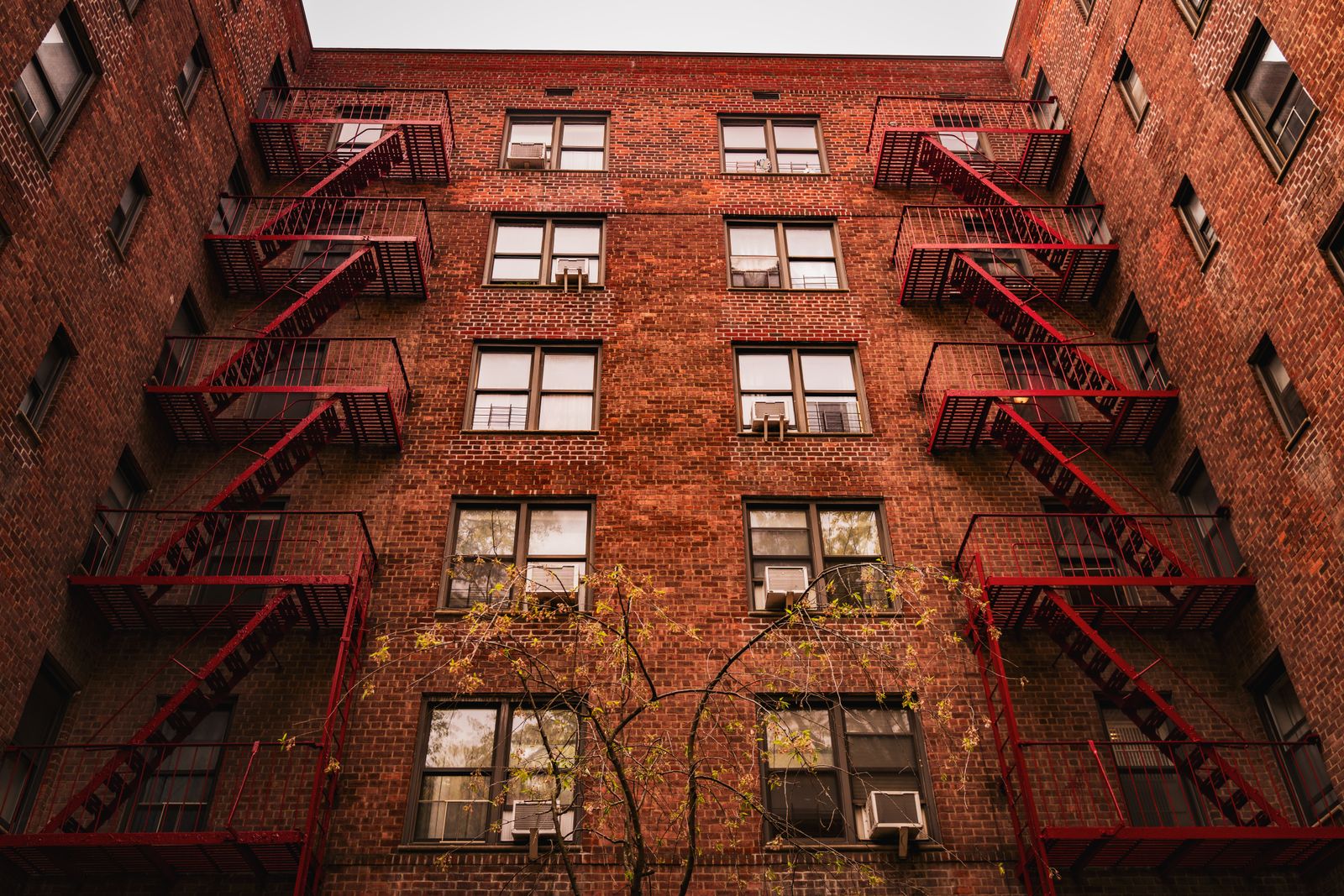
Herbert Sukenik’s leverage fit inside 350 square feet. The longtime Mayflower Hotel tenant ultimately received a reported $17 million in cash to leave, along with lifetime use of a roughly 2,200-square-foot apartment at the Essex House for $1 a month.
The room itself was tiny. The site beneath it was not: in 2004, a joint venture led by Arthur and William Lie Zeckendorf acquired the Mayflower Hotel and adjoining property for $401 million, according to an HVS transaction survey.
The $401 million site still had four protected tenants
The aging Mayflower stood at 15 Central Park West, on a piece of Manhattan real estate facing Central Park that the developers intended to replace with an exceptionally high-end condominium project. Most occupants could leave with the closing of the hotel, but four elderly residents still held rent-regulated apartments.
Accounts of the negotiations describe the four men as longtime protected tenants whose departure had to be negotiated separately. Two of them eventually accepted multimillion-dollar settlements.
Another was Arthur MacArthur IV, the son of General Douglas MacArthur. He accepted $650,000 to leave, according to reporting based on Michael Gross’s book House of Outrageous Fortune.
Sukenik remained. His refusal turned a small apartment into the most stubborn piece of the assemblage.
Rent regulation did not make demolition impossible
The legal situation was more complicated than simply saying the tenants could never be removed. New York permits owners to seek termination of rent-regulated tenancies when they intend to demolish a building, but the owner must first obtain approval from the state Division of Housing and Community Renewal.
Under New York State Homes and Community Renewal’s demolition rules, an owner must document the proposed demolition and financial ability to carry it out, and affected tenants do not have to leave until a final agency order has been issued. Additional procedures apply to rent-controlled apartments in New York City.
A private settlement was therefore not the developers’ only theoretical route. It was, however, a way to end the dispute without waiting for the full demolition-eviction process and any litigation that might follow, a dynamic that has appeared in other New York redevelopment disputes involving regulated tenants.
The collision between new development and people already occupying valuable urban land has played out far beyond this address. TerraDaily has covered both the effects of gentrification on established residents and large redevelopment projects where existing communities complicate plans for valuable land.
Herbert Sukenik became the last holdout
Sukenik was 73 when the Mayflower was acquired. He had a doctorate, lived alone, had independent financial means, and occupied a roughly 350-square-foot rent-regulated room that he had lived in for decades.
Will Zeckendorf later described him as highly intelligent, financially independent and socially isolated. Those circumstances mattered because an offer that might persuade another tenant had far less power over someone who did not urgently need the money.
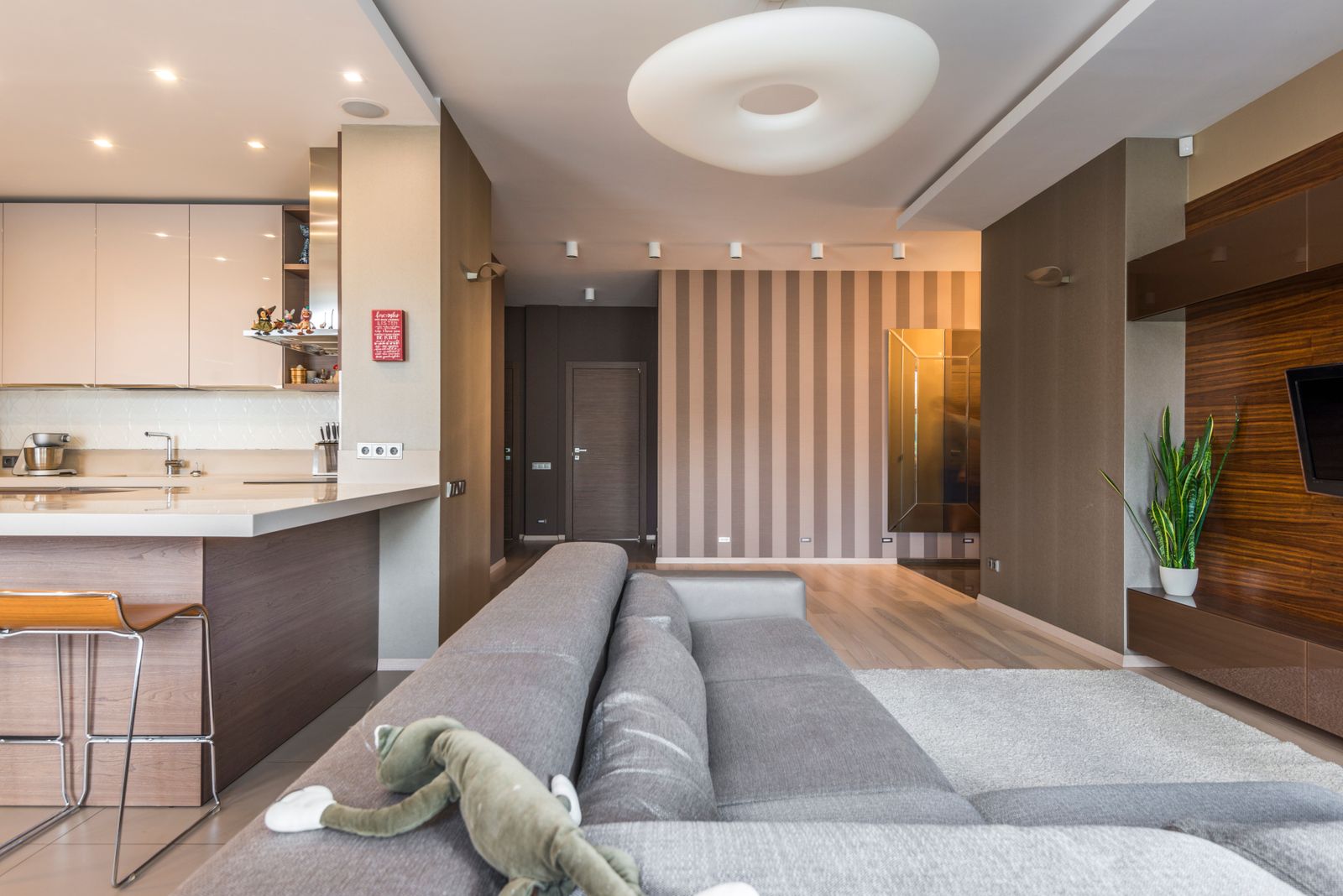
At one stage, Sukenik was offered a much larger replacement home nearby. A reconstruction of the negotiations by 6sqft says the talks continued while redevelopment advanced around him.
Demolition work did not simply remain frozen across the entire property. Vacated portions could be cleared while Sukenik remained, leaving him amid a construction site as the developers continued negotiating for his departure.
His leverage came from the difference between the value of the room and the value of having the entire site available. The developers were not evaluating what 350 square feet of old hotel space was worth on its own; they were evaluating what it would cost to eliminate the final obstacle to the project they intended to build.
The settlement was $17 million plus a nearly free apartment
In 2005, Sukenik finally agreed to leave. Published accounts put the settlement at $17 million in cash, plus lifetime use of a two-bedroom apartment at the Essex House on Central Park South that was reportedly worth about $2 million.
The exact $17 million figure came from reporting on the deal rather than a public settlement document. Will Zeckendorf did not publicly disclose the precise payment, but he did confirm that the relocation cost was extraordinarily high and described it as the largest amount his firm had paid to move a single tenant.
Using the reported cash payment alone, $17 million divided by 350 square feet works out to about $48,600 for every square foot Sukenik surrendered. That comparison is not a valuation of the apartment; it shows how disconnected the settlement had become from the physical size of the space.
Sukenik moved into the Essex House under the $1-a-month arrangement and remained there until his death in 2011 at the age of 80.
What rose after the Mayflower
The Mayflower disappeared and 15 Central Park West rose in its place. Robert A.M. Stern Architects describes the completed 2008 project as a pair of limestone-clad residential buildings designed to recall the prewar architecture of Central Park West.
The development included a 75-foot lap pool, screening room, private dining spaces and other amenities aimed at the highest end of Manhattan’s residential market. Its park-facing apartments quickly became some of the city’s most coveted real estate.
Before construction was even complete, buyers were committing extraordinary sums. Vanity Fair reported that total sales were expected to land around $2 billion, with numerous individual apartments selling for more than $20 million.
Against roughly $2 billion in condominium sales, the reported $17 million cash payment to Sukenik amounted to about 0.85 percent. That does not make the settlement small, but it explains how a payment that looked absurd in relation to a 350-square-foot room could still make economic sense in relation to the project surrounding it.
No unsupported estimate of weekly delay costs is needed to make the point. The Mayflower site had been acquired for $401 million, the new building would generate sales measured in billions, and one protected tenant occupied space the developers still needed to clear.
The studio itself is gone now, along with the Mayflower around it. Somewhere inside the footprint of 15 Central Park West is the airspace once occupied by 350 square feet of old hotel room, a place small enough to cross in a few steps and valuable enough, at the end, to command a reported $17 million.
