
Between March and September 2026, a German logistics firm called COLI Group finished a job that ended with 14 GE Vernova power transformers sitting at a construction site on Poland’s Baltic coast. The four heaviest weighed 361 tonnes apiece — roughly the mass of a fully loaded Boeing 777 at takeoff — and the roads leading inland from the port at Władysławowo included bridges that could not carry them. So the crew built a bridge on top of the bridges, a temporary steel flyover threaded across the existing spans, and rolled the transformers over the top.
The whole operation took six months, three chartered ships, and coordination with a stack of Polish authorities through a winter that bottomed out at minus 15 degrees Celsius, according to Offshore Engineer.
The cargo that started in Derince
The transformers came out of GE Vernova’s factory in Türkiye and were loaded at Safiport in Derince, on the eastern shore of the Sea of Marmara. Fourteen units, all built for a single destination: an onshore substation that will step up and manage the electricity generated by Baltica 2, a 1.5 GW offshore wind farm being built jointly by Poland’s PGE Group and Denmark’s Ørsted.
Ten of the transformers weighed between 110 and 170 tonnes each. Heavy, but within the tolerance of an ordinary port crane and a specialised road trailer. Those units sailed to Gdynia, on Poland’s northern coast, were offloaded there, and driven inland to the substation site.
The other four were a different problem entirely. A single 361-tonne transformer is a steel box the size of a small house, filled with copper windings and insulating oil. Put four of them on the same manifest and the logistics stop resembling shipping and start resembling civil engineering. The bigger units could not simply be unloaded at Gdynia and driven the rest of the way, because the road network between Gdynia and the Baltica 2 substation site was not built for that kind of point load.
Instead, COLI barged the four heaviest transformers further west along the coast to Władysławowo, a fishing port at the base of the Hel Peninsula. There, a roll-on/roll-off operation transferred them from barge to land using self-propelled modular transporters — the multi-axled platforms that walk skyscraper columns and rocket stages around on hundreds of tiny wheels, distributing weight so that no single point on the ground has to bear too much.
Even with the load spread across dozens of axles, the bridges along the inland route to the substation could not handle it.
The flyover built on top of the bridge
The solution was a temporary elevated structure — a steel span assembled directly over the existing bridge decks, transferring the transporter’s weight past the old bridge and down onto the abutments and the ground beyond. The old bridge stayed put. The new one sat on top of it, carried the 361-tonne load across, and was then dismantled and moved to the next bottleneck.
That kind of temporary flyover is a standard trick in the heavy-lift world, but it is expensive and slow. Each crossing means surveying the underlying bridge, designing a bespoke steel truss, trucking the components in, assembling them on site, driving the transporter across at walking pace, and then reversing the whole process. Heavy Lift & Project Forwarding International reported that the route required coordination with multiple local Polish authorities and stretched across the depths of winter.
Temperatures on the Baltic coast dropped to minus 15 degrees Celsius during the road transport phase. Hydraulic fluid thickens at those temperatures. Steel contracts. Diesel gels. Everything takes longer.
Why Poland needs the transformers in the first place
The transformers are the throats through which Baltica 2’s electricity will pass. Offshore wind turbines generate alternating current at a working voltage that is far too low to send efficiently down a long transmission line. Step-up transformers at the offshore substation raise that voltage; cables carry it to shore; onshore transformers then adjust it again to match the Polish grid. Every megawatt-hour the turbines produce touches at least two of these machines on its way to a socket.
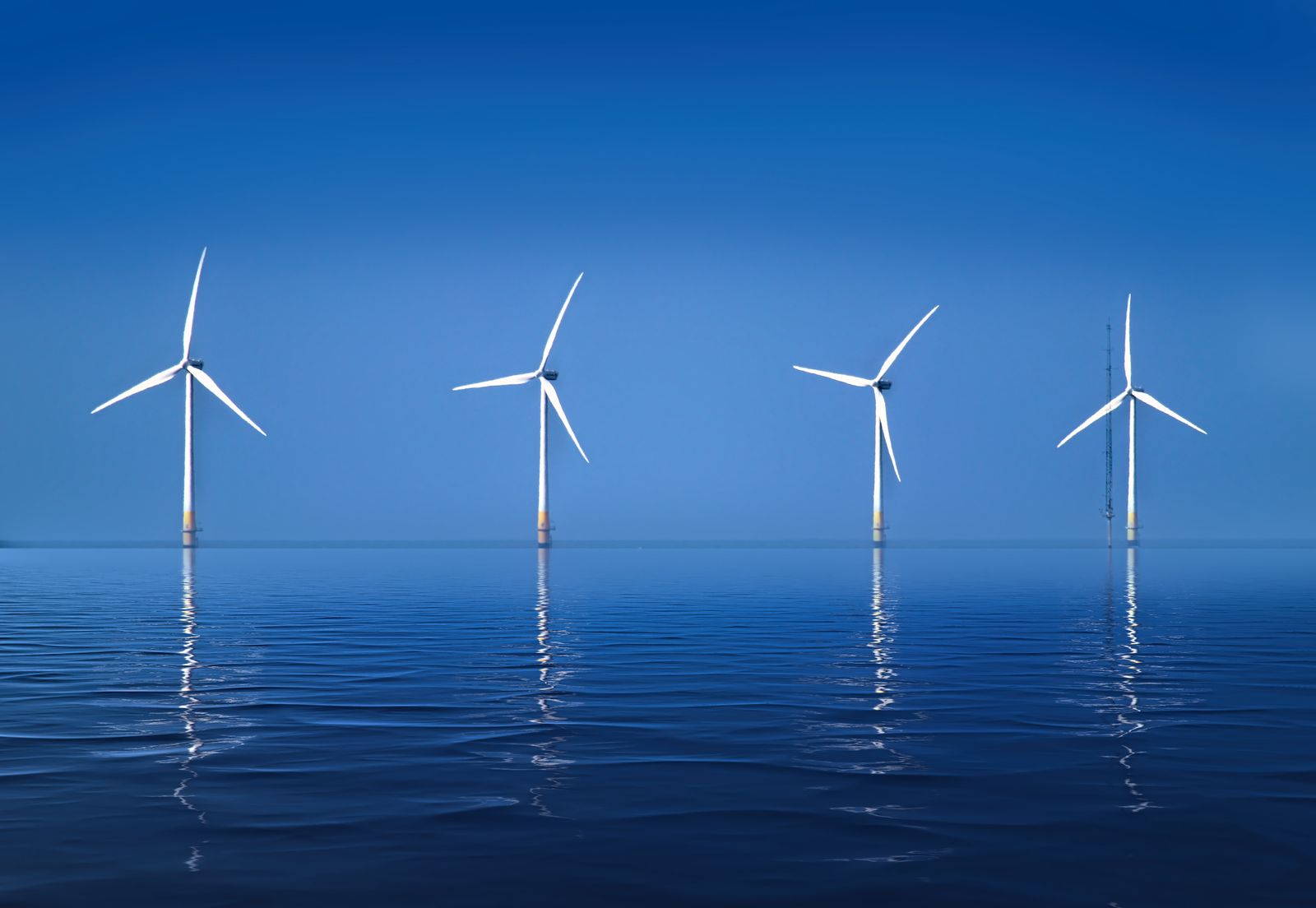
Baltica 2 will comprise 107 wind turbines when it comes online, scheduled for commissioning in 2027. The project’s developers say the finished farm will have the capacity to power over 2.4 million households — roughly one in six of Poland’s roughly 15 million households.
For a country whose electricity mix has for decades been dominated by domestic coal, that is a structural change. Ørsted and PGE took the final investment decision on Baltica 2 as a joint venture, and the project is now the largest single renewable investment in Polish history.
Three ships, three voyages, and a wider pattern
COLI Group split the shipment across three separately chartered vessels sailing on three voyages between Derince and Poland. That is not a matter of running out of deck space on a single ship. It is a matter of risk. Concentrating all 14 transformers on one hull would mean a single incident — a fire, a grounding, a storm — could delay the entire wind farm’s commissioning by the year or more it would take to build replacements.
The staggering also matched the pace at which the receiving site could handle the cargo. A temporary storage area was set up at Władysławowo so that the four heaviest units could wait on the quay while the substation site itself was still being prepared to receive them. Transformers of that scale are not stored casually. They sit on load-spreading mats, are monitored for tilt and moisture ingress, and are usually kept under nitrogen pressure to prevent air from contaminating the internal oil.
What happened between Derince and the Polish coast is a small slice of a much larger industrial pattern. The energy transition, whatever else it is, is a logistics problem. Every offshore wind farm needs transformers, monopiles, jacket foundations, cable-laying vessels, and nacelles the size of city buses. All of these components are built in a handful of specialised factories scattered across Europe, Asia, and North America. All of them need to arrive somewhere else.
The heavy-lift industry that moves them is a niche, specialised business dominated by a small number of firms with the ships, cranes, and modular transporters to handle single pieces of freight weighing hundreds of tonnes. In September 2026, UK firm Allelys re-engined its 1,200-tonne capacity AK912 mobile crane — the kind of machinery that shows up when a single lift has to be measured in the thousands of tonnes.
Terra Daily has written before about the physical footprint of the energy shift, from Chile’s Atacama textile insulation experiments to the disputed accounting of fossil fuel subsidies. The Baltica 2 transformer move belongs to the same story from a different angle: the pieces of the low-carbon grid are heavy, and someone has to actually carry them.
What a 361-tonne transformer contains, and what arrives on the coast
Strip away the outer casing and a transformer at this scale is a stack of laminated silicon-steel plates, wound with tonnes of copper wire, submerged in tens of thousands of litres of mineral oil that acts as both electrical insulator and coolant. The oil alone in a unit this size can weigh 60 tonnes or more. Radiators, bushings, and tap changers cluster around the outside like organs on a body.
These are also machines with lead times measured in years. Global demand for large power transformers has surged with grid expansion and renewable buildout, and factories cannot spin them out on short notice. A transformer damaged in transit is not something a project can simply reorder. Which is why COLI moved the units in staggered voyages, built a bridge over a bridge, and drove them the last kilometres at speeds slower than a walking pace.
By late summer 2026, all 14 transformers were at the substation site. Baltica 2’s turbines themselves are being installed offshore, with foundations already going into the Baltic seabed. When the wind farm reaches full output in 2027, its 1.5 GW of capacity will feed into the Polish grid through the very machines COLI spent six months delivering.
Somewhere in the paperwork is a line item for a temporary steel flyover, assembled and dismantled multiple times over a Polish winter, so that four boxes of copper and oil weighing 361 tonnes each could cross bridges that were built for lighter traffic in a different era. The bridges are still there. The flyover is gone. The transformers are waiting for the wind.
